The Toyota Prado is not a soft city car. It is a big off road SUV built for mud, sand, and long dirt roads. Toyota fits it with a 2.8 litre diesel engine that makes 500Nm of torque, plus up to 221mm of ground clearance for rough terrain.
All that adventure means dirty boots, wet dogs, and spilled coffee land right on the seats. Regular fabric starts fraying at the bolsters after 50,000 miles of daily use.
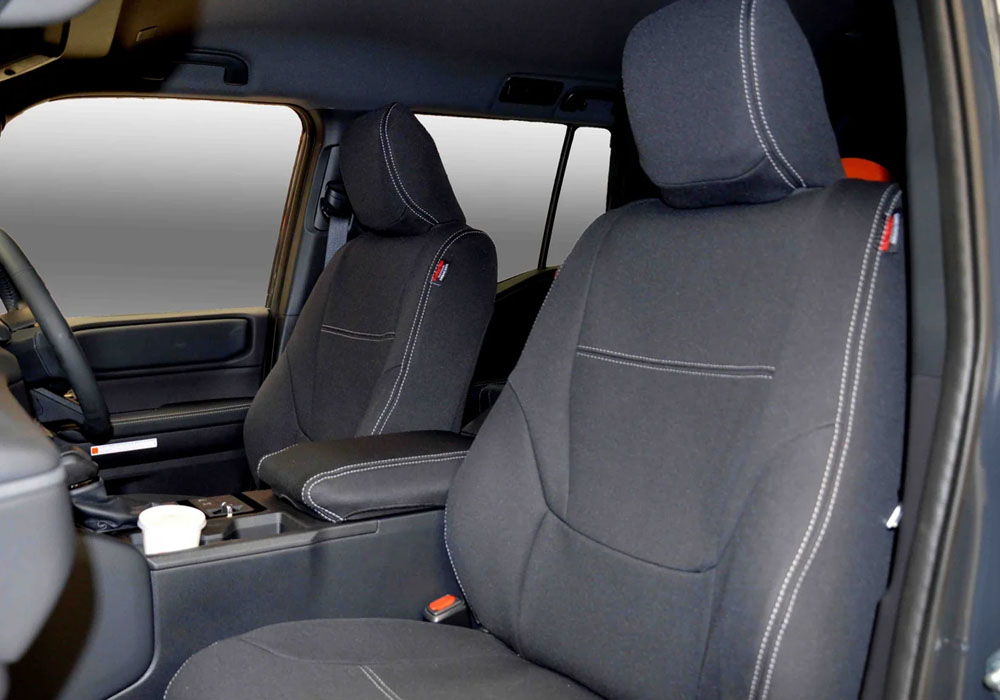
That is where toyota prado seats covered in neoprene change the whole game, and here is exactly why.
What Makes Neoprene Different From Cloth
Neoprene is not fabric. It is rubber, the same rubber used in wetsuits and diving suits. Water cannot soak through a closed cell rubber sheet. It just sits on top until you wipe it off. Cloth seats pull sweat and drink spills straight into the foam underneath. That foam holds moisture, and moisture breeds mould over time. A neoprene cover blocks that path from day one. The rubber layer also fights off UV rays, so it will not crack or fade under the harsh Australian sun on a long drive north.
The Prado Takes More Abuse Than You Think
Look at the numbers. The Prado weighs around 2,595kg unladen and can tow 3,500kg braked. That is a heavy vehicle doing heavy work, and every trip adds grit to the cabin. Kids climb in with sandy shoes. Dogs jump in wet from the lake. Tradies toss tools on the passenger seat without a second thought. None of that is gentle on cloth. Covers rated for 100,000 plus double rubs shrug off years of that treatment without splitting at the seams.
Neoprene vs Cloth vs Leather
| Feature | Neoprene | Cloth | Leather |
| Water resistance | High | Low | Medium |
| Summer heat | Warm | Cool | Hot |
| Lifespan | Up to 10 years | 3 to 5 years | 5 to 8 years |
| Cleaning | Wipe and rinse | Vacuum and scrub | Special cream needed |
I will be straight with you. Cloth wins on breathability, and leather looks flashier at a dealership. But for a vehicle that tows, camps, and gets muddy, neoprene wins on every practical point.
Why Prado Owners Keep Choosing Neoprene
- Keeps mud and sand away from the factory foam underneath
- Handles wet swimmers and togs after a beach day
- Stretches over bolsters without bunching or riding up
- Comes off fast for a proper hose down at home
- Protects resale value on a model that already starts near $73,200
The One Trade Off Worth Knowing
Neoprene is heavier than cloth, and it can hold a bit of warmth on a 35 degree day. That is the honest downside. A lighter grey or silver backed panel reflects sunlight and cuts that heat down fast, so colour choice actually matters here. Skip the dark black option if you park outdoors all day.
Fit Matters as Much as the Material
A Prado seat is not shaped like a small hatchback seat. Bolsters sit higher, and the side airbag pocket needs a stitched seam that will not block deployment. Custom neoprene covers built for the Prado follow the exact factory pattern across GX, GXL, VX, Altitude, and Kakadu grades. That means no bunching near the console, no gaps behind the headrest, and airbags that still fire the way Toyota engineered them. A universal cover simply cannot promise that.