Most homeowners ignore a slow drain for weeks, say UTZ Property Management specialists. Maybe months. It still works, technically, so there’s no urgency. Then one Tuesday morning the kitchen sink backs up completely, water pools across the counter, and suddenly a $150 cleaning job has turned into a $900 call before breakfast.
Your drains don’t fail without warning. They hint. They gurgle, they smell, they drain slower and slower until they don’t drain at all. The trick is knowing which hints mean “handle this soon” versus “call someone right now.” That’s exactly what this breakdown covers.
The Drain Distress Scale: A Simple Way to Read the Signals
Think of your home’s drainage system as sending messages in three tiers. Tier 1 signals are mild and give you a window to schedule a fix. Tier 2 signals mean something is actively building toward a failure. Tier 3 signals mean the failure is already underway and waiting makes it worse. Every warning sign below maps to one of these tiers, so you always know how fast to move.
This framework isn’t complicated. It just gives you a decision rule instead of a gut feeling, which is where most homeowners go wrong. They treat a Tier 2 problem like a Tier 1 because the water is still technically moving.
Slow Draining in One Spot (Tier 1)
A single slow drain, say just the bathroom sink, usually points to a localized clog: hair, soap scum, or a buildup of toothpaste residue sitting right below the stopper. This is the most forgiving scenario on the list. You’ve got time, but not unlimited time.
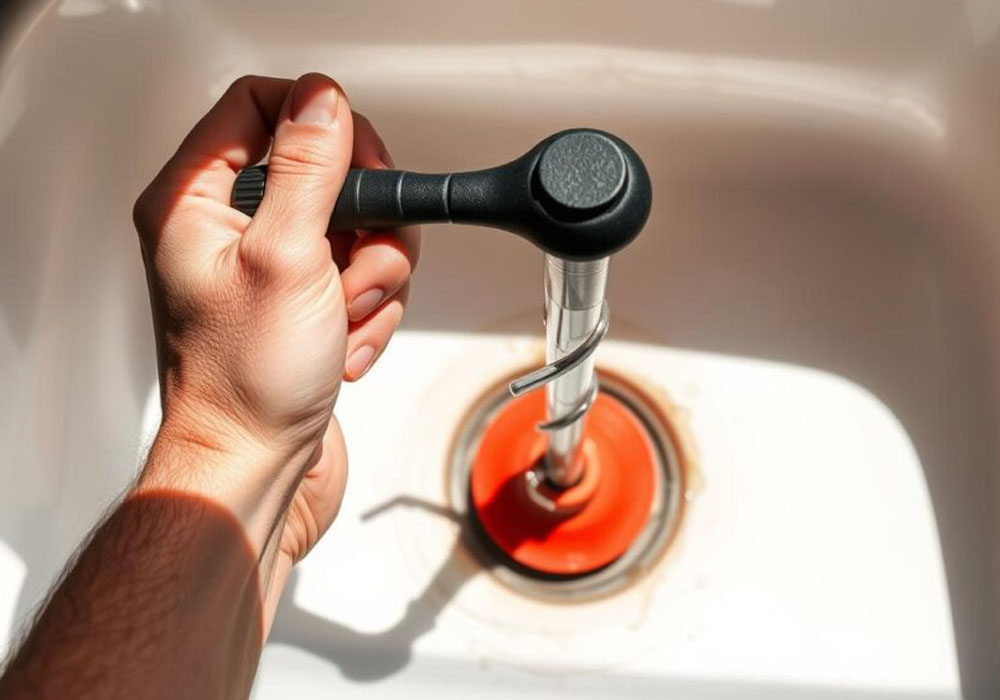
The smart move here is a simple drain snake or a enzyme-based drain cleaner before the partial blockage turns into a complete one. Chemical drain cleaners like Drano work for light clogs but they’re genuinely rough on older pipes, especially if your home was built before 1980 and still has cast iron or galvanized steel runs. Use them sparingly.
If the same drain keeps slowing back down within a few weeks of clearing it, that’s no longer a Tier 1 situation. A recurring clog in the same spot usually means there’s a deeper obstruction that a snake can’t reach, or the pipe has a structural issue like a bellied section where debris collects.
Multiple Drains Running Slow at the Same Time (Tier 2)
Here’s the concrete scenario worth picturing. Imagine a house where the kitchen sink has been a little sluggish for three months. Nobody thinks much of it. Then one evening the washing machine drains into the laundry tub, and suddenly the toilet gurgles and the shower starts to back up. That’s not three separate clogs. That’s one partial blockage sitting in the main sewer line, and every fixture that drains is now fighting to push water past it.
When two or more drains in different areas of your home slow down around the same time, you are almost certainly dealing with a main line issue. The kitchen, the bathroom, and the laundry all share a path to the municipal sewer or your septic system. A blockage anywhere along that shared route affects every drain upstream of it.
Grease is the most common villain in kitchen lines. It goes down warm and liquid, cools to a solid inside the pipe, and then acts like a net that catches every food particle and soap residue passing through. A year of cooking grease can narrow a four-inch pipe down to a trickle. Tree roots are the next most common culprit in main lines, especially in homes over 20 years old with clay or concrete sewer pipes.
Foul Odors Rising From the Drain (Tier 2)
A drain that smells like rotten eggs or sewage is telling you one of two things. Either organic material is decaying inside a partial blockage and the gases are venting back up through the fixture, or your P-trap (the curved pipe section under every drain) has dried out and is no longer blocking sewer gas from entering your home.
A dried P-trap is a quick fix: run water in rarely-used drains, like a guest bathroom sink you haven’t touched in months, for thirty seconds every few weeks. But if the smell is coming from an actively-used drain, that’s a decomposing blockage. The odor is the last warning before a backup.
Sewer gas isn’t just unpleasant. It can contain methane and hydrogen sulfide, both of which are harmful in enclosed spaces. Don’t sit on this one.
Gurgling Sounds After Flushing or Running Water (Tier 2)
Gurgling means air is trapped in your drain lines and getting displaced as water moves through. A healthy drain is silent. The moment you hear gurgling from a toilet after running the bathroom sink, or from the kitchen drain after the dishwasher finishes a cycle, air is trapped where it shouldn’t be.
This almost always points to a partial blockage in a shared line or a venting problem. Your drain system includes vent pipes that run up through the roof, allowing air to equalize pressure as water flows. A blocked vent stack, often caused by leaves, bird nests, or debris, creates the same negative-pressure effect as a blockage and produces identical gurgling sounds. A plumber with a camera can tell you in minutes which you’re dealing with.
Water Backing Up Into Another Fixture (Tier 3)
Water from one fixture appearing in another one is a Tier 3 emergency. If you flush the toilet and water rises in the bathtub, stop using all fixtures immediately. You have a complete or near-complete main line blockage, and continued use will cause sewage to back up through the lowest drain in the house, usually a floor drain or bathtub.
This is the situation where waiting 24 hours to “see if it clears up” leads to a flooded bathroom floor and the kind of water damage that reaches subflooring and drywall. Insurance data shows the claims frequency for water damage runs at roughly 1.61 claims per 100 house-years, meaning about one in every 60 insured homes files a water damage claim in any given year. Sewage backups are a major driver of those claims, and the cost typically far exceeds the cost of the plumbing fix itself.
For situations like this, calling emergency plumbing services as soon as the backup appears is the right call. A hydro-jet or professional auger can clear a main line in a fraction of the time a DIY approach would take, and the job gets done without the risk of pushing the blockage deeper or damaging older pipe walls.
What You Can Actually Do Right Now
You don’t need to wait for a problem to act. Here’s a practical four-step routine that catches most drain issues before they reach Tier 3.
- Monthly: Pour a kettle of boiling water down every kitchen drain to melt grease accumulation. Follow it with a cup of baking soda and a cup of white vinegar for light enzyme action.
- Every 3 months: Run water in every fixture in the house, including guest bathrooms, utility sinks, and floor drains. This recharges P-traps and confirms all drains are moving freely.
- Every 6 months: Check under every sink for moisture on cabinet floors or supply lines. A slow leak under the sink is far less dramatic than a drain backup but causes just as much long-term damage.
- Annually: Have a plumber snake or camera the main sewer line if your home is over 15 years old, or if you have large trees anywhere in the yard. Tree roots don’t announce themselves until a root ball has already claimed significant pipe space.
According to the U.S. EPA’s WaterSense program, the average family can waste 180 gallons per week, or 9,400 gallons of water annually, from household leaks alone. A large portion of that waste traces back to plumbing issues that a routine check would catch early. The math on preventive maintenance is hard to argue with.
Reading the Full Picture
| Warning Sign | Tier | Likely Cause | Time to Act
|
| One slow drain | 1 | Local clog (hair, soap) | Within 1 to 2 weeks |
| Multiple slow drains | 2 | Main line partial blockage | Within 48 hours |
| Sewage odor from drain | 2 | Decomposing blockage or dry P-trap | Within 24 hours |
| Gurgling after flushing | 2 | Blocked main line or vent stack | Within 24 hours |
| Water backing into another fixture | 3 | Complete main line blockage | Immediately |
“Pipes don’t clog overnight. They clog slowly… A drain can still technically work while it’s getting tighter inside.” This observation from plumbing professionals reflects a reality most homeowners learn the hard way: the absence of a complete failure is not the same as a healthy drain.
Your drains are one of the most used systems in your home and one of the least watched. Running a simple monthly check takes five minutes and costs nothing. Ignoring a Tier 2 signal for six weeks often costs several hundred dollars and a weekend of your life dealing with the aftermath. The signals are there. Now you know how to read them.