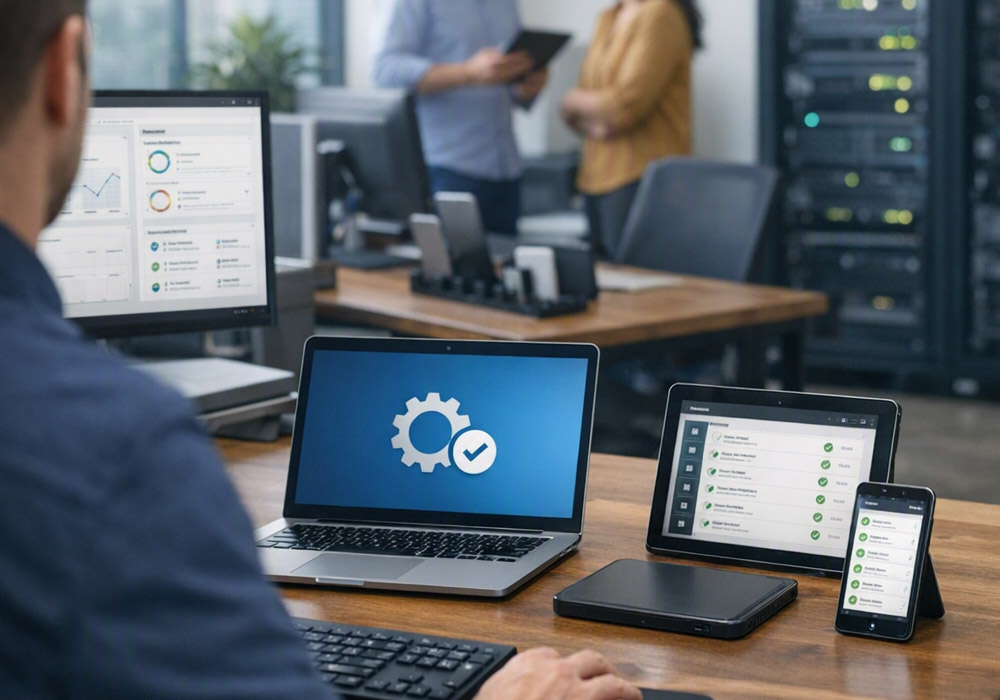
The number of devices a typical organization needs to track has grown dramatically, spanning laptops, phones, tablets, and an increasing number of remote and hybrid work setups. Managing that sprawl manually, one device at a time, quickly becomes unsustainable as headcount grows. An endpoint management solution, such as the one offered through ConnectWise, exists specifically to bring that scattered device landscape under a single, coherent system rather than leaving IT to track everything through spreadsheets and memory.
Centralize Visibility Across All Devices
Without a centralized view, IT teams often don’t have a clear, current picture of exactly which devices are active, what software they’re running, or whether they’re up to date, points out TCT Property Management Buckeye. Centralized visibility solves that blind spot directly, giving IT a single dashboard instead of a patchwork of disconnected records. That single view also makes it far easier to spot a device that’s fallen out of compliance before it becomes a security issue. Fewer surprises during an audit is one of the more immediate, practical benefits of that visibility.
Automate Routine Software Updates
Manually pushing updates to every device individually is slow and easy to fall behind on, especially across a larger fleet of machines. Automated update deployment ensures devices stay current without requiring IT to intervene on each one separately, which meaningfully reduces the window of vulnerability between when a patch is released and when it’s actually applied. That shrinking window matters most for high-severity vulnerabilities that attackers move quickly to exploit.
Enforce Consistent Security Policies
Inconsistent security settings across devices create gaps that are easy to overlook until something goes wrong. Centralized policy enforcement applies the same baseline protections across every managed device automatically, removing the guesswork of manually configuring each one and reducing the odds of a misconfigured device slipping through unnoticed. Consistency across the fleet also simplifies compliance reporting considerably.
Simplify Remote Troubleshooting
When employees work from scattered locations, resolving a device issue in person simply isn’t practical. Remote management tools let IT diagnose and resolve many problems without needing physical access to the device itself, which cuts down resolution time considerably and keeps employees productive instead of waiting on an in-person visit. That speed matters most for a distributed team spread across several time zones.
Track Device Inventory Automatically
Manually maintained device inventories tend to go stale quickly as hardware is added, retired, or reassigned. Automated inventory tracking keeps that record accurate without requiring manual updates, which matters considerably during audits, security incidents, or simple asset planning conversations. An accurate inventory also simplifies budgeting decisions around hardware refresh cycles.
Streamline Onboarding and Offboarding
Setting up a new employee’s devices, or securely wiping a departing employee’s access, involves several steps that are easy to miss when handled manually. A centralized system standardizes this process, reducing the risk of a lingering access gap after someone leaves the organization. That standardization matters most for organizations with frequent turnover or seasonal staffing changes.
Reduce the Burden on IT Staff
Every manual task eliminated through automation is time IT staff can redirect toward more strategic work instead of routine device maintenance, which matters even more for smaller IT teams supporting a disproportionately large device fleet. That freed-up capacity often makes the difference between an IT team that’s reactive and one that can plan ahead.
None of these improvements require an organization to overhaul its entire IT infrastructure overnight. Even implementing a few of these practices tends to meaningfully reduce the daily friction of managing a growing, increasingly distributed device fleet, freeing IT teams to focus less on routine maintenance and more on the priorities that actually move the organization forward.