Your pipes might be failing right now, and your water is probably doing it. Not a burst pipe, not a dramatic flood. Just a slow, invisible buildup of calcium and magnesium that narrows your pipes a little every single year, drops your water pressure, and quietly shaves years off every appliance connected to your water supply. In the Mojave Desert, where Hesperia’s groundwater runs naturally mineral-heavy, this problem hits harder and faster than most homeowners ever expect.
This article explains exactly how hard water attacks residential plumbing, what the warning signs look like in a High Desert home, and how to get ahead of it before you’re staring at a repair bill instead of a quick fix.
What Hard Water Actually Does Inside Your Pipes
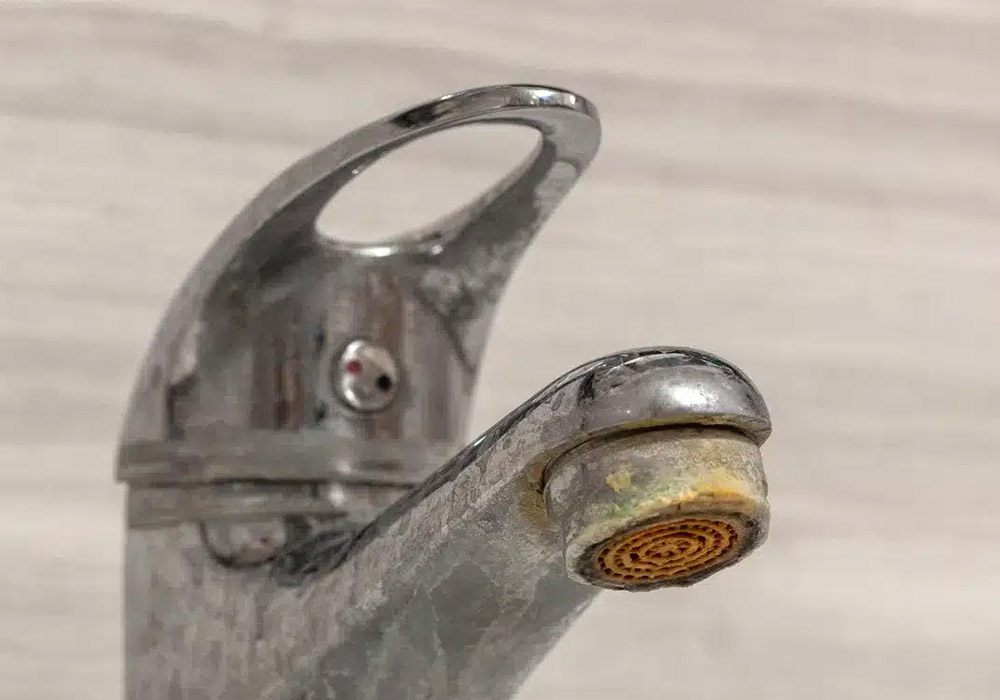
Hard water is water loaded with dissolved minerals, mainly calcium and magnesium. It’s not dangerous to drink, but your pipes couldn’t care less about that distinction. Every time hard water flows through your plumbing, it leaves behind a thin film of mineral residue called limescale. One day’s worth: invisible. Five years’ worth: a real problem.
When hard water is heated, solid deposits of calcium carbonate form. According to the U.S. Geological Survey, this scale can reduce the life of equipment, raise the costs of heating water, lower the efficiency of electric water heaters, and clog pipes. That’s not just your water heater at risk. It’s every appliance connected to a hot water line, including your dishwasher, your washing machine, and your kitchen faucets.
Water systems that use groundwater as a source face particular concern because, as water moves through soil and rock, it dissolves naturally occurring minerals and carries them into the groundwater supply. If those minerals are present around a water-supply well, hard water gets delivered straight to homes. Hesperia pulls its supply from exactly that kind of groundwater system, which means every home in the city is dealing with this whether the owner knows it or not.
Think of it as arterial plaque, but for your house. And just like the medical version, you won’t feel it until things get serious.
The Leak Problem That Scale Makes Worse
Here’s where hard water stops being just an efficiency issue and starts costing real money. Limescale buildup creates uneven surfaces on the interior walls of pipes, especially copper. Those rough spots become sites for corrosion. Corrosion leads to pinhole leaks. Pinhole leaks lead to water damage inside walls, floors, and ceilings, and that’s when a plumbing call turns into a restoration project.
Leaks in general are already one of the most expensive forms of passive home damage. According to the EPA’s WaterSense program, the average household’s leaks account for more than 9,300 gallons of water wasted every year, and household leaks nationwide waste nearly 1 trillion gallons annually. Hard water accelerates the conditions that produce those leaks, meaning homes in high-mineral areas face this exposure sooner than the national average suggests.
If you’re in Hesperia and your home is more than 15 years old, your pipes have been bathing in mineral-rich groundwater for a long time. The scale is there. The question is how far along it is.
Why Hesperia’s Plumbing Infrastructure Tells the Real Story
The city itself has been fighting this battle at scale for years. The Hesperia Water Pipeline Division handles the repair and replacement of water lines throughout the city’s distribution system, and the steel pipe being replaced has reached its useful life expectancy and is showing signs of deterioration. In Fiscal Year 2024-2025 alone, the Pipeline Division was responsible for the replacement of over 500 water service lines. That’s the city working on its infrastructure. Your private home plumbing runs on a separate clock entirely, and nobody’s scheduling that work for you.
That’s the part most homeowners miss. The municipal side gets monitored and maintained. The branch that runs from the street into your house, through your walls, and to your fixtures? That’s your responsibility. And in a High Desert city where groundwater hardness and aging pipes go hand in hand, the risk compounds quietly every year you wait.
Experienced plumbers in hesperia who work in the region regularly see the same pattern: homeowners who ignored slow pressure drops and chalky buildup on fixtures for years, then discovered corroded pipe sections or a water heater that failed a decade early. The math is never kind when you wait.
The Hesperia Hard Water Threat Matrix
Not every symptom means the same thing. Here’s a practical way to read what your home is telling you:
| Warning Sign | Likely Cause | Urgency Level | First Step
|
| White or yellow crust on faucets and showerheads | Surface limescale from hard water | Low, but it’s a signal | Descale fixtures, test water hardness |
| Steadily dropping water pressure | Scale narrowing interior pipe diameter | Medium, act within 3 months | Professional pipe inspection |
| Water heater taking longer to heat | Scale insulating the heating element | Medium to high | Flush and inspect water heater annually |
| Unexplained spike in water bills | Hidden leak, often pinhole corrosion | High, act immediately | Meter test, call a licensed plumber |
| Brown or rusty water at first run | Corroding older steel pipe | High to critical | Water quality test, pipe assessment |
No single sign guarantees a catastrophe. Two or three together, especially in a home older than 20 years, means it’s time to stop watching and start acting.
What You Can Actually Do Right Now
Good news: the damage curve is not a straight line. The earlier you intervene, the cheaper the fix. Here’s a practical four-step approach for any Hesperia homeowner:
- Test your water hardness. Hardware stores sell basic test strips for a few dollars. This tells you whether you’re dealing with hard or very hard water and sets the baseline for every other decision.
- Inspect your water heater. Check the bottom of the tank for sediment buildup. If it sounds like gravel rattling when the heater fires up, scale has already accumulated. An annual flush removes it before it causes early failure.
- Check your meter for leaks. Shut off every water source in the house, then check your water meter. If the dial moves at all over two hours, water is escaping somewhere. That’s your cue to bring in a professional.
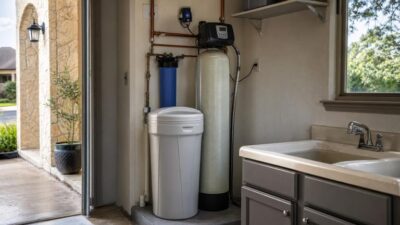
- Consider a water softener. This is the single most effective long-term intervention for high-mineral water. A whole-house softener replaces the calcium and magnesium ions with sodium, which leaves no scale behind. The upfront cost hurts, but it’s a fraction of a pipe replacement or a prematurely failed water heater.
“Across the country and especially here in the West where water is scarce, it’s more important than ever to use water efficiently and check for leaks around the house.” — Austin Krcmarik, Water Efficiency Planner, Denver Water
That quote captures exactly the pressure Hesperia homeowners face. Water scarcity in the High Desert makes every wasted gallon from a scale-accelerated leak more costly, not just for your wallet but for the regional water table everyone depends on.
The Maintenance Mindset That Changes Everything
Plumbing is one of those systems that rewards people who think about it once a year and punishes everyone who waits until something goes wrong. In Hesperia, where the water is mineral-heavy, the pipes are aging, and summer heat pushes demand on water heaters hard, the stakes are higher than they are in a city with soft municipal water.
Annual inspections, proactive water heater maintenance, fixture monitoring, and a water softener where the hardness warrants it: these are not overcautious moves. They’re the difference between a $200 service call and a $6,000 pipe replacement behind a finished wall.
Your home’s plumbing will tell you what it needs. The only question is whether you’re listening before or after it becomes an emergency.