Most backyards are summer props. They look great in June, collect leaves in October, and disappear entirely from your life by December. If that sounds familiar, the problem usually is not your yard, it is the design approach. A backyard that genuinely works in every season requires a completely different starting point: you plan around your worst month, not your best one.
This guide walks you through a practical zone-based method for creating outdoor space that stays livable, stays beautiful, and stays in daily use whether it is 95 degrees or snowing sideways. No fantasy renders. No budget assumptions pulled from thin air. Just a framework you can actually use.
Why Most Backyard Renovations Underdeliver
Homeowners tend to make outdoor investments based on how they feel during a warm weekend in April. They picture summer barbecues, add a deck, maybe a fire pit, then wonder why nobody uses the space in February. The truth is that a well-planned outdoor space is an asset in every sense of the word.
According to a 2025 survey published by Fixr, 56% of exterior design experts say homeowners are more willing to invest in outdoor spaces in 2025 than in 2024, and 98% of those experts agree that an updated outdoor space has a measurable impact on home value. That is a near-unanimous professional consensus. Yet most people still design their backyards around one season and wonder why the other three feel like wasted square footage.
The fix starts with thinking in zones, not in features.
The Zone-Stack Method: A Framework for Four-Season Yards
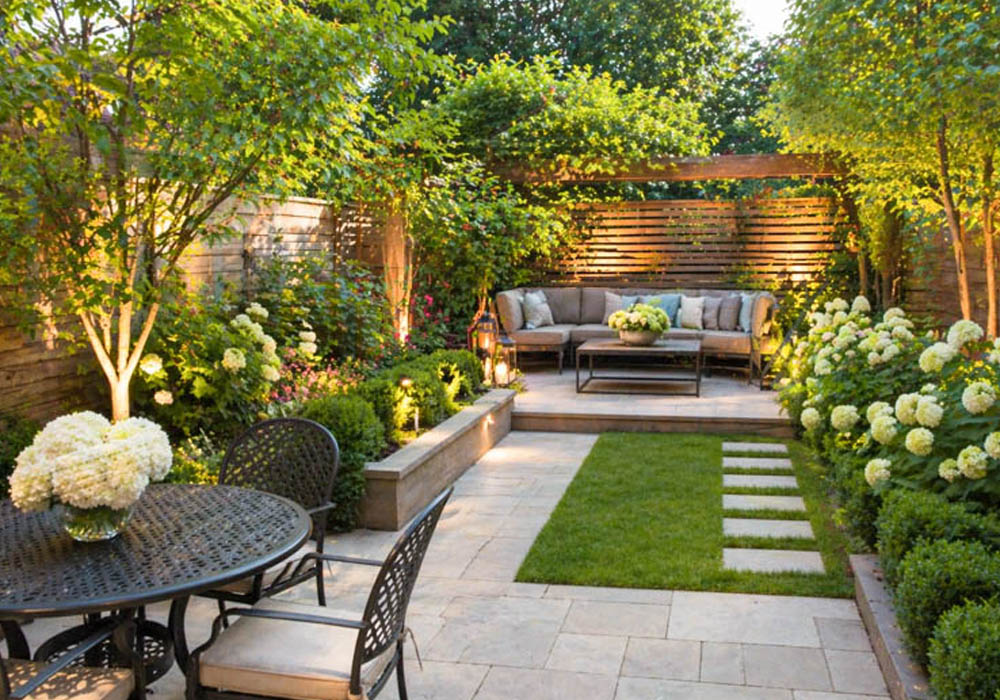
Zone-stacking is a design approach where every section of your backyard serves a clear purpose and at least two of those sections remain fully functional in cold or wet weather. You are not building a summer patio with winter additions bolted on later. You are building four-season capability from the ground up, then layering warm-weather extras on top of that base.
Here is how the zones break down:
- Zone 1: The covered anchor. A permanent roof structure, whether a pergola with a polycarbonate panel, a proper roof extension, or a dedicated outbuilding. This is your single most important investment. Everything else in the yard orbits it.
- Zone 2: The heat source. You need controlled warmth that works independently of good weather. A wood-burning or electric fire feature, a radiant floor panel, or a purpose-built sauna structure all qualify here.
- Zone 3: The open green. Lawn, planted beds, or a simple gravel garden. This zone is seasonal by nature and that is fine. It does not need to carry the design in winter; it just needs to look clean and not shabby.
- Zone 4: The transition edge. The strip between your house’s back door and Zone 1. Keep it weather-resistant and completely clear. A muddy path in November kills the motivation to use any of your other investments.
You do not need every zone to be large. A 600 square foot backyard can still apply this framework. Zone 1 might be a 10×12 covered area. Zone 2 might be a compact freestanding unit tucked into one corner. The proportions adjust; the logic does not.
Choosing a Heat Source That Actually Gets Used
This is where most backyard designs go quietly wrong. Homeowners install a fire pit, use it four times a year because it requires setup and cleanup, then it sits cold for eleven months. A heat source only justifies its footprint if you actually fire it up.
The three realistic options for year-round use are radiant patio heaters mounted under your covered area, a wood-burning or gas fireplace with a proper enclosure, and a dedicated sauna structure. Each suits a different lifestyle and budget. Patio heaters are cheapest to install but ongoing running costs add up. Fireplaces score high on ambiance but require a chimney and seasonal wood delivery. A sauna is the biggest upfront investment of the three but it functions independently of weather, requires almost no setup once it is at temperature, and gets daily use from households that install one.
If you live somewhere with real winters, a sauna is genuinely hard to beat. For instance, an outdoor sauna in utah style build, designed for high-altitude cold and wide temperature swings, prioritizes thick-wall insulation and weatherproof cladding from the start, making it a functional heat zone twelve months a year. That is the design thinking you want applied to wherever you live, not just the product but the insulation-first mindset.
What the Data Says About Outdoor ROI
Spending on the backyard is not purely hedonic. The financial case is real, though nuanced.
| Project Type | Estimated Cost Recovery at Resale | Source
|
| Wood deck addition | 83% | 2024 Cost vs. Value Report |
| Standard patio | Up to 95% | NAR Outdoor Features Report |
| Landscaping & lawn maintenance | Up to 217% | National Association of Realtors |
| Outdoor kitchen | ~80%+ | Multiple aggregated surveys |
The numbers above come from varying market conditions, so treat them as directional, not guaranteed. What they consistently show is that outdoor upgrades tied to everyday livability, not novelty, recover the most cost. A sauna you use daily, a covered patio you eat dinner under in September, a transition path that does not turn to mud: these outperform the inflatable hot tub you deflated after two uses.
The National Association of Realtors publishes a dedicated Remodeling Impact Report: Outdoor Features that examines why homeowners pursue outdoor upgrades, the value of landscape enhancements, and the increased personal satisfaction homeowners report once those projects are complete. Their data consistently shows emotional payoff, measured through a “Joy Score” metric, runs neck and neck with financial return as a motivation. You are building for both.
The Four Mistakes That Ruin Year-Round Backyards
These are the errors I see over and over, and every one of them is avoidable with a little upfront planning.
- Skipping drainage. A backyard that floods or stays soggy in spring is an unusable backyard for three to four months. Grade the ground away from your house before you spend a dollar on any surface feature.
- Buying seasonal furniture for a permanent space. If your seating goes into storage every fall, Zone 1 sits empty all winter. Choose materials rated for your climate and leave them out.
- Placing the heat source too far from the house. Thirty feet feels like no distance at all in July. In January at 7 p.m. with your hands full, it feels like a trek. Put your Zone 2 heat source close enough to make the trip effortless.
- Overbuilding green and underbuilding cover. A lush garden is gorgeous in May. Spend 70% of your budget on plants and zero on a covered area and you have bought yourself a beautiful space you will use for eight weeks.
A Practical Starting Checklist Before You Spend Anything
Before a single contractor visits, work through these five questions. Your answers will shape every decision that follows.
- What is your yard’s coldest usable month, and what would need to be true for you to spend two hours outside that day?
- Where does water pool or drain during a heavy rain?
- Which side of the house gives afternoon shade in summer without blocking winter light?
- Is there an existing structure, fence line, or tree that can anchor Zone 1 without a full build?
- What is the one outdoor activity your household does consistently across seasons, even if just 15 minutes at a time?
Your answer to that last question is where your budget goes first. Everything else is secondary.
Designing for the Long Game
A backyard is not a project you finish and forget. According to Houzz research cited by This Old House in 2025, the top three reasons homeowners renovate their outdoor spaces are improving aesthetics (51%), enhancing entertainment space (37%), and extending the livable footprint of their home (33%). Notice what is at the top: not resale value, not curb appeal. Plain personal enjoyment. Design for the life you actually live and the financial benefits follow.
A backyard designed with the Zone-Stack Method, with a proper covered anchor, a dependable heat source, clean transitions, and greenery kept in its seasonal lane, will get used in January just as much as July. That is the goal. Not a show garden. A real yard that fits your real life, all 365 days of it.
“Homeowners have embraced their outdoor spaces, transforming them into oases with pools, patios, plants and greenery. These outdoor features are embraced by the homeowner and can also attract buyers if the owner wants to sell.”
Dr. Jessica Lautz, NAR Deputy Chief Economist and Vice President of Research, 2023 Remodeling Impact Report
The single question worth asking yourself before you call a contractor: is this backyard designed for the version of your life that exists in every month, or just the one that looks best in photos?