Outdoor lighting used to be relatively simple: turn the lights on, turn them off, or rely on a timer. Smart controls have changed that relationship by giving homeowners more control over when exterior lights operate and how different parts of the property are used after dark.
That control matters because outdoor lighting rarely serves only one purpose. A front walkway may need dependable evening illumination, patio lights may be wanted only during gatherings, and decorative lighting may change according to the season or occasion.
The value of app control is not having more buttons to press. It is being able to match the lighting more closely to what is happening outside.
Start by Separating Lighting Into Real-Life Uses
Before thinking about an app, divide the property according to how the lights are used.
One group might cover the front entrance and walkway. Another could include the patio or deck. Landscape accents, permanent roofline lighting, side-yard fixtures, and entertaining areas may each have different schedules.
This is the stage where homeowners considering Astoria Lighting Co should think first about how they want different exterior sections to behave rather than focusing only on colors or visual effects.
A control system becomes more useful when the lighting layout already reflects the way the property functions.
Scheduling Removes Repetitive Daily Adjustments
One of the most practical smart-lighting features is scheduling.
Exterior lights that should operate every evening do not need to depend on someone remembering to turn them on.
A schedule can also prevent lights from remaining on long after they are needed.
This is particularly useful for architectural or landscape lighting used regularly. Instead of treating the system like temporary decorative lights, homeowners can establish a normal evening pattern and adjust it when routines change.
Schedules should still be reviewed occasionally. Seasonal daylight changes and household routines can alter when certain lighting is actually useful.
Different Activities Benefit From Different Brightness Levels
A backyard does not always need the same amount of light.
Preparing food at an outdoor kitchen may call for brighter task lighting than sitting around a patio after dinner. A front entrance may need steady visibility, while decorative landscape features can often operate more softly.
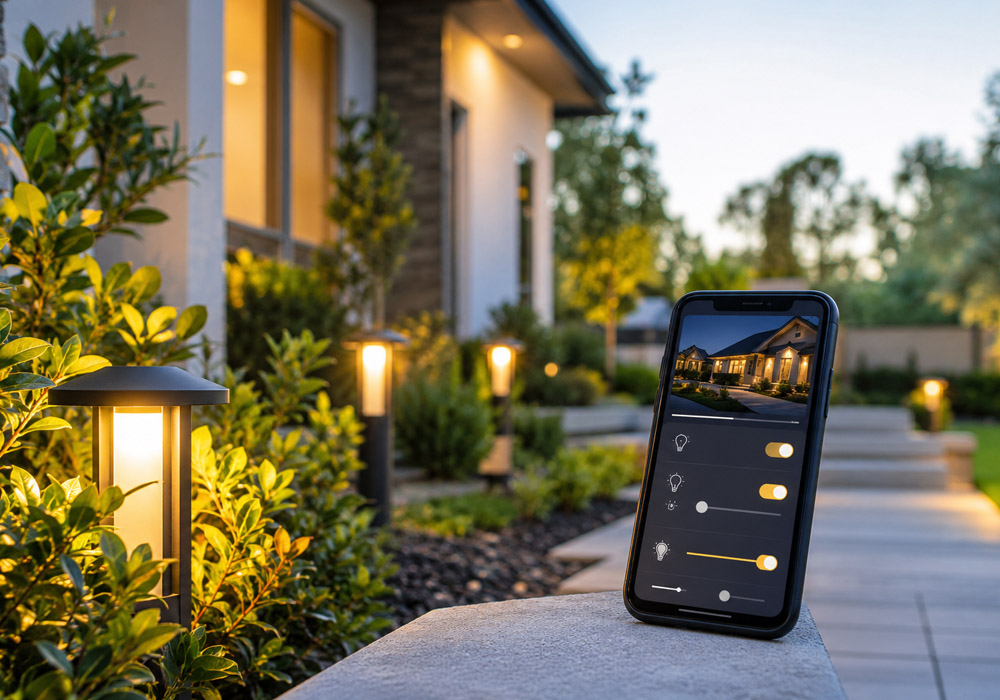
App-based controls can make those changes easier when the installed system supports dimming or separate zones.
The important part is designing those differences deliberately.
If every fixture is connected as one large group, an app may offer less flexibility than homeowners expect. Control planning should therefore happen alongside fixture planning rather than after installation.
Presets Can Reduce Constant Adjustment
Homeowners often settle into a few repeatable lighting situations.
There may be an everyday evening setting, a brighter entertaining setup, a holiday display, and a quieter late-night arrangement.
Saving preferred settings can make the system easier to live with because users do not have to rebuild the lighting scene every time.
This becomes especially useful when several areas or programmable fixtures are involved.
The technology should shorten the process of getting the desired result. If operating the lighting requires adjusting numerous settings every night, the control setup may be more complicated than necessary.
Remote Control Is Most Useful When It Solves a Real Problem
Being able to manage exterior lighting from a phone can be convenient, but the strongest benefit appears when it solves practical situations.
Someone may realize after leaving home that decorative lights were left running. Plans may change and an outdoor gathering may continue later than expected. A homeowner may want lights operating before returning to the property after dark.
For a system being planned with Astoria Lighting Co, homeowners can discuss which exterior lighting groups they actually want available through app control and which ones should simply follow dependable automatic schedules.
That distinction keeps smartphone control from becoming a feature that exists without a clear purpose.
Smart Control Does Not Fix Poor Fixture Placement
An app cannot correct glare.
It cannot make a badly positioned path light illuminate the right part of the walkway, and it cannot stop an exposed fixture from shining directly toward a seating area.
The physical lighting design still comes first.
Fixture location, beam direction, brightness, spacing, and the relationship between different lighting layers determine what the yard looks like.
Smart controls are most useful after those fundamentals are right.
A well-designed outdoor system with simple controls will usually be easier to use than a poorly designed layout with numerous programming options.
Think About Who in the Household Will Use the System
A lighting app should not work only for the person who originally configured it.
Consider who else may need to operate the exterior lights.
Family members, houseguests, or property caretakers may need a straightforward way to activate common settings without understanding every advanced option.
Frequently used controls should therefore be easy to find.
If every routine action requires opening several menus or changing individual fixtures, people may stop using the smarter functions altogether.
Good control design reduces decisions for ordinary use while leaving customization available when someone actually wants it.
Do Not Create Too Many Zones
Separate control zones can add flexibility, but excessive subdivision creates another problem.
A modest backyard probably does not need every fixture controlled independently.
Group lights according to activities and physical areas.
Patio lighting may belong together. Front architectural lighting may operate as another group. Path and step lighting may need a different schedule from decorative features.
The number of zones should reflect genuine differences in use.
If two groups are almost always switched on and off together, separating them may add complexity without providing much benefit.
Use Automation Without Losing Manual Control
Automated schedules are convenient until the household needs something different.
A party runs later than usual. Guests arrive unexpectedly. Outdoor work continues after the normal shutoff time.
The system should allow an easy temporary change without forcing the homeowner to rewrite the normal schedule.
Afterward, the usual routine should be simple to resume.
This balance between automation and manual control is what makes smart exterior lighting practical. The system handles predictable patterns while still accommodating evenings that do not follow them.
Consider How Controls Affect Permanent Lighting
Permanent exterior lighting can serve several roles during the year.
The same installed system may be used differently for everyday architectural illumination, celebrations, seasonal displays, or special events, depending on its capabilities.
That makes control flexibility particularly relevant.
Rather than physically changing temporary lights whenever the desired appearance changes, homeowners may be able to adjust the installed lighting through programming.
Near the end of planning, Astoria Lighting Co can be asked how the proposed control structure relates to the permanent lighting layout, including which parts will operate together and how common settings will be managed after installation.
The answer matters because homeowners will interact with the controls long after the installation work is finished.
Plan for the Times When the App Is Not the Main Focus
Smartphone control should make exterior lighting easier, not make the homeowner dependent on constant phone use.
Routine evening lighting should be able to follow predictable schedules where appropriate.
The app then becomes useful for changes, special occasions, brightness adjustments, or other deliberate choices.
This also keeps the system from turning into another household device that demands attention every day.
The best setup often feels uneventful during normal use because the commonly needed lighting operates the way the household expects.
Smart Control Works Best When the Lighting Plan Comes First
App-controlled outdoor lighting is useful because it gives homeowners more flexibility over schedules, brightness, zones, and changing activities.
It is not a substitute for thoughtful exterior design.
The property still needs appropriate fixtures in the right locations, comfortable brightness levels, sensible grouping, and a clear reason for each lighting layer.
Once those foundations are established, smart controls can make the system much easier to manage. Homeowners can spend less time switching individual lights and more time using the exterior spaces the lighting was installed to support.