Hot, sticky afternoons are a fact of life in the Tennessee Valley. When the air outside feels like a sauna, an air conditioner must remove heat and moisture at once. If your home in or around Tuscumbia feels clammy even while the thermostat shows the target temperature, your system may be losing the humidity battle. Before assuming something major has failed, it helps to understand how airflow, coils, and controls affect dehumidification, and which checks you can make safely. This guide focuses on humidity-specific performance issues that are common in our climate and explains when a quick homeowner fix is reasonable and when a trained technician should take over.
Early signs your AC is losing the humidity battle
Humidity problems do not always look like a classic no-cool situation. Watch for long run times with rooms that still feel damp, a musty odor near floor registers, or light condensation on windows in the evening. A basic hygrometer can confirm indoor relative humidity above roughly the mid-50s while the system runs. Another clue is a cold supply temperature at the vent but little relief from that sticky feeling, which points to poor latent (moisture) removal rather than a lack of cooling capacity.
If the drain pan has already tripped a float switch and shut the system down, call Tuscumbia air conditioning repair services to clear the line and inspect for biological growth. Safety devices exist to protect ceilings and floors from condensate overflows, and bypassing them risks water damage. Repeated trips indicate more than a one-off clog and deserve a professional look.
Likely culprits you can spot safely
Start with airflow. A heavily loaded filter, especially a dense high-MERV media, can choke return air and let the evaporator coil get too cold, encouraging icing and reducing moisture removal. Replace the filter and confirm each return grille is unblocked by furniture. Avoid closing too many supply registers to “force” air into other rooms. That raises duct static pressure, strains the blower motor, and can actually reduce airflow through the coil.
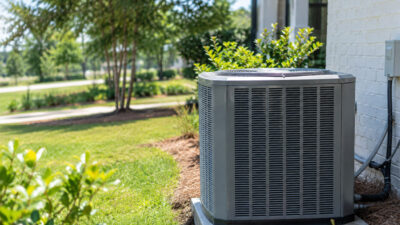
Next, check the outdoor condenser. Grass clippings, cottonwood fluff, and pet hair matted into the fins raise head pressure and cut capacity. With the power off at the disconnect, gently rinse from inside out if debris is visible. Then look at the condensate drain. A slow drip at the outside termination or gurgling near the air handler suggests buildup. Algae and dust often form a plug in warm months. If you see standing water in the secondary drain pan or signs of rust, have a technician clear the line to avoid damaging the trap or fittings.
Issues that point to a technician and why
Some humidity complaints trace to faults you cannot diagnose without instruments. Low refrigerant charge from a small leak reduces evaporator temperature and can frost the coil, starving airflow and worsening humidity. A sticking thermal expansion valve (TXV) or mismatched metering device also disturbs the balance between sensible and latent cooling. These problems require checking superheat and subcooling with gauges, not guesswork.
Electrical components matter too. A weak capacitor may let a compressor start but fail under load in the afternoon, causing intermittent short cycling that leaves the air sticky. A pitted contactor can chatter and stall the fan. Duct leakage in an attic or crawlspace pulls humid outdoor air into the return, which shows up as high indoor humidity even with long run times. Verifying total external static pressure in inches of water column, measuring blower speed taps, and smoke-testing ducts are normal parts of a pro evaluation.
Two real-world humidity scenarios and what they tell you
Scenario one: the house cools quickly after the system starts, the thermostat satisfies, and then everything feels clammy within 30 minutes. This often happens with an oversized single-stage unit that removes heat fast but does not run long enough to wring out moisture. Lowering the blower speed can increase latent removal, but it comes with a trade-off. Set it too low, and the evaporator may dip below freezing, leading to ice and worse humidity. A technician can adjust airflow in cubic feet per minute per ton and determine whether staging or a different sensible heat ratio fits your home’s envelope and duct system.
Scenario two: the temperature stalls a few degrees above setpoint all afternoon and the air feels damp. Outdoors, the condenser coil is warm to the touch, and the fan exhaust is barely hot. Indoors, vents feel cool but weak. That combination often points to a dirty outdoor coil paired with restricted airflow across the indoor coil. Replace the filter, power down to thaw a frosted evaporator if needed, and carefully rinse the condenser fins. If performance remains poor, a technician should check for low charge, a failing capacitor slowing the fan, or a return-side duct leak pulling humid attic air into the system.
Preventing moisture problems with simple maintenance and smart settings
Filters do more than capture dust; they set the stage for airflow. In high-pollen months, inspect monthly and replace as soon as the pleats darken deeply. Around the condenser, keep at least two feet of clearance on all sides, and trim shrubs so the fan can move air across the coil. Pour a small amount of diluted white vinegar into the condensate line’s accessible tee a few times each cooling season to discourage algae. In the thermostat menu, avoid running the indoor fan in the ON position during summer. That recirculates moist air and can re-evaporate water off the coil. If your thermostat supports dehumidify-on-demand or blower-off delay, enable those features to reduce re-evaporation without overcooling.
North Alabama humidity magnifies every weak point in an AC system, from a dusty filter to a leaky return. By distinguishing moisture problems from pure temperature problems and tackling safe checks first, you can often restore comfort quickly or at least describe the symptoms clearly to a technician. When issues involve refrigerant, electrical parts, or duct performance, let a pro handle the measurements and adjustments. That combination of homeowner maintenance and targeted expert service keeps both temperature and humidity in check through the muggiest part of summer.