Electrical issues rarely start with a dramatic failure. More often, a home gives subtle warnings: a breaker that trips after you run a space heater, a warm or discolored outlet, or LED bulbs that flicker when the refrigerator kicks on. Knowing what you can safely observe before calling an electrician helps you describe the problem accurately and avoid making it worse. The guidance below focuses on visible symptoms and non-invasive checks. It does not ask you to open your panel or remove devices from boxes. If you smell burning, see melted plastic, or notice smoke at any point, stop using the affected circuit and seek professional help immediately.
What a Repeated Breaker Trip Is Really Telling You
When a circuit breaker trips, it is reacting to heat caused by excessive current, a short circuit, or an arc fault. A typical bedroom or living room uses a 15-amp breaker; a portable space heater and a vacuum on the same circuit can quickly exceed that rating. Reset the breaker once, then try moving one appliance to a different circuit. If the breaker still trips with a single load, that suggests a wiring fault or a chronic overload that merits expert electrical repairs.
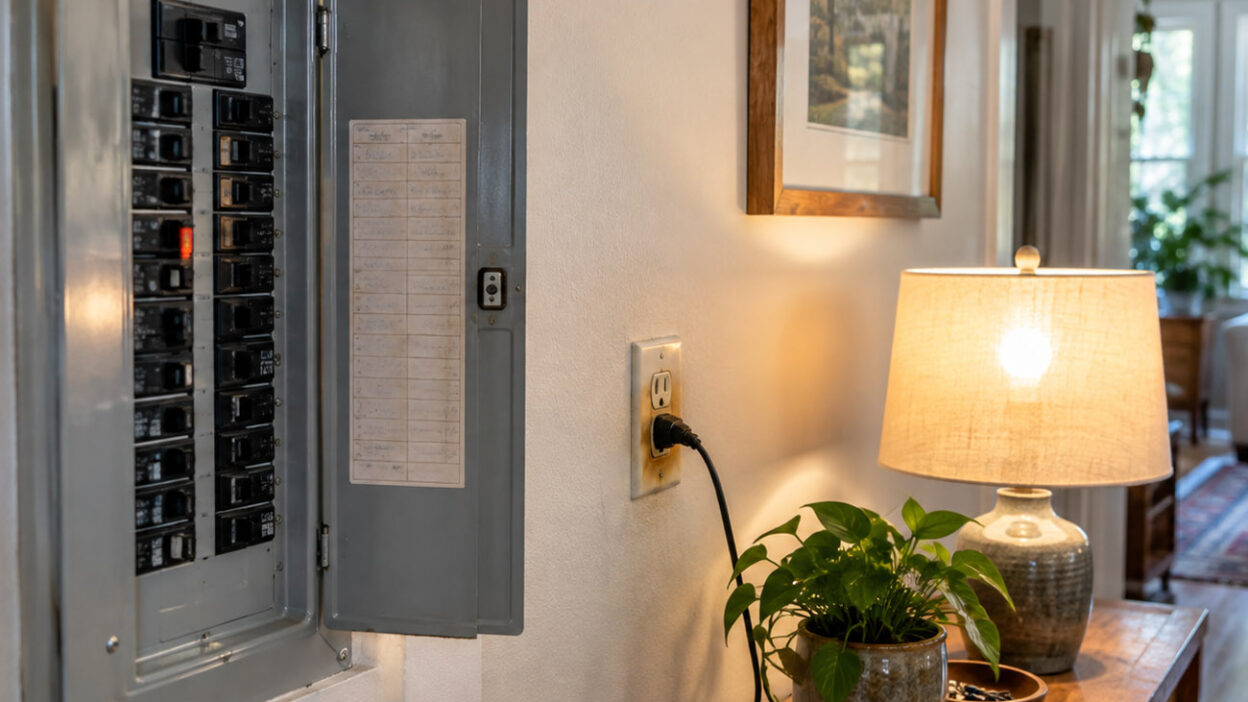
Do not tape a breaker in the on position, and do not keep resetting it while it trips immediately. That could indicate a shorted cord, a damaged receptacle, or a ground fault that a GFCI or AFCI should catch. Put your hand near the front of the panel to feel for warmth and listen for buzzing, but do not remove the cover. If a breaker handle feels loose or you see scorch marks around the panel, leave it off. An electrician can test for a shared neutral, a double-tapped breaker, or an undersized circuit feeding high-demand devices like window air conditioners.
Hot or Discolored Outlets: Overload vs. Loose Connection
A warm faceplate or a brown halo around a receptacle indicates resistance heating. Two common causes are overloading a daisy-chained run of outlets with multiple power strips or a loose connection at the receptacle itself. Backstabbed connections, where the wire is pushed into spring-loaded holes on the back of a device, are more prone to loosening over time than screw-terminal connections. In older homes with aluminum branch-circuit wiring, any looseness amplifies heat and arcing risk.
If an outlet feels hot or the plug blades come out visibly blackened, stop using it and anything downstream. Move the appliance to a different known circuit, not just a different outlet in the same room. A professional may replace the receptacle, move connections to properly torqued side screws, or pigtail aluminum to copper with approved connectors inside a junction box. Avoid stacking cube taps or using multiple power strips; they concentrate the load and can mask a circuit that needs a dedicated 20-amp line for items like microwaves or countertop appliances.
Flickering LEDs and Buzzing Dimmers: Compatibility You Can Solve
Not all dimmer switches work with LEDs. Older dimmers use triac technology designed for incandescent loads and can cause low-level flicker, ghosting, or audible buzzing with LED drivers. Another culprit is a voltage dip on a shared circuit when a large motor starts, like a refrigerator or furnace blower. Brief dimming throughout a room that coincides with a compressor start can be normal, but repeated or prolonged flicker across multiple rooms can indicate a loose neutral or service issue that requires professional testing.
First, confirm the bulbs are listed as dimmable LEDs. Then check the dimmer’s LED compatibility rating and total wattage; many require a minimum load and have a lower maximum than their incandescent rating. Replace a mismatched dimmer before assuming a wiring defect. If the lights flicker when a motor-driven appliance starts, reduce the shared load on that circuit or move the appliance. Widespread, random flickering, especially when accompanied by other symptoms like intermittent appliance resets, is not a bulb problem and should be evaluated at the panel and service connections.
GFCIs That Won’t Reset and Trips in Wet Areas
Ground-fault circuit interrupters compare current on the hot and neutral conductors and trip when leakage is detected, often as little as a few milliamps. Bathrooms, kitchens, garages, basements, and outdoor receptacles should have GFCI protection. A GFCI that will not reset with nothing plugged in may be detecting moisture in the box, a damaged device, or a wiring fault on a downstream outlet fed from its load terminals. One bathroom GFCI can protect several other receptacles on the same branch, so the trouble may be elsewhere.
Press the test button, then the reset. If it trips again immediately with all loads unplugged, do not force it. Check for cracked covers, missing in-use weather covers outside, or signs of water intrusion. In a garage, a freezer or fridge with a failing defrost heater can leak current through condensation and trip. Weather-resistant receptacles, properly rated in-use covers, and GFCI devices installed with correct line and load termination improve reliability. Avoid bootleg grounds, where a jumper ties neutral to ground on a receptacle; that defeats safety and can energize metal enclosures under fault conditions.
When Observation Ends, and a Pro Should Take Over
Some red flags call for immediate professional attention: a breaker that feels hot to the touch, a crackling sound at a switch, lights brightening in one room while dimming in another, a burning odor at a receptacle, frequent arc-fault trips without portable loads, or any sign of melted insulation. There is a real trade-off between short-term workarounds and long-term safety: moving a space heater to a different outlet may stop nuisance trips, but adding a dedicated circuit or upgrading old devices prevents overheated conductors and damage inside walls. Document what you notice, label which appliances were running, and photograph affected outlets or fixtures. An electrician can test with a multimeter, verify torque on terminations, inspect for overfused conductors, and recommend upgrades like whole-house surge protection or AFCI/GFCI combinations where required. Careful observation paired with timely service keeps small symptoms from becoming dangerous failures.