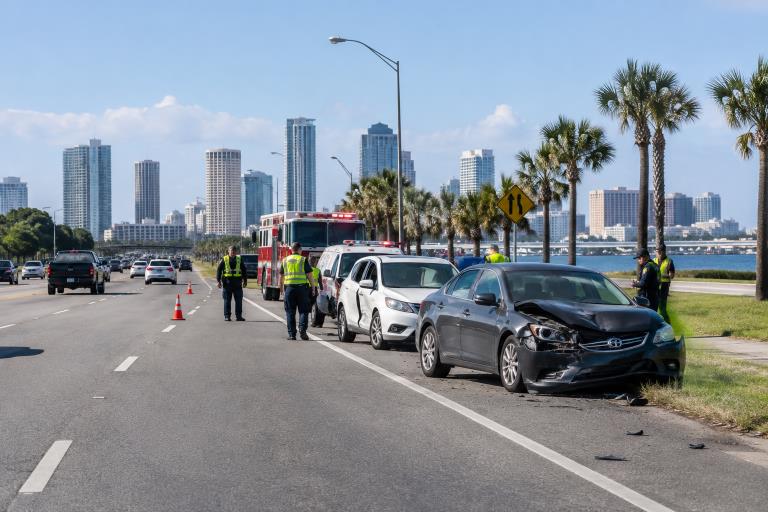
A collision on I-275, the Crosstown, Dale Mabry Highway, or a neighborhood street in Tampa can leave people shaken and unsure what to do next. The priority is always protecting people from further harm, followed by preserving accurate information about what happened.
For people facing serious injuries or difficult insurance questions, a personal injury law firm Hillsborough County is worth understanding in context. Hackworth Law, P.A. is a Tampa law firm that lists personal injury and wrongful death among its practice areas, alongside other legal services for the local community. A firm familiar with Hillsborough County can provide a useful perspective when a crash involves disputed liability, extensive treatment, or several insurance carriers.
Start With Safety At The Crash Scene
Take a breath, check yourself and your passengers, and look for anyone who may be hurt. Call 911 if there are injuries, a possible medical emergency, a fire risk, blocked traffic, or uncertainty about whether the vehicles can be moved safely. Tampa rainstorms, low evening visibility, and fast-moving traffic can turn an initial crash into a more dangerous situation within minutes.
Turn on hazard lights if possible. If the crash is minor and the vehicles pose a traffic hazard, move them to a safer nearby location when it is safe to do so. Do not leave the area. Florida law generally requires drivers involved in a crash to stop, provide identifying information, and give reasonable assistance when someone is injured. The current Florida traffic statutes also address crash reporting, driver duties, and the exchange of information.
Report The Collision And Exchange Basic Information
A police response or driver exchange form creates an early record of the date, time, location, people, and vehicles involved. Stay calm, speak respectfully, and avoid arguing about blame at the roadside. A crash scene is rarely the right place to conclude fault.
Exchange the practical details needed to identify the people, vehicles, and insurance coverage involved:
- Full names, phone numbers, and addresses.
- Driver’s license information.
- Vehicle registration and license plate numbers.
- Insurance company and policy information.
- Names and contact information for witnesses.
- The responding agency, officer name, and report or case number, if available.
Document The Scene Before Details Disappear
If it is safe, use your phone to document the scene before vehicles are towed, traffic resumes, or the weather changes. Take wide photos that show the roadway, lanes, traffic signals, signs, lighting, construction zones, and vehicle positions. Then take closer photos of impact damage, debris, broken parts, skid marks, and visible injuries.
Make a quick note about the weather, road surface, direction of travel, and what you remember seeing or hearing. Save dashcam footage, phone videos, texts, and location data. Witnesses often leave quickly, so ask whether they are willing to share a name and contact information. Documentation does not establish fault on its own, but it can preserve details that might otherwise be lost.
Seek Medical Care Even If Pain Seems Minor
Adrenaline and stress can make it difficult to recognize symptoms at the scene. Seek prompt medical attention when you experience a head impact, headache, dizziness, neck or back pain, numbness, shortness of breath, abdominal pain, or any symptom that concerns you. If symptoms appear later, explain when they started and that a crash occurred.
Follow the treatment plan provided by your medical professional, attend recommended follow-up appointments, and keep records of bills, prescriptions, mileage, work restrictions, and visit summaries. These records can help you track your recovery and provide a clearer timeline of care.
Notify Insurance Companies Carefully
Report the crash to the appropriate insurer promptly and provide accurate basic facts. It is reasonable to share the date, location, vehicles involved, report number, and known injuries. It is not necessary to speculate about fault, diagnose yourself, predict the length of recovery, or guess about future expenses before the facts are clear.
Keep a log of every claim number, call, email, document request, and deadline. Read forms carefully before signing them. A settlement or release can affect rights related to the crash, so it should not be treated as routine paperwork when injuries or losses remain uncertain.
Build A Simple Accident File
Create one digital folder, paper folder, or both. Keeping the materials together reduces stress and makes it easier to respond to legitimate requests later.
- Crash report, exchange form, and report number.
- Photos, videos, dashcam files, and witness details.
- Insurance letters, emails, estimates, and claim notes.
- Medical records, bills, prescriptions, and appointment notes.
- Towing invoices, repair estimates, rental records, and receipts.
- Pay stubs or employer records related to missed work.
- A dated journal describing pain, limitations, appointments, and recovery progress.
If you later need an official record, the state’s online crash-report portal is one place eligible users may obtain Florida traffic crash reports.
Avoid Mistakes That Can Complicate A Claim
- Do not leave the scene unless emergency personnel direct you to do so or an emergency makes it necessary.
- Do not apologize in a way that could be misunderstood as an admission of fault.
- Do not delete photos, messages, videos, or social media posts related to the crash.
- Do not assume that a minor-looking impact means there can be no injury.
- Do not post detailed crash updates, injury claims, or recovery photos on social media.
- Do not discontinue medical care solely because symptoms briefly improve.
- Do not sign a broad release without understanding what claims it may resolve.
When A Claim May Need Legal Review
Legal guidance may be useful when injuries are serious, responsibility is disputed, a commercial vehicle or rideshare driver is involved, the other driver is uninsured, or multiple insurers are involved. A review may also be appropriate after a hit-and-run crash or a fatal collision. These situations can involve evidence, coverage questions, medical records, and deadlines that deserve close attention.
Common Questions After A Florida Crash
Should You Call the Police For A Minor Accident?
Consider injuries, traffic danger, damage, and whether the other driver will exchange information. If the situation is unclear or anyone needs medical attention, call 911.
What If The Other Driver Admits Fault?
Document the statement if possible, but still exchange information, gather evidence, and let the investigation and insurance process continue.
What If Pain Appears Days Later?
Seek medical care, describe the symptoms accurately, and explain when they began. Delayed pain should not be ignored.
A Practical 24-Hour Action Plan
- Protect everyone’s safety and call for help when needed.
- Exchange information and obtain report details.
- Photograph the vehicles, roadway, signs, and injuries.
- Seek medical evaluation and follow medical instructions.
- Notify the appropriate insurer.
- Create an accident file and write down what happened while the details are fresh.
Closing Perspective
After a Tampa-area crash, the strongest first steps are straightforward: protect people, preserve facts, seek appropriate care, and avoid rushed decisions. Every crash is different, and this general information is not a substitute for advice about a particular accident, injury, insurance policy, or legal claim.