Key Takeaways
- Media companies are more stable when they avoid relying on a single revenue source.
- Direct relationships with readers, viewers, listeners, and members reduce dependence on outside platforms.
- Subscriptions, events, licensing, commerce, and premium services can complement advertising income.
- Finance, operations, editorial, product, sales, and technology teams need shared goals and clear measures.
- Artificial intelligence can improve workflows, but human accountability remains essential.
- A focused set of financial and audience metrics can support better investment decisions.
Media businesses are operating in an environment where audience habits, distribution channels, advertising demand, and technology can change quickly. Building resilience is not about predicting every shift. It is about creating a business that can maintain quality, serve its audience, and respond intelligently when a single source of traffic or revenue weakens.
That requires disciplined financial and operational leadership alongside editorial creativity. Executives with experience across finance, strategy, and media transformation, including David Geithner, illustrate why revenue planning and operating decisions must be closely connected to a company’s broader growth strategy.
Why Resilience Matters
Resilience means maintaining a clear mission while adapting to real business conditions. A publisher may face rising production costs, a broadcaster may face fragmented viewing habits, and a digital brand may see referral traffic change without warning. The goal is not growth at any cost. It is the ability to continue creating valuable work while making careful, sustainable choices.
Distribution remains especially important because audiences encounter journalism and entertainment through many channels. Understanding shifts in how people access news can help leaders avoid treating any one platform as a permanent foundation for their business. A company supported by advertising, memberships, events, and licensing has more options than one dependent on a single channel.
The Revenue Pressure Facing Media Companies
Traditional income streams are under pressure, while digital advertising is highly competitive and often influenced by market conditions beyond a publisher’s control. Search changes, social platform algorithms, and AI-generated answers can also affect visibility and referral traffic. These changes do not make platform distribution useless, but they do make platform dependence risky.
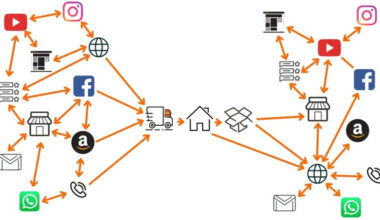
Leaders should therefore distinguish between the reach they borrow and the relationships they control. Social posts, search referrals, and partner distribution can introduce new people to a brand. Registration, email, subscriptions, event attendance, and repeat product use create a more direct connection. Both matter, but they should not receive the same strategic weight.
How To Build A Healthier Revenue Mix
A healthy revenue mix does not mean launching every possible product. It means selecting a limited number of offers that fit the brand, meet an audience’s needs, and can be operated profitably. The right mix will differ for a local newsroom, a trade publication, a consumer magazine, or a specialist video business.
Potential Revenue Channels
- Subscriptions and memberships that provide access, convenience, or a sense of community.
- Premium advertising, sponsorships, and branded programs with clear standards.
- Live events, conferences, workshops, and virtual briefings.
- Content licensing for archives, video, photography, data, or editorial expertise.
- Affiliate commerce and carefully selected online stores.
- Research products, professional data services, and business intelligence.
- Premium newsletters, podcasts, video series, and other focused formats.
Questions To Ask Before Adding A New Channel
- Does the offer solve a real problem or provide clear value for a defined audience?
- Can the company deliver it consistently without weakening its core work?
- What costs, skills, and systems are required before it can scale?
- Which measure will determine whether the project is succeeding?
- Would the offer still work if traffic from a major platform fell sharply?
Why Direct Audience Access Matters
Direct audience access gives a media company more context about what people value and more ways to communicate with them. Newsletters, user accounts, subscriptions, podcasts, mobile alerts, and member communities can each create a useful point of contact. The strongest approach usually combines several of these rather than treating one channel as the entire strategy.
First-party data should be collected with transparency and restraint. Teams can use it to improve recommendations, identify likely subscribers, and understand which topics build loyalty. They should also explain what information is collected, why it is used, and how users can manage their preferences. Trust is both an editorial obligation and a commercial asset.
The Role Of Finance And Operations
Finance and operations teams do more than report results after the fact. They help decide where resources should go, how much risk is sensible, and when an experiment deserves to expand. Their work is most effective when it is connected to editorial, product, sales, and technology planning.
Core responsibilities include tracking revenue and costs by product, setting project budgets, forecasting cash needs, and regularly reviewing performance. For example, a company can test a paid newsletter with a small, highly engaged audience before hiring a larger team or expanding into several markets. The test should have a clear owner, a budget limit, an audience promise, and a decision date.
Using Artificial Intelligence With Care
AI can support data analysis, transcription, tagging, translation assistance, customer service, workflow automation, and audience testing. IOutcomes, not novelty should judge its value A useful project may save staff time, reduce repetitive work, improve discovery, or make a product easier to use.
It should not replace fact-checking, editorial judgment, or accountability. Written policies should address privacy, copyright, disclosure, security, permitted uses, and human review. The AI risk management framework offers a practical way to evaluate and manage risks before a tool becomes part of a critical workflow.
Metrics That Support Better Decisions
A crowded dashboard can obscure the decisions that matter. Leadership teams should instead agree on a small set of measures that connect audience value with financial performance, including:
- Revenue per active user.
- Subscription conversion, renewal, and cancellation rates.
- Email open and click rates.
- Event attendance, sponsor revenue, and repeat participation.
- Customer acquisition cost and contribution margin by product.
- The share of revenue tied to the largest product, advertiser, or platform.
- The share of traffic and engagement coming from direct channels.
Revenue concentration deserves close attention. When a single customer, platform, or product accounts for an outsized share of revenue, the company should assess its exposure and develop realistic alternatives before a disruption occurs.
A Practical 90-Day Action Plan
Days 1 To 30: Review The Current Position
List every revenue source, compare margins across products, identify major traffic dependencies, and review customer feedback. Look closely at why subscribers cancel, why sponsors renew, and where operational work consumes disproportionate time.
Days 31 To 60: Select A Small Number Of Tests
Choose one direct-audience project, such as a targeted newsletter or membership benefit, and one additional revenue test, such as a premium report, event, or licensing package. Assign each initiative a budget, an owner, a timeline, and a success measure.
Days 61 To 90: Measure And Refine
Compare results with the original targets. Continue projects that demonstrate value to the audience and credible financial potential. Adjust or stop projects that consume resources without making meaningful progress, then share the findings across teams so that future decisions improve.
Conclusion
A resilient media business is built on several dependable paths to value, not on a single perfect product or platform. Strong audience relationships, careful financial planning, disciplined experimentation, high-quality content, and responsible use of technology can give media organizations room to adapt without losing the trust that enables growth.