Replacing most or all teeth in one jaw is a major health decision, not simply a cosmetic upgrade. Missing or failing teeth can affect eating, speech, comfort, confidence, and everyday routines, but full-arch implants are not automatically the best solution for every person. The right path begins with a careful diagnosis, realistic goals, and a treatment plan that accounts for long-term care.
Patients in New York City researching biologic approaches can review Tetrahealth’s information about full arch ceramic dental implants. The page describes Tetrahealth’s All-on-X approach, including ceramic prosthetics, digital planning, and coordinated periodontal and prosthodontic care from a specialty team. It can be a useful reference when comparing how material selection, surgical planning, and final tooth design may fit together.
What Full-Arch Dental Implants Are Designed to Do
A full-arch restoration replaces most or all teeth in the upper or lower jaw. Rather than placing an implant for every missing tooth, a dental team may use several implants to support a full set of replacement teeth. Depending on the design, the teeth may be fixed in place or made removable for cleaning and maintenance.
It is helpful to distinguish among common options:
- Fixed full-arch bridge: A prosthesis attached to implants and removed only by a dental professional.
- Implant-supported denture: A removable denture that gains stability from implants.
- Individual implants: Separate implant crowns are used to replace selected missing teeth.
The term “All-on-X” generally describes a full-arch approach supported by a variable number of implants. It does not mean every patient receives the same number, type, or placement pattern of implants.
Build a Candidacy Checklist Before Choosing Treatment
A complete evaluation should look beyond whether teeth are missing. The team should consider the health of remaining teeth, gum condition, active infection, jawbone volume, bite position, jaw movement, and signs of clenching or grinding. Medical history, medications, smoking or nicotine use, and the ability to follow recovery instructions also matter.
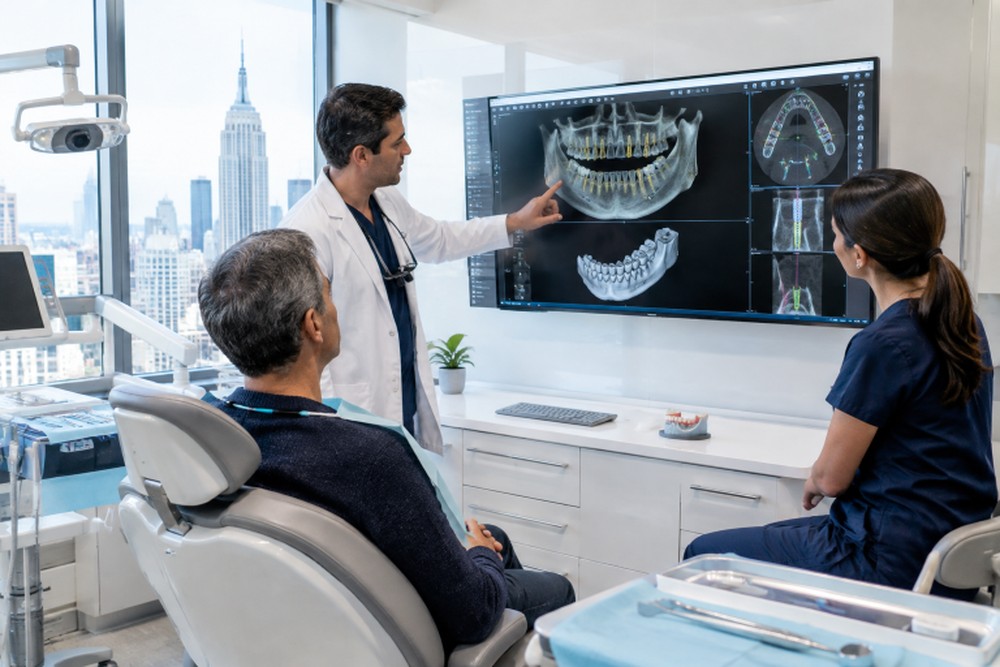
Good planning commonly includes photographs, digital scans, periodontal measurements, bite analysis, and three-dimensional imaging when appropriate. Recent clinical discussions of full-arch care have emphasized the role of CBCT-based planning in evaluating full-arch implant cases, especially when the team needs to assess available bone and anatomical structures.
Personal goals should be part of the conversation as well. Ask what matters most to you, whether that is improved chewing, a more secure appliance, easier speech, appearance, fewer removable components, or preserving natural teeth whenever possible.
Questions to Ask the Treatment Team
Bring a written list to the consultation. Clear answers can reveal whether the proposed plan is coordinated and whether you understand the responsibilities of each professional involved.
- Who will complete the examination, planning, surgery, and final restoration?
- What is the long-term outlook for any remaining natural teeth?
- How will gum disease, infection, or bone concerns be addressed before surgery?
- Will I receive temporary teeth, and what are their limitations during healing?
- What happens if an implant does not heal or integrate as expected?
- How will the team evaluate bite balance, speech, comfort, and access to hygiene?
- Which fees are included, and which future services could be separate?
Compare Materials for the Final Restoration
Final full-arch restorations may use acrylic, composite, titanium-supported designs, zirconia, or combinations of these materials. Each option involves trade-offs in appearance, weight, repairability, cleaning access, wear resistance, and cost. A material that suits one person’s bite and priorities may not suit another’s.
For example, zirconia is often considered when patients want a ceramic restoration, but it still requires careful design and maintenance planning. A small study, summarized by the American Dental Association, found encouraging short-term outcomes for full-arch implant-supported monolithic zirconia prostheses, while noting that longer follow-up is needed. Ask how the selected restoration could be adjusted, repaired, or replaced if circumstances change.
Why Planning Should Begin With the Final Bite
Implant placement affects the strength, appearance, comfort, and cleanability of the final teeth. For that reason, a thoughtful plan works backward from the intended result. The team should consider tooth position, smile appearance, speech, available restorative space, jaw relationships, and the patient’s ability to clean beneath or around the restoration.
A temporary restoration can provide useful information during healing. It may help the patient and dental team assess speech, bite, appearance, and comfort before the final teeth are completed. However, a temporary is not necessarily designed to function like the final restoration.
Review the Timeline and Recovery Plan
Timelines vary by health needs, surgical complexity, healing response, and the type of restoration planned. Same-day teeth, when appropriate, often refers to a temporary prosthesis placed near the time of surgery, not a final set of teeth completed in one day.
- Evaluation: Records, imaging, medical review, and discussion of alternatives.
- Preparation: Treatment for infection, gum disease, damaged teeth, or bone concerns when needed.
- Surgery and temporary phase: Implant placement and temporary teeth when clinically appropriate.
- Healing and testing: Follow-up visits to assess tissue healing, comfort, hygiene, and bite function.
- Final restoration and maintenance: Delivery of the planned teeth followed by ongoing professional care.
Prepare for Everyday Care and Long-Term Maintenance
Fixed implant teeth still need daily cleaning. Your team may recommend brushing, specialized floss or threaders, water flossing, and techniques for cleaning beneath the restoration. The appropriate routine depends on the design of the teeth, gum condition, and individual risk factors.
Professional maintenance visits are important because implants and restorations can develop problems that are difficult to identify at home. Report bleeding, swelling, persistent pain, looseness, a damaged tooth surface, or a change in your bite. Grinding, tobacco or nicotine use, missed visits, and inadequate cleaning can complicate long-term care.
Compare Alternatives Before Deciding
Full-arch implants are one option, not the default answer. Depending on clinical findings, alternatives may include preserving and restoring natural teeth, replacing selected teeth with individual implants, using an implant-supported removable denture, wearing a conventional complete denture, or completing care in stages. Some patients benefit from gum or bone treatment before deciding on a final restorative option.
Use a Written Consultation Checklist
Before committing to treatment, request a written diagnosis and plan that identifies the proposed implant locations, temporary and final materials, estimated stages, fees, maintenance needs, repair policies, and the qualifications of the professionals involved. A useful consultation should create clarity, not pressure. The best choice is one that fits your oral health, goals, budget, recovery support, and ability to maintain the result over time.