The First Five Minutes: Choreographing Arrival and Orientation
Long before the first question, the interview begins. It begins when a candidate enters your orbit. Heart rates drop with a clear reception sign, a host who knows the candidate, and a smooth handoff to the room. Put the role title and a modest welcome card on a tiny stand outside the door. Display a clock, tissues, and water within for convenient access. Small clues show skill and caring. Performance usually matches stage readiness.
Sensory Design: Light, Sound, Scent, and Texture
Interviews are brain-burners. Environment conserves or drains mental energy. Warm, uniform illumination is preferable to overhead glare. In hybrid sessions, use a lamp to soften faces for camera rendering and human perception. Keep the temperature in the comfortable band and cease altering it during the session. The oscillations divert the mind and body.
Like water, sound leaks. Reduce room reflections if it’s not sealed. A rug, cloth chairs, and a soft pinboard reduce echos and make voices easier to hear. Place a door sweep or temporary draft blocker at the threshold to prevent hallway spills. On interview days, avoid scented diffusers and harsh cleaners. Fragrance polarizes and causes headaches. Neutral air wins.
Layout That Encourages Dialogue, Not Combat
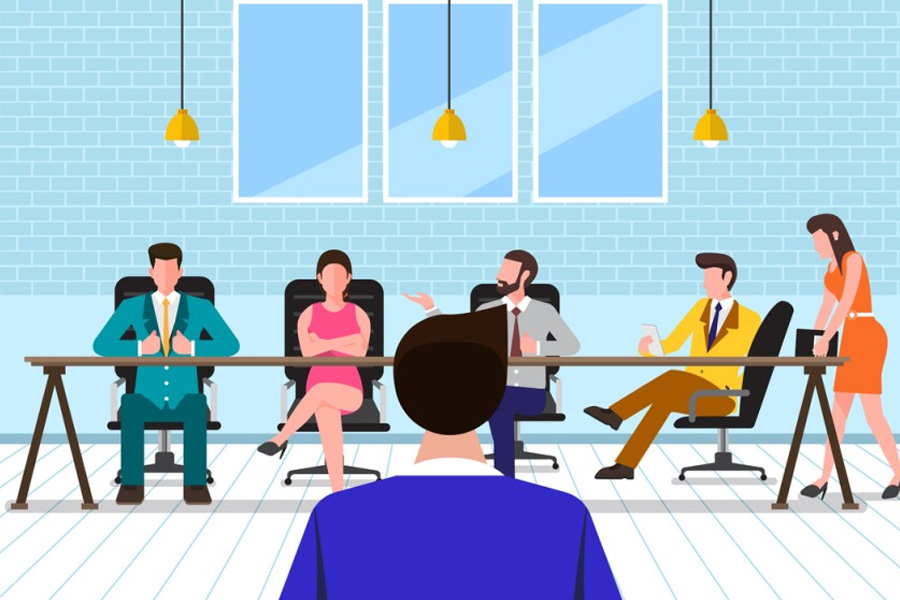
Geometry affects psychology. Place one-on-one seats in a gentle curve or 45 degrees apart. Panels should have three interviewers visible to candidates and rotate others. On a rectangle table, let the candidate sit on the short side with two interviewers next to them. This basic location promotes conversational turn-taking and lowers distance-judgment.
Be aware of height discrepancies. Before the first handshake, power dynamics shift if one chair towers while the other sags. Match and level chairs. Clear the table save for water, a notepad, and test equipment. Face-down phones, off notifications. People should be the room’s focus, not blinking technology.
Accessibility and Neurodiversity Considerations
Fairness starts with a passable space. Pre-check elevators, step-free paths, and door widths. Provide clear restroom directions and calm waiting rooms away from the sales floor. Give structure-seeking candidates the interview agenda at the start and explain what will happen. Allow earplugs or noise-reducing headphones for coding or case activities. Eliminating a loud light or vent is fair, not a favor.
Invite accommodations proactively in the scheduling email. Then ensure the room can deliver on what you offer. A printed copy of the job description and the exercise prompt helps candidates who process information better on paper.
Hybrid and Remote Realities: Your Digital Room Is a Room
Remote panel parts turn the screen into a wall. Put the display at eye level to avoid candidates staring up or down at faces. Avoid echoing voices by placing a boundary mic in the center of the table and a small speaker facing the candidate. One person should control mute and screen share. With a document camera or perspective, remote panelists can follow a whiteboard without guesswork.
Standardize digital environments for totally remote encounters. A plain background, mild front light, and headsets for each interviewer. Share the calendar invite, deck, case file, and backup dial-in. Join the call five minutes early. Like a well-prepared suite down the hall, the digital room should feel deliberate.
Branded but Neutral: Signaling Quality Without Bias
Walls talk. Subtly use brand colors, a mission poster, and a clean whiteboard for fresh ideas. Avoid political stickers, sports pennants, and insider jokes. Family photos on shared shelves, team happy hour beer bottles, and heroic overwork medals tell a story you may not want to tell. Signaling norms without excluding anyone is the purpose. Think gallery, not shrine.
Tools and Props: What Belongs in the Room and What Does Not
Label a drawer or caddy for a consistent kit. Most demands are met with fresh markers, pens, sticky notes, a timer, HDMI adapters, charging cords, and disinfection wipes. Bring a tiny box of breath mints and a lint roller. Replace depleted goods weekly to avoid showtime scavenger hunts.
Eliminate clutter magnets. No outdated papers, prototypes, proprietary roadmaps, or half-erased calculations on the whiteboard. Instead of leaving take-home materials on the table as visual cacophony, put them in a tidy folder and hand them over.
The 30 Minute Pre-Flight: A Run Sheet for Interviewers
Thirty minutes out, walk the route from reception to the room and clear obstacles. Check the room temperature, lighting, and chairs. Fifteen minutes out, power up the display, test the camera, and do a quick sound check with a colleague. Ten minutes out, place water, notepads, and the agenda on the table. Five minutes out, silence notifications, review the candidate’s profile, and align on who asks which questions. When the candidate arrives, start with names and roles, then outline the flow. Momentum feels effortless when preparation has done the heavy lifting.
No Room, No Problem: Pop-Up and Offsite Tactics
If your office lacks an appropriate room, create one. Portable acoustic screens, a collapsible backdrop, and a tiny lamp may turn a meeting room into an interview space. A comfortable rug under the table and retractable privacy screen prevent clatter and glass wall exposure.
Book a hotel, library, or coworking center small meeting room offsite. Choose venues with staffed reception, quiet corridors, and stable internet. Visit first to understand light switches, thermostat controls, and connectors. Arrive early with your room kit to get the configuration you want. Neutral ground can turn a logistical nightmare into a premium candidate experience and team calm.
Risk Management: Privacy, Compliance, and Safety
More than courtesy is needed for confidential interactions. Rooms where voices are not easily heard. Use a simple occupied sign to deter walk-ins and hide important documents. Be transparent, get consent, and store video interviews in restricted access. Shred printed resumes or lock them up until disposal. Maintain a medical or safety incident process with an on-site support number. Good governance preserves warmth. Trust is built.
FAQ
How big should the room be for different interview formats?
An intimate area for three keeps concentration tight for one-on-ones. A six-person space eliminates shoulder crowding and lets the camera frame faces clearly for a panel of three plus a candidate. Full-day loops benefit from a larger space with a side table for items to reside without touching the main surface.
What if the only available room has glass walls?
Removable privacy film or screens restrict direct sightlines. To prevent reflections, place seats away from high-traffic areas and add a rug or fabric panels. Schedule interviews at low-traffic periods and place a simple note requesting quiet along that stretch during the slot if onlookers still feel uncomfortable.
Is it appropriate to offer coffee or snacks?
Give water by default. Without spills or delays, coffee or tea is fine. Avoid crumbly snacks, strong smells, and something that requires juggling wrappers. If a marathon schedule includes lunch, provide a brief, obvious break and a neutral alternative like a boxed salad or sandwich. Confirm dietary preferences in advance.
How do we handle whiteboards when confidentiality is a concern?
Use a clean board. Only photograph and erase the candidate’s work before they depart if they consent. If not, erase before the candidate. Never display previous meeting notes. Store sensitive material for examination with the same care as resumes.
What is the fastest way to elevate a mediocre room?
Use a warm desk lamp, a modest rug, a door sweep, and matching chairs at comparable heights. Clean everything. Display water and a simple plan. Test the AV and turn off fluorescent banks if softer sources provide enough light. The feel goes from generic to deliberate quickly.
How should we prep for a fully remote interview to ensure parity with onsite?
Set up every interviewer similarly. Headset or lapel mic, front-facing soft light, neutral backdrop, consistent camera angle. Pre-share materials and utilize a shared document for exercises. Provide a backup dial-in link for one platform. Assign a host to handle waiting rooms and handoffs for a smooth candidate experience.
How much buffer time should we plan between interviews?
Minimum reset time is 10 minutes. Fifteen minutes allows for artifact cleanup, water refills, note alignment, and polite greeting. Mid-block breaks should be 20 minutes if the loop is task-based. Time cushions safeguard evaluation quality and civility.
What belongs in an interviewer’s go-bag for offsite sessions?
A tiny kit includes HDMI and USB-C adapters, a small extension cord, a travel router or hotspot, a boundary mic, gaffer tape, fresh markers, pencils, sticky notes, disinfection wipes, mints, tissues, and a foldable privacy backdrop. This backpack transforms a room into an interview-ready area in minutes.