
Hair thinning affects millions of adults worldwide, prompting a search for solutions beyond traditional transplants and topical minoxidil. Recent breakthroughs in biotechnology have introduced highly targeted options that work at the cellular level. Among these innovations, exosome hair treatment has emerged as a frontrunner for individuals seeking non-surgical hair restoration. This therapy uses extracellular vesicles to signal dormant follicles, encouraging them to enter the active growth phase. Alongside these cellular messengers, other advanced solutions like Growth Factor Therapy are changing how clinicians address pattern baldness and thinning. Understanding how these biological therapies function helps patients make informed decisions about managing their hair health with modern, scientifically backed procedures.
The Science Behind Exosomes in Hair Restoration
Exosomes are microscopic extracellular vesicles released by almost all cells in the body, particularly stem cells. They act as tiny biological envelopes, carrying vital signaling proteins, lipids, and nucleic acids directly to target cells. In the context of hair loss, an exosome hair treatment delivers these concentrated signaling molecules straight to the scalp. Once injected, the exosomes communicate with the dermal papilla cells, which control the hair growth cycle. This communication helps wake up dormant hair follicles, extends the anagen (growth) phase of the hair cycle, and increases the thickness of existing hair shafts.
How Vesicles Communicate with Hair Follicles
Unlike whole stem cell therapies, exosomes do not contain a nucleus or DNA. This key difference eliminates the risk of cellular rejection or unwanted cell differentiation, making the procedure highly stable and safe. Patients typically undergo a series of sessions, during which a clinician applies the purified exosome solution to the scalp using microneedling or shallow injections. Over the following months, the scalp experiences increased blood flow, reduced inflammation, and a significant boost in localized cellular repair. By targeting the root cause of follicle miniaturization, this cellular therapy offers a highly precise way to combat androgenetic alopecia without the downtime associated with surgical hair restoration.
What is Growth Factor Therapy?
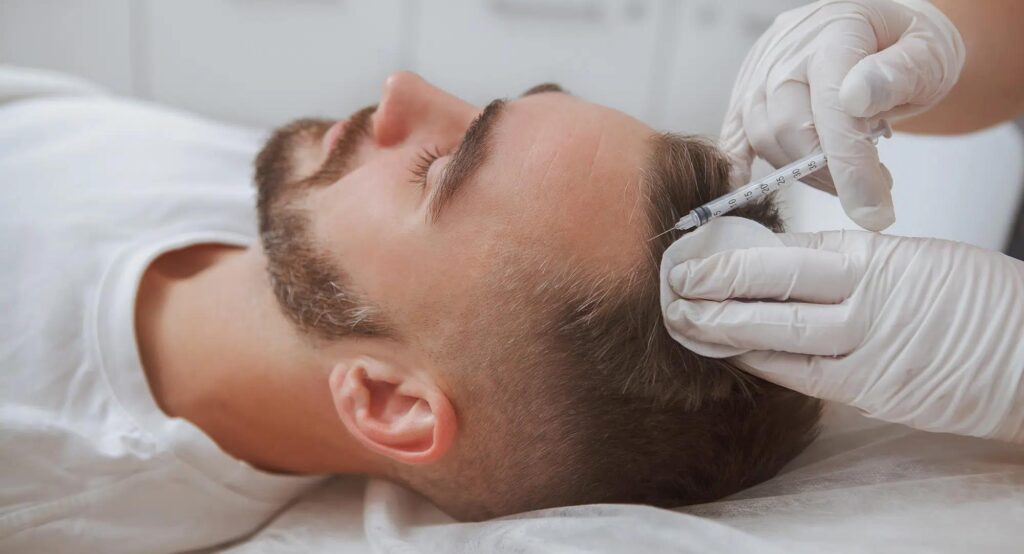
While exosomes coordinate complex intercellular communication, another closely related approach relies on direct protein application. Growth Factor Therapy utilizes a concentrated blend of specific proteins that naturally occur in the human body to stimulate tissue regeneration. These proteins, which include vascular endothelial growth factor (VEGF) and fibroblast growth factor (FGF), play a crucial role in wound healing and blood vessel formation. When applied to the scalp, these proteins bind to the receptors on follicle cells, sending direct instructions to accelerate division and growth.
The Role of Autologous and Synthetic Proteins
This treatment often utilizes autologous sources, such as platelet-rich plasma (PRP) derived from the patient’s own blood, or bio-engineered synthetic growth factors designed for maximum potency. The primary goal of Growth Factor Therapy is to reverse the miniaturization of hair follicles caused by genetic factors or aging. By nourishing the scalp environment and improving microcirculation, this treatment ensures that developing hair shafts receive adequate oxygen and nutrients. Clinicians often recommend this approach for patients experiencing early-stage hair thinning, as it strengthens existing hair and prevents further shedding. The procedure is quick, typically taking less than an hour, and allows patients to resume their daily activities immediately, making it a highly convenient option for busy individuals.
Comparing Exosomes and Growth Factors
Choosing between these two advanced therapies requires a clear understanding of their distinct mechanisms and concentrations. An exosome hair treatment represents a more advanced generation of cellular therapy compared to standard growth factors. While growth factors are individual proteins that deliver a single instruction to cells, exosomes contain thousands of active signaling proteins, microRNAs, and growth factors wrapped in a protective lipid membrane. This protective envelope allows exosomes to survive longer in the scalp tissue and deliver a more complex, multi-layered instruction set to the hair follicles.
Biological Complexity and Longevity
On the other hand, traditional growth factor treatments are highly established, with years of clinical data supporting their efficacy, particularly when administered through platelet-rich plasma. They remain a highly accessible and cost-effective entry point for many patients. Some cutting-edge clinics now combine both modalities to achieve synergistic results. By using growth factors to provide an immediate metabolic boost to the scalp and exosomes to orchestrate long-term cellular repair, practitioners can customize treatments to match the severity of a patient’s hair loss. Ultimately, a thorough consultation with a hair restoration specialist, including a scalp analysis, will determine which biological agent best suits an individual’s specific hair loss pattern.
What to Expect During and After Treatment
Preparing for a regenerative hair procedure involves understanding the clinical timeline and expected outcomes. For both treatments, the process begins with a thorough cleaning of the scalp, followed by the application of a topical numbing cream to ensure patient comfort. During a cellular exosome session, the practitioner precisely administers the solution across the thinning areas using tiny, superficial injections. The recovery period is remarkably brief, with most patients experiencing only mild redness or slight swelling at the injection sites for twenty-four to forty-eight hours.
Post-Treatment Care and Results Timeline
It is advisable to avoid washing the hair or engaging in strenuous exercise for at least one day following the session to allow the scalp to absorb the active ingredients fully. Results do not appear overnight, as cellular regeneration is a gradual process. Patients generally begin to notice a reduction in daily hair shedding within four to eight weeks, followed by visible improvements in hair density and texture around the three-to-six-month mark. To maintain these regenerative benefits, clinics often suggest follow-up maintenance sessions once or twice a year. This ongoing support helps sustain follicle activity and counters the progressive nature of genetic hair thinning over time.
Conclusion

Modern hair restoration has evolved far beyond temporary cover-ups and invasive surgeries. Advanced biological options like exosome-based treatments and growth factor solutions offer promising, scientifically proven pathways to combat hair thinning. By working at the cellular level, these treatments revive dormant follicles, improve scalp health, and stimulate natural hair growth with minimal downtime. While each method possesses unique biological advantages, both represent a significant leap forward in regenerative medicine. Consulting with a qualified specialist allows individuals to design a personalized treatment plan tailored to their specific hair loss stage. Investing in these innovative therapies can restore not only a fuller head of hair but also the confidence that comes with it.