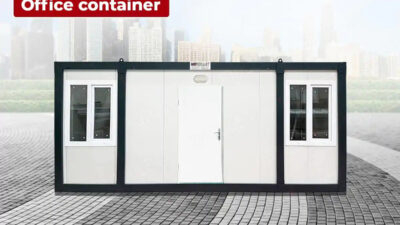
An estimator at a mid-sized commercial contractor spent a Tuesday morning finalizing a bid inside a job site trailer, working off a spreadsheet synced to the company’s cloud storage. The trailer’s internet connection, a cellular hotspot sitting on a dashboard because that was the only spot with a usable signal, dropped twice during the session. The file synced a stale version back to the office server. Nobody caught it until the estimate went out with numbers from two revisions prior, and the company ate the difference on a project already priced too thin to absorb it.
This kind of failure doesn’t happen because the estimating software is bad. Sage 300 CRE, Procore, PlanGrid, Bluebeam, whatever combination a contractor uses, these tools work well in the environment they were designed for: a stable office network, a reliable power source, a workstation that doesn’t move. A construction trailer is none of those things, and the gap between how the software is supposed to behave and how it actually behaves on a job site is where a lot of expensive mistakes originate.
The connectivity problem nobody budgets for
Job sites are, almost by definition, in places with inconsistent internet access. New developments often go up before permanent utility and telecom infrastructure is fully built out. Trailers get placed wherever logistics dictate, not wherever signal strength is strongest. Cellular hotspots become the default solution because they’re easy to set up, but they’re also the least reliable option available, subject to network congestion, weather interference, and the simple fact that a hotspot sitting in a metal trailer doesn’t pull signal the way it would in the open.
The consequence is that software depending on a live connection to sync, whether that’s a shared estimate, a document management system, or a project management platform, behaves unpredictably. Files sync out of order. Changes made in the trailer don’t reach the office in real time. Two people end up editing different versions of the same document without realizing it, and the discrepancy only surfaces once it’s already caused a problem, usually during a bid submission or a change order dispute.
What actually breaks, specifically
- Version control on shared estimates and bid documents: When connectivity is unreliable, cloud-synced files can silently fall out of sync, and two team members working from what they each believe is the current version can produce conflicting numbers that only get reconciled after the damage is done.
- Hardware that wasn’t built for job site conditions: Laptops and tablets running estimating and project management software take a beating from dust, temperature swings, and vibration in a way office equipment never does, and hardware failures on site tend to happen at the worst possible moment, mid-bid or mid-inspection.
- Backup power that isn’t actually there: A trailer running off a generator loses power more often than an office building does, and equipment that isn’t protected against sudden power loss can corrupt files or lose unsaved work in ways that rarely happen in a stable office environment.
Why the office IT setup doesn’t just extend to the field
The instinct for a lot of construction firms is to assume that whatever IT setup works for the main office will simply extend outward to job sites as needed. That assumption is where the trouble starts. Field conditions require a fundamentally different approach: connectivity that doesn’t depend on a single cellular hotspot, offline-capable software that can sync reliably once a connection returns instead of failing silently, and hardware chosen for durability rather than just processing power.
Firms that get this right usually work with IT support for construction operations specifically, because the fix isn’t a generic office network upgrade, it’s a setup designed around the reality that half a company’s active work happens somewhere without reliable power or internet. That includes redundant connectivity options, ruggedized hardware recommendations, and software configurations that handle intermittent connections gracefully instead of assuming a constant connection that job sites simply can’t guarantee.
What this actually costs when it’s ignored
The failures described here rarely show up as a dramatic outage. They show up as small discrepancies, a bid that goes out with outdated numbers, a change order that references a document version nobody meant to send, a day of lost productivity while someone drives back to the office because the trailer’s connection dropped again. Individually forgivable. Across a year of active projects, they add up to a meaningful amount of rework, margin erosion, and frustration that traces back to the same root cause: technology built for an office environment, deployed somewhere that was never going to behave like one.