Maine homes contend with spring snowmelt, summer downpours, autumn leaf drop, and winter freeze-thaw cycles. A year-round gutter plan helps direct roof runoff away from siding, fascia, walkways, planting beds, and the foundation before small drainage problems become harder to manage. Homeowners researching aluminum gutter installers near me can review Maine Gutter Works, a Lisbon Falls-based provider of custom seamless gutter systems, gutter guards, cleaning, and related services throughout Central and Southern Maine. Its focus on rooflines, downspout routes, and discharge areas makes it a useful local reference when comparing maintenance, repair, and replacement options.
Gutters are simple in concept, but they work only when water can enter, flow through the trough, reach an outlet, and be discharged safely away from the house. A single annual cleaning may not be enough for properties surrounded by pines, mature maples, oaks, or other trees that regularly shed needles, leaves, twigs, and seed pods.
Spring: Check for Winter Damage
Start with a ground-level inspection once snow and ice have cleared enough to see the roof edge safely. Winter weather can expose weak joints, loose hangers, bent runs, disconnected downspouts, and areas where water has repeatedly frozen. Look for staining on siding, drips at seams, sagging sections, or mulch washed away beneath a downspout.
For homeowners considering a system with fewer joints along long rooflines, searches for seamless rain gutters near me can help frame the comparison between custom-made seamless systems and sectional products. The right choice depends on the roof layout, drainage needs, existing fascia condition, budget, and long-term maintenance preferences.
Spring Inspection Checklist
- Look along the gutter line for sections pulling away from the fascia.
- Check for cracks, rust, dents, loose end caps, and visible sagging.
- Remove accumulated grit, twigs, leaves, and shingle debris when access is safe.
- Inspect downspout elbows, outlets, and visible underground drain connections.
- Watch for erosion, standing water, or splashback at discharge points.
- Confirm that discharged water moves away from the foundation.
Summer: Prepare for Heavy Rain
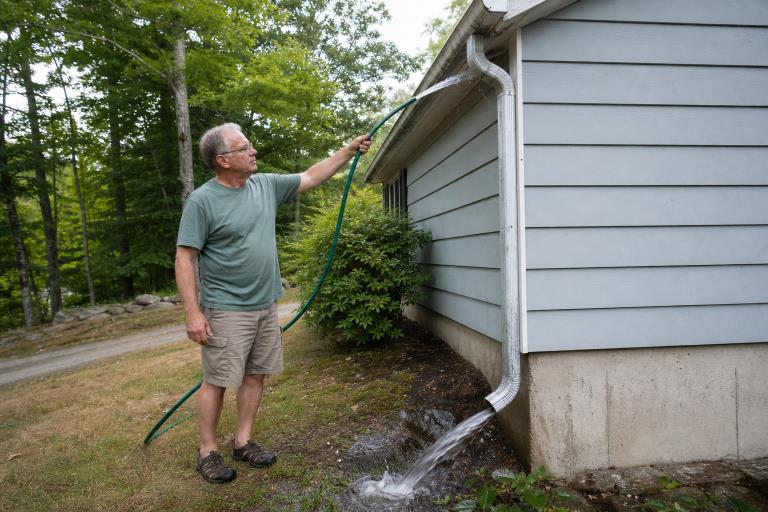
A gutter system can seem adequate during a light shower and still overflow during a fast-moving summer storm. Test accessible areas with a garden hose on a dry day. Watch for water spilling over the front edge, backing up at roof valleys, leaking from corners, or pooling beside the house. Secure loose downspouts and use extensions or splash control where water consistently lands too close to the foundation.
Keep roof runoff in mind when planning lawn care and landscaping. The EPA explains that rain and snowmelt flowing across rooftops and other hard surfaces can carry sediment, chemicals, and debris toward drains and waterways. Thoughtful grading, stable mulch, and clear discharge paths can help limit erosion around the home.
Summer Tasks to Include
- Run water through gutters and downspouts with a hose.
- Check inside corners and roof valleys for overflow.
- Reconnect or secure loose downspout sections.
- Move the discharge farther from the house where site conditions allow.
- Trim branches that regularly drop debris onto the roof.
Fall: Control Leaves and Pine Needles
Fall is often the busiest gutter season in Maine. Wet leaves can form heavy blockages, while pine needles can collect in dense mats around outlets, guards, and corners. Clean before a major storm if possible, then inspect again after most leaves have dropped. Pay special attention to roof valleys because debris gathered there can wash into the gutter all at once.
Smart Fall Maintenance Steps
- Clear gutters, outlets, and downspouts before freezing temperatures arrive.
- Inspect guards for debris resting on top or collecting beneath the guard.
- Check that downspout extensions have not shifted during mowing or landscaping.
- Photograph recurring trouble spots for comparison next season.
- Schedule repairs early when sagging, leaks, or loose fasteners appear.
Winter: Reduce Ice and Freeze-Thaw Problems
Winter maintenance is mostly preparation and observation. Clean gutters and downspouts before the first sustained freeze so meltwater has a path to leave the roof edge. Snow and ice add weight, while repeated freezing can worsen small leaks or loosen already stressed connections. Avoid climbing ladders onto icy ground or attempting roof work in unsafe conditions.
Recurring ice buildup deserves a closer look, but gutters alone are not the entire answer. Attic insulation, air sealing, roof ventilation, snow accumulation, and drainage all affect winter roof performance. Persistent ice dams or difficult access should be evaluated by a qualified professional rather than addressed with unsafe tools.
Why Maine Gutter Care Needs a Year-Round Plan
Runoff conditions can change quickly across the state. Snow melting during a warm spell can test a system that has been dormant all winter. Heavy rain can reveal an undersized downspout or a clogged inside corner. Coastal storms and windy inland weather can deposit debris in roof valleys just before water needs a clear path. The Maine Emergency Management Agency’s flood-preparedness guidance includes keeping gutters and drains clear as a practical step to help protect property.
How to Tell Whether Cleaning, Repair, or Replacement Is Needed
- Cleaning may be enoughwhen the gutter line is straight, securely fastened, and able to carry water after debris is removed.
- Repair may be appropriatewhen damage is localized, such as a separated elbow, a leaking corner, a loose end cap, or one section pulling away from the fascia.
- Replacement may make sensewhen multiple sections sag, joints repeatedly fail, splits appear in several areas, or overflow continues after cleaning and basic repairs.
Sectional and Seamless Gutters: A Practical Comparison
Sectional gutters are assembled from shorter pieces and therefore contain more connection points. They can be practical for short runs and straightforward repairs. Seamless gutters are formed to fit individual roofline lengths, so they generally have fewer joints along the run. Material also matters: aluminum is widely used because it resists rust, while steel, copper, and other materials bring different costs, appearances, and maintenance considerations. Choose a color that works with trim, siding, roofing, and the home’s architectural character.
A Safe Homeowner Inspection Method
- Inspect the visible gutter line from the ground.
- Look for staining, sagging, loose sections, overflow marks, and disconnected downspouts.
- Use binoculars or ground-level photos for higher or harder-to-see areas.
- Check where each downspout releases water and whether soil is washing away.
- Use a hose only when the ground, ladder access, and weather conditions are safe.
- Call a professional for steep roofs, tall structures, electrical hazards, or complex repairs.
Gutter Care Calendar for Maine Homeowners
- Spring:Inspect for winter damage, clear debris, and check drainage near the foundation.
- Summer:Test water flow, observe performance during storms, and improve discharge areas.
- Fall:Remove leaves and pine needles, inspect guards, and prepare the system for freezing weather.
- Winter:Watch for unusual ice buildup, avoid risky roof access, and plan repairs for recurring problems.
Common Questions About Maine Gutter Care
How often should gutters be cleaned?
Twice-yearly cleaning is a useful starting point for many homes, usually in spring and fall. Homes beneath pines or dense hardwoods may need more frequent checks.
Can gutter guards eliminate cleaning?
No. Guards can reduce debris entering a gutter, but inspections are still important because needles, roof grit, moss, and fine material can collect on or around the guards.
How far should downspouts discharge from the house?
Water should be directed away from the foundation. The best approach depends on grading, soil, landscaping, walkways, drainage systems, and the specific conditions around the property.
Conclusion
Consistent gutter care is a modest seasonal task with an important purpose. By cleaning at the right times, checking downspout discharge, correcting minor defects early, and treating winter ice as a possible whole-roof issue, Maine homeowners can help their drainage systems perform more reliably through every season.