Key Takeaways
- AI avatars can make exhibits and lessons more interactive when they serve a clear learning goal.
- Strong human oversight, approved source materials, and simple interfaces matter more than realistic animation.
- Students and visitors should always know when they are interacting with an AI system.
- Accuracy, accessibility, privacy, and bias need to be designed into the experience from the start.
- Small pilots with measurable outcomes are safer and more useful than an untested large-scale launch.
Why AI Avatars Are Drawing Attention In 2026
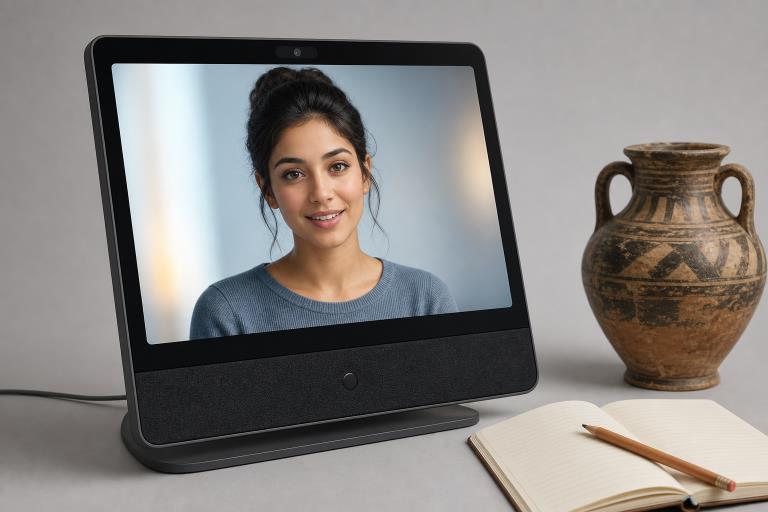
An AI avatar is a digital character that communicates through text, speech, animation, or video. Unlike a prerecorded museum film or a standard website chatbot, an AI interactive avatar can respond to a visitor’s question in the moment, offer a follow-up prompt, and adjust its language for the audience. That conversation can make a lesson or exhibition feel more active, particularly for people who are unsure what to ask or where to begin.
For schools and cultural institutions, the appeal is practical. An avatar can repeat an explanation without tiring, support multiple languages, and provide an extra layer of guidance during busy periods. It should not be treated as a substitute for teachers, docents, curators, or staff. Its strongest role is to help people explore trusted information and prepare them for deeper discussion with a human expert.
Museums are already examining how artificial intelligence may affect exhibitions, collection research, visitor services, and public access. In 2026, UNESCO and ICOM’s global survey on AI in museums reflects the sector-wide effort to understand both the opportunities and the ethical questions involved.
How Museums Can Use AI Avatars
In a museum, an avatar can serve as a conversation guide rather than a replacement for exhibit labels. It may introduce an object, explain unfamiliar vocabulary, offer routes through a gallery, or help a family find age-appropriate activities. A well-designed system can also support pre-visit planning, remote exploration, and post-visit review for people who want to revisit what they learned.
- Present historical figures, artists, or fictional guides as exhibit companions.
- Answer approved questions about objects, places, materials, and time periods.
- Provide translated text and spoken guidance for international visitors.
- Give children prompts that encourage observation instead of passive viewing.
- Extend access to people who cannot travel to the museum in person.
For example, a visitor might ask, “Why is this vase cracked?” The avatar could answer, “This vessel was repaired in antiquity, which suggests it remained valuable after it broke. Look for the small metal staples near the rim.” That response is useful only if it comes from approved curatorial notes, collection records, or research. The avatar should not invent a dramatic story simply because it sounds engaging.
How Classrooms Can Use AI Avatars
Classrooms can use avatars as structured practice partners. A language learner might hold a low-pressure conversation in Spanish. A science student could ask an animated guide to explain photosynthesis at two different reading levels. A history class might interview a carefully scripted representation of a historical figure, then identify where the simulation reflects evidence and where uncertainty remains.
- Provide language conversation practice and pronunciation support.
- Run guided question-and-answer sessions about literature, science, and history.
- Support role-play activities involving historical or fictional characters.
- Offer hints, examples, and questions instead of completing work for students.
- Help remote learners through spoken explanations, captions, and visual cues.
The avatar should assist the teacher, not replace classroom relationships, professional judgment, or discussion among students. Teachers remain responsible for choosing the learning objective, checking understanding, and deciding when a tool is appropriate. An avatar is most helpful when it creates another path into a topic, not when it becomes the entire lesson.
What Interactive Learning Research Suggests
Interactive experiences can increase attention and participation, but attention is not the same as learning. Visitors may remember a memorable character while missing the main historical idea. Schools and museums should therefore pair avatar interactions with a brief knowledge check, reflection prompt, sketching activity, or group conversation.
Recent research on an AI- and augmented-reality-supported serious game at the Blue Calico Museum found stronger cultural knowledge outcomes and engagement for the experimental group than for the comparison group. The museum learning study is a useful example of testing interactive technology with pre- and post-learning measures instead of relying only on positive reactions.
Trust, Bias, And The Problem With A Convincing Face
A human-looking face and natural voice can make information feel more trustworthy than it deserves to be. Users may judge an avatar’s authority based on its apparent age, gender, race, clothing, accent, or formal manner. A polished digital guide can therefore make a weak or incorrect answer sound convincing.
Clear labeling helps set appropriate expectations. Use language such as “AI guide” or “digital learning assistant,” explain what sources the system uses, and provide a simple way to verify important claims. The most realistic character is not always the best choice. A friendly, stylized avatar may reduce confusion while still creating a welcoming experience.
Accuracy And Content Controls
- Start narrow:Build the first version around one exhibit, unit, or topic.
- Use approved sources:Ground answers in exhibit notes, archival records, lesson plans, and reviewed references.
- Show uncertainty:Require the system to say when evidence is incomplete or a question falls outside its scope.
- Review regularly:Have teachers, historians, curators, or subject experts test answers.
- Maintain the content:Update the knowledge base when exhibits, research, or school materials change.
Open-ended systems are especially risky around disputed history, sensitive cultural subjects, and questions outside the approved collection of materials. A good avatar should redirect, offer a source, or invite the user to ask a staff member when it cannot answer reliably.
Privacy, Safety, And Accessibility
Before launch, institutions should decide what information is collected, whether voice recordings or chat logs are stored, who can review them, and how long they are kept. Collect as little personal data as possible. Plain-language privacy notices should be understandable to visitors, students, and parents, especially when children can use the system.
Accessibility belongs in the first design review. Provide captions, keyboard navigation, screen-reader support, replay controls, adjustable speech speed, and a non-avatar option for users who find a visual character distracting. Avoid flashing effects, fast motion, and interfaces that require precise gestures. A simpler experience often reaches more people.
A Simple Pilot Plan For Schools And Museums
- Choose one measurable goal, such as improving vocabulary practice or answering common visitor questions.
- Select one audience, such as middle school students or first-time visitors.
- Prepare a small set of reviewed materials and expected questions.
- Test common, unclear, difficult, and inappropriate prompts before public use.
- Measure answer accuracy, completion rates, user feedback, and learning outcomes.
- Fix privacy, accessibility, and content problems before expanding the program.
Questions To Ask Before Launch
- What problem does this avatar solve better than a webpage, video, label, or printed guide?
- How will users know they are speaking with AI?
- Who is responsible for reviewing answers and handling complaints?
- What happens if the system fails or gives an uncertain response?
- Can people with different languages, abilities, and levels of digital comfort use it successfully?
Conclusion
AI avatars can bring energy and flexibility to museums and classrooms, but realistic speech and movement are not the real measure of success. Useful projects begin with trusted content, honest labeling, inclusive design, and active human guidance. In 2026, the strongest implementations will use avatars as conversation aids and learning tools, while keeping teachers, curators, and real human relationships at the center.