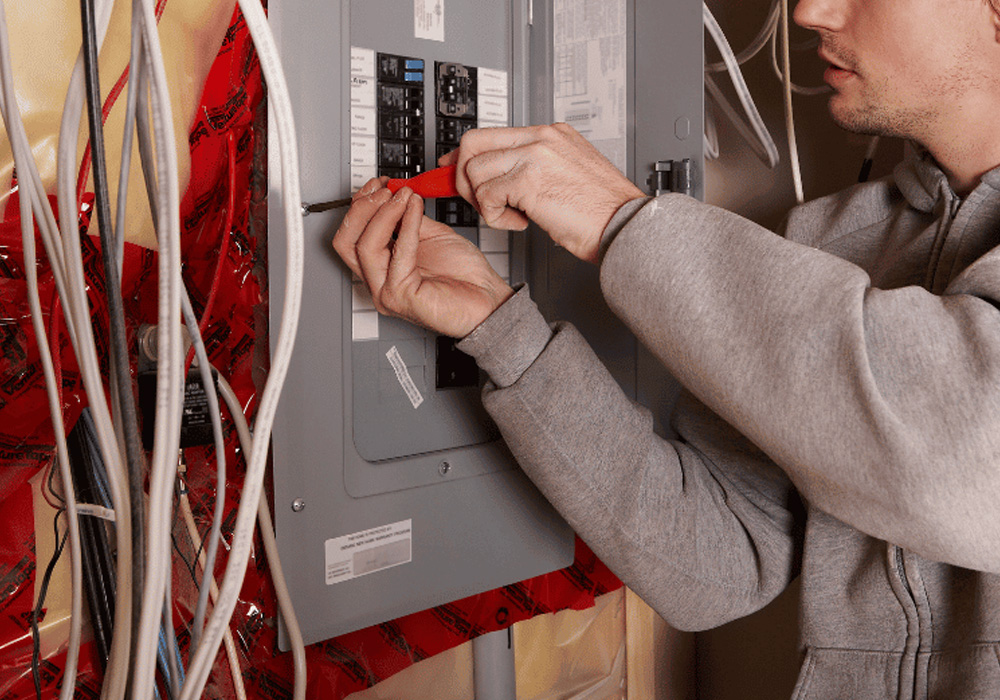
Most confusion about electrical panels comes from mixing up age and use. A panel can be old and fine, or fairly new and undersized for the way a home is used now.
An old panel always needs replacement
Age gets attention because it’s easy to read on a label. That date alone says little about condition or past work.
An older panel isn’t automatically due for replacement, but age alone can’t establish that it’s safe to keep. Equipment type, condition, installation history, and load all matter. Rust or scorch marks warrant professional attention regardless of the installation date.
An electrical contractor can assess the equipment and perform a load calculation when evaluating capacity. That calculation accounts for existing and proposed electrical loads under applicable sizing rules. It’s more useful than choosing a panel based on age alone.
Quiet operation isn’t proof of spare capacity. Breakers are designed to sit quietly for long stretches.
Sorting through household items during a cleanout often brings attention to home infrastructure updates that have been delayed. Evaluating electrical capacity becomes essential when reorganizing utility spaces or setting up heavy modern appliances in cleared areas. Consulting a licensed electrician for circuit breaker panel upgrades ensures that the system safely supports modern power demands without creating hazards or tripping risks during routine home operations.
A new panel means rewiring the whole house
This myth stops a lot of projects before they start. People picture drywall torn out in every room.
A panel swap is usually focused work at one spot. The crew replaces the box and breakers, updates grounding, and fits a new meter enclosure or service cable when the job calls for it. Existing branch circuits often reconnect to the new panel without opening walls throughout the house.
Full rewiring is a separate job. It may fit a home with damaged cable or very old wiring methods, but it isn’t part of every upgrade.
It helps to separate panel hardware from service size. Replacing a panel doesn’t necessarily increase the home’s electrical service capacity. Increasing service from 100 amps to 200 amps can involve changes beyond the panel. Either project may require utility coordination to disconnect and reconnect power. An electrical contractor can explain the scope and approvals needed for the home.
Panel work is a safe weekend DIY shortcut
A panel’s neat rows of breakers can make replacement seem like a straightforward equipment swap. That appearance hides serious hazards.
Even with the main breaker off, incoming service conductors may remain energized. Contact with live components can cause severe shock or burns. Homeowners should leave panel covers in place and panel work to qualified professionals.
Permits and utility coordination add another layer. Panel replacement generally requires a permit and inspection, with local requirements depending on the work. The contractor should explain how power will be safely disconnected and restored, and who will arrange any necessary utility work.
A Sacramento-area homeowner might ask an electrical contractor such as Under the Sun Solar and Electric to review the current load and permit needs before work begins. A written scope can distinguish the panel work from any additional wiring or service changes.
Trips and flickers don’t prove a panel needs replacement. Breakers that trip often or lights that dim and flicker call for an assessment of the problem.
A bigger panel raises the bill by itself
A panel distributes electricity to circuits rather than consuming it like an appliance. Breakers help protect circuit wiring against excessive current.
Moving from 100 amps to 200 amps doesn’t make lights burn brighter or force appliances to draw more. Electricity use depends on the equipment operating and how long it runs. Utility rates also affect the bill, but a larger service rating doesn’t itself increase household energy consumption.
Think of it like a wider driveway. It doesn’t create more trips. It just gives more room when extra cars show up.
Empty slots mean plenty of capacity is left
Two free slots look like headroom. Those openings show physical space for breakers, not how much additional electrical demand the system can support.
A load calculation may show that a service lacks capacity for a proposed appliance even with slots open. Conversely, a crowded panel doesn’t automatically mean the service capacity is insufficient. Physical space, equipment ratings, and calculated load are separate considerations that an electrician evaluates together.
Installing a larger breaker to stop trips isn’t a capacity upgrade. An incorrectly sized breaker can leave wiring inadequately protected against overheating. Repeated trips call for a professional assessment of the cause, not a bigger breaker.
Every EV charger needs a bigger panel
Level 2 charging draws a steady load for hours, so the worry makes sense. An upgrade isn’t automatic, though.
Some homes can support a charger on the present panel with careful planning, while others can’t without changes. SMUD notes that an EV charger does not necessarily need a panel upgrade, since circuit-sharing or energy-management equipment may be an alternative in some cases. A qualified electrician can evaluate whether those options suit the home and planned driving needs.
The useful question is how the charger fits with heating and cooking at peak times. A load check plus a look at daily patterns gives a better answer than rules of thumb.
If the planned charging load exceeds what the existing system can support, an upgrade may be part of the plan. In other cases, a professionally designed lower-power charging setup or suitable load-management equipment may avoid a service upgrade. A new circuit can still require work at the existing panel.
Panels seem less mysterious once age and load are considered separately. Most myths fade with that distinction in mind. A clear assessment beats guesswork, and it keeps small panel questions from turning into larger remodel headaches.