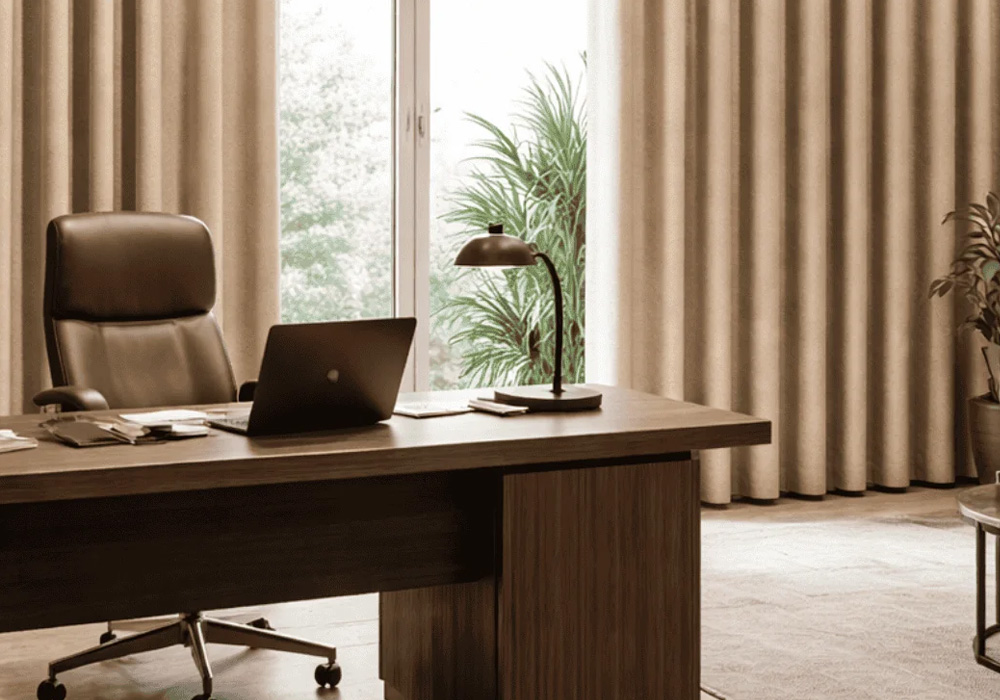
Acoustic curtains won’t make a Singapore flat silent. They can soften harsh reflections in the room and take the edge off the high-frequency part of everyday noise, making the home calmer to live and work in.
What you are hearing at home
In an HDB flat or condo, you might hear elevated MRT trains, expressway traffic, aircon compressors or sound from corridors and adjoining homes. Identify the source and the route the sound takes before choosing a treatment. Voices and TV sounds carry because hard surfaces bounce them around. Glass does little to calm a room once that sound is inside. Blackout curtains are specified for light control. Some heavy fabrics also soften reflections, but the blackout label alone does not establish acoustic performance.
Glass and tile keep echo alive. That’s why a living room can feel loud even with the windows shut.
Low rumble is the hardest part to shift. Train vibration and deep traffic drone pass through glass and frames easily, and fabric alone won’t hold them back. Curtains handle the sharper layer of chatter and hiss far better. The distinction is clear in small study rooms with hard floors, where voices linger.
How acoustic curtains actually work
There are two different jobs here and curtains handle them differently. Absorption means calming reflections already in the room. Transmission means stopping sound from passing through the window area in the first place. Dense layered fabrics are good at the first job. They catch mid and high-frequency energy and the room sounds less sharp.
Weight helps, which is why fabric weight in GSM gets mentioned a lot. A tight weave with full pleats gives sound more material to interact with. Some designs add a dense liner such as mass-loaded vinyl while others rely on layered thermal weave, and both approaches can have a place if the curtain is cut full and hung with good coverage.
Blackout is a light test and acoustic performance is a sound test, so one label doesn’t prove the other.
Shoppers often see two ratings and wonder what they mean. One type of lab test looks at blocking sound and another at calming echo inside a room. For curtains in a lived-in flat, the second type tells you more about daily comfort because most of the gain comes from less bounce off glass and tile. Deeper pleats help too, since folds expose more cloth to the room.
What to check before you buy
Look past marketing names and check the build. Ask for fabric weight and what the liner is made of. Look for deep pleats and a width clearly wider than the glass it must cover. Check whether the maker shares lab tests for absorption or transmission rather than vague claims about quiet.
Fullness and liner matter more than colour or pattern. A flat panel with little gather won’t do as much as a full pleat that bunches material across the window, which is why comparing acoustic curtain options for Singapore homes by fabric weight and liner material is the first step. Use those details to shortlist two designs, then compare track needs and care.
Curtains work best as part of a small system. The window frame and any brush seals or silicone beads around it limit leaks at the edges. The curtain then deals with reflections and the sharper edge of sound that remains. This approach keeps expectations realistic and results steadier than expecting one product to fix the whole room.
Hanging that helps the fabric do its job
Track position changes what a curtain can do. A ceiling-mounted track that sits close to the ceiling and runs past the sides of the window gives fuller coverage than a short rod. Overlap the panels in the centre so there isn’t a straight slit for sound and light to pass through. Let the hem sit close to the floor or touch it lightly, as a long drop looks settled and keeps coverage consistent.
There’s no need to chase a perfect airtight seal in a lived-in home. Aim for consistent coverage without wide openings at the top or sides.
Floor-to-ceiling drops suit homes with tall windows and sliding doors. When the track spans wall to wall, the cloth can stack back off the glass by day and pull closed with generous overlap at night. That simple habit – open wide for light, close fully for calls and rest – is easy to keep.
Where daily comfort actually comes from
Once echo drops, everyday life gets easier. Calls sound clearer because voices don’t bounce around the study. The TV doesn’t need to fight a bright, ringy room. Kids can read while someone else cooks and clatter fades faster. It’s a calmer backdrop rather than total quiet.
Denser curtains often bring two side gains. Many weaves block daylight well and give more privacy after dark, though this varies by model so check the spec. If afternoon heat is another concern, ask separately about the lining’s thermal properties and the window’s sun exposure. Acoustic fabric weight alone does not establish energy savings, and light blocking is not a substitute for a thermal performance specification.
Start with realistic expectations and hang the curtains well. Choose weight and fullness you can live with every day and your rooms can sound softer and feel easier to be in.