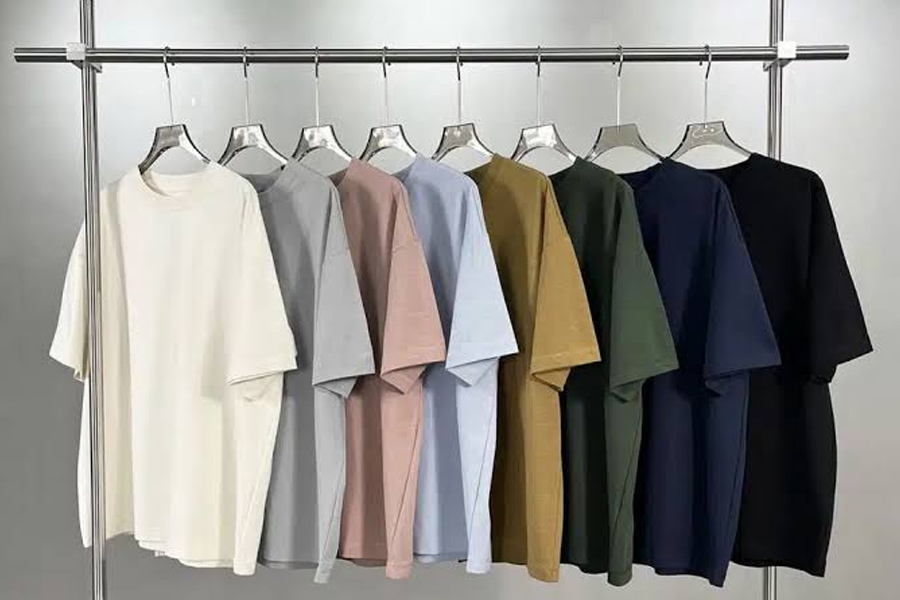
Walk into any busy warehouse and you can spot the new guy in seconds.
He’s the one in a shirt that doesn’t match anyone else’s.
Teams look sharp when everyone wears the same thing, and customers notice that faster than you’d think.
A 2019 study by the Center for Retail Management at Northwestern found uniformed staff were rated as more trustworthy by 74% of shoppers surveyed. That’s not a small number. Getting your crew into matching gear isn’t just about looks either, it’s about safety, brand memory, and cutting down the “who do I even ask for help” moment. Ordering bulk custom work shirts solves that problem in one go.
Why Do Customers Trust a Matching Team More?
People trust what they can read fast. A matching shirt tells a stranger who’s staff and who isn’t, before a single word gets spoken. Retail researchers call this a trust shortcut. Your brain doesn’t want to work hard, so it grabs the easiest signal in the room. A logo on a chest is that signal. Skip the matching shirts and you make every customer do extra thinking, and extra thinking usually means they just walk off instead of asking for help.
What Actually Changes When You Order in Bulk?
Buying one shirt at a time from a random shop gets expensive and messy fast. Bulk orders flip that. Printers and embroiderers charge per setup, not per shirt, so the machine gets loaded once and then just runs. That single setup cost gets split across fifty shirts instead of one. Here’s what the maths tends to look like on a standard cotton polo run, based on typical Australian supplier pricing in 2024.
| Order Size | Cost Per Shirt | Setup Fee Split |
| 10 shirts | $28-32 | $4.50 each |
| 50 shirts | $19-22 | $0.90 each |
| 100+ shirts | $14-17 | $0.45 each |
Bigger orders quietly save real money, and most business owners never sit down to check the numbers.
Which Details Actually Matter Before You Order?
Not every shirt is worth putting your logo on. Fabric weight, colour fastness, and stitch type decide whether the shirt still looks good after twenty washes or falls apart after five. Before you sign off on a bulk run, check these things.
- Fabric weight of at least 180 GSM so the shirt doesn’t go see-through in sunlight
- Embroidery over screen print for logos that get washed weekly, it lasts far longer
- A size run that actually includes 2XL and 3XL, not just S to XL
- Colourfast dye, tested by washing a sample shirt in hot water before the full order
- A supplier who keeps stock, so a torn shirt in month six can be replaced fast
Does a Uniform Actually Affect Safety on Site?
Safe Work Australia reported that in 2022 to 2023, over 120,000 serious workers’ compensation claims came from workplace incidents, and a chunk of those trace back to poor visibility on site. A matching shirt in a bright colour, especially with reflective trim, makes every worker easier to spot from a distance. That’s not branding, that’s basic safety maths.
Is the Upfront Cost Worth It for a Small Team?
Ten people don’t need a warehouse full of shirts, but they do need to not look like ten random strangers. Even a small order of fifteen or twenty shirts gets you the trust benefit and the safety benefit, just at a slightly higher per-shirt price than a huge order. I’d rather pay a bit more per shirt and get the whole team matching than save a few dollars and have half the crew in odd branded polos from three years ago. That inconsistency costs more in lost trust than it ever saves in dollars.