You picked James Hardie siding because it lasts decades, resists fire, and shrugs off Montana winters. But here’s the uncomfortable truth: Hardie board only delivers those promises when the installation is flawless. The product is the easy part. The contractor is where most homeowners get burned.
This guide walks you through the exact questions to ask, the installation details to verify, and the red flags that send most people running. By the end, you’ll know whether the bid on your kitchen table comes from a team that treats your house like their own, or someone who treats it like a paycheck.
Why Does Installation Quality Matter So Much?
Think of Hardie board like a high-end rain jacket. The fabric is waterproof, but if the seams aren’t sealed right, you get soaked anyway. Hardie board is the same. It’s engineered to resist moisture, fire, and pests, but those properties depend entirely on how the panels go up.
James Hardie’s own specifications dictate everything from the gap between panels to the type of nails used and the clearance off the ground. James Hardie publishes these requirements for a reason: in 2024, they expanded their warranty program precisely because installation errors were the number one cause of premature siding failure. Their warranty only covers work done by contractors who complete their training. So the first question you ask isn’t about price. It’s about certification.
Question One: Are You a James Hardie Preferred Contractor?
This is the single most important filter. James Hardie runs multiple tiers of certification for installers. The top tier, Elite Preferred, requires contractors to complete rigorous training and maintain a track record of zero warranty claims. When a contractor holds this status, you’re not just getting a skilled crew. You’re getting a crew that has been vetted by the manufacturer itself.
You can verify this claim yourself. James Hardie’s website has a contractor locator tool where you plug in your zip code and see which local companies hold active certifications. If your contractor’s name doesn’t show up, ask why. Some good crews skip the certification process because of cost or paperwork. But that means you’re relying on their word alone, and their word won’t help you if the siding fails five years from now.
What If They Say “We’ve Installed It for Years”?
Experience matters, sure. But certification proves something experience doesn’t: that the installer is up to date on the current specifications. Hardie board has changed over the years, and so have the installation rules. A contractor who learned the trade in 2005 might still be using techniques that void the warranty today. Certification forces recertification, which forces updated knowledge.
Question Two: What Does Your Flashing Detail Look Like?
Flashing is the unsung hero of siding installation. It’s the metal or synthetic material that directs water away from vulnerable spots like window sills, door frames, and roof intersections. If the flashing is wrong, water finds its way behind the siding, and you won’t see the damage until it’s rotting your sheathing from the inside.
A confident contractor should be able to describe their flashing approach in detail without hesitating. They should mention sill flashing, head flashing, and how they handle corners. If they wave it off with a vague “we do it right,” that’s a sign they don’t think about it much, which means they probably don’t do it right.
Ask to see photos from a recent installation. A crew that’s proud of their work has a portfolio. They’ll show you close-ups of their flashing details. If they can’t produce a single photo, treat that as a warning.
Question Three: How Do You Handle the Gaps and Clearances?
Hardie board needs room to breathe. The panels expand and contract with temperature changes, so if you nail them tight against each other or flush to the ground, they’ll crack under their own stress. James Hardie specifies a minimum clearance of two inches from the soil and a specific gap between panels depending on the season.
Here’s where local climate knowledge matters, and why an installer who knows Great Falls is worth more than one who flies in from out of state. This region sees dramatic temperature swings. weather.gov recorded temperature variations of over 80 degrees Fahrenheit within a single year in central Montana, and that kind of swing puts serious stress on siding joints. A local crew has seen what happens when these gaps are wrong. They’ve fixed the fallout. That experience shows up in their work.
Question Four: Can I See the Job Site in Progress?
Any contractor can show you a finished project that looks beautiful. The real test is what happens mid-installation. Ask if you can swing by an active job site, not your own, just to observe for fifteen minutes. Most confident crews will say yes. Wary ones will make excuses.
Here’s what you’re looking for when you’re there:
- Are the workers wearing appropriate safety gear? It sounds basic, but it tells you about their professionalism.
- Are they using the right fasteners? Hardie board requires specific nails or screws, not whatever happens to be in the truck.
- Are they cutting panels on-site? They should be using dust collection systems or wearing proper respirators. Hardie board contains silica, and inhaling the dust is a genuine health concern. The gov reports that construction workers face some of the highest rates of occupational illness from silica exposure across all U.S. industries. A crew that ignores their own lungs probably isn’t meticulous about your house either.
- Are they sealing the cut edges? When panels are cut to fit, the exposed edge needs to be painted or sealed to prevent moisture intrusion. Skipping this step is a classic corner that leads to early failure.
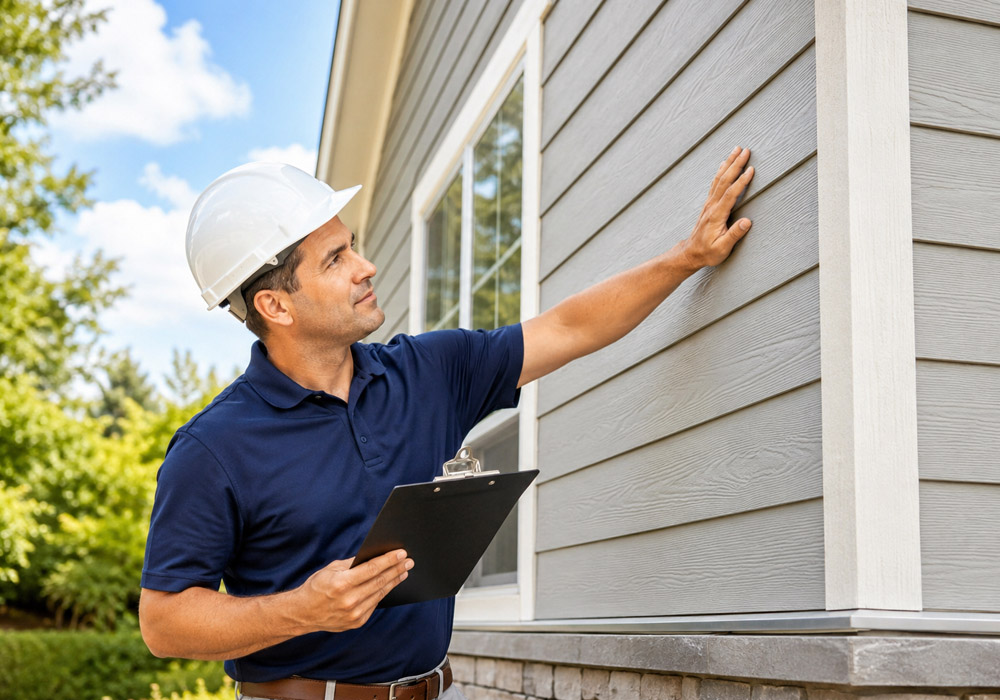
You don’t need to be a building scientist to spot carelessness. You just need to watch for people moving fast and sloppy versus moving deliberate and precise.
Question Five: What’s Your Repair Policy?
Even the best installation can run into issues. A nail pops. A panel gets nicked by a falling branch. The question is what happens after the crew leaves. Some contractors treat the final payment as the end of the relationship. Others stand behind their work.
Ask about their callback rate and their warranty process. How do they handle a problem that shows up six months after completion? What about two years? Get the answer in writing, not just as a verbal promise. The difference between a contractor who returns to fix a minor issue and one who stops answering the phone is the difference between a professional and a drifter.
Here’s a practical tip from the field: ask how they handle defects caused by the siding material itself versus defects from installation. James Hardie’s material warranty covers manufacturing issues. The contractor’s workmanship warranty should cover installation errors. If you install the wrong flashing detail and water gets in, that’s on them, not the manufacturer. Make sure the paperwork clearly states where that line falls.
The Inspection Checklist You Can Print Tomorrow
| Inspection Point | What You’re Verifying | Why It Matters
|
| Manufacturer certification | Contractor holds a current James Hardie certification | Proves training and enables warranty coverage |
| Flashing details | Sill, head, and corner flashing are part of the scope of work | Prevents water intrusion at vulnerable points |
| Panel gaps | Correct spacing between panels for thermal expansion | Prevents cracking and buckling in temperature swings |
| Ground clearance | Minimum two inches between siding and soil | Blocks moisture wicking and pest access |
| Cut edge sealing | All field cuts are painted or sealed | Stops moisture from entering exposed panel cores |
| Fastener type | Correct nails or screws, properly driven | Prevents pops and holds panels secure in wind |
| Written workmanship warranty | Clear process for post-installation repairs | Protects you if issues surface later |
Print this list and bring it to your next consultation. A contractor who walks you through each point without getting defensive is a keeper. One who gets annoyed at the questions is showing you how they’ll handle your concerns later, when the work is done and you need them most.
The Settlement Time for Your House
Getting your siding replaced is a decision you’ll live with for twenty years or more. That’s why the selection process deserves the same care you’d give to choosing a surgeon. You don’t pick the cheapest surgeon, and you don’t pick the one with the flashiest brochure. You pick the one who demonstrates, through evidence and process, that they know exactly what they’re doing.
Here’s the thing about hiring well: it changes your entire experience. When you trust your crew, you stop obsessing over every detail. You sleep better during the installation, and you enjoy your home more after it’s done. You also protect your biggest asset. Siding is one of the few home upgrades that pays for itself in resale value and energy savings, if it’s done right.
If you’re in Great Falls and looking for a team that treats Hardie board with the respect it demands, start with hardie board siding installers in Great Falls who carry manufacturer certifications and can show you their work. Ask the hard questions. Visit the job sites. Compare the processes, not just the prices.
Your home is about to wear a new coat that’s supposed to last decades. Take the time to make sure the person putting it on knows what they’re doing. The right contractor will welcome your scrutiny, because they know their work holds up under it. What’s the first question you’ll ask at your next consultation? If it’s not on this list, you might want to re-read this article before you sit down.