Stubborn tendon and fascia pain can linger despite rest, stretching, or even injections. Many people turn to shockwave treatment hoping to return to running, tennis, hiking, or simply taking their first steps in the morning without a sharp jolt in the heel. At the same time, technology and technique matter; what you do before, during, and between sessions can also influence the outcome. Proper preparation helps your clinician identify the true pain generators, an informed approach during treatment keeps the energy focused where it is needed, and smart recovery habits support tissue remodeling. Use the guidance below to avoid common mistakes and make the most of your shockwave treatment course for conditions such as plantar fasciitis, Achilles or patellar tendinopathy, lateral epicondylitis, and calcific shoulder tendinopathy.
Preparing the Tissue: What to Do in the 48 Hours Before Your First Session
If you are scheduled for Shockwave Therapy, arrive with a calm, readable tendon or fascia. A hard workout beforehand can leave the area diffusely sore, masking the irritable focal points a therapist needs to target. For plantar fascia problems, avoid prolonged barefoot standing on hard floors the day before treatment. For Achilles problems, skip hill repeats and heavy calf raises. Check the skin at the treatment site for cuts or rashes, and avoid thick lotions that may interfere with the coupling gel used to transmit energy from the applicator head into the tissue. Wear clothing that allows easy access to the treatment area, such as shorts for patellar tendon care or a sleeveless top for shoulder treatment. If you use topical anesthetics, ask your clinician whether you should pause them so your feedback during the session remains accurate.
During Treatment: Calibrating Intensity Without Chasing Pain
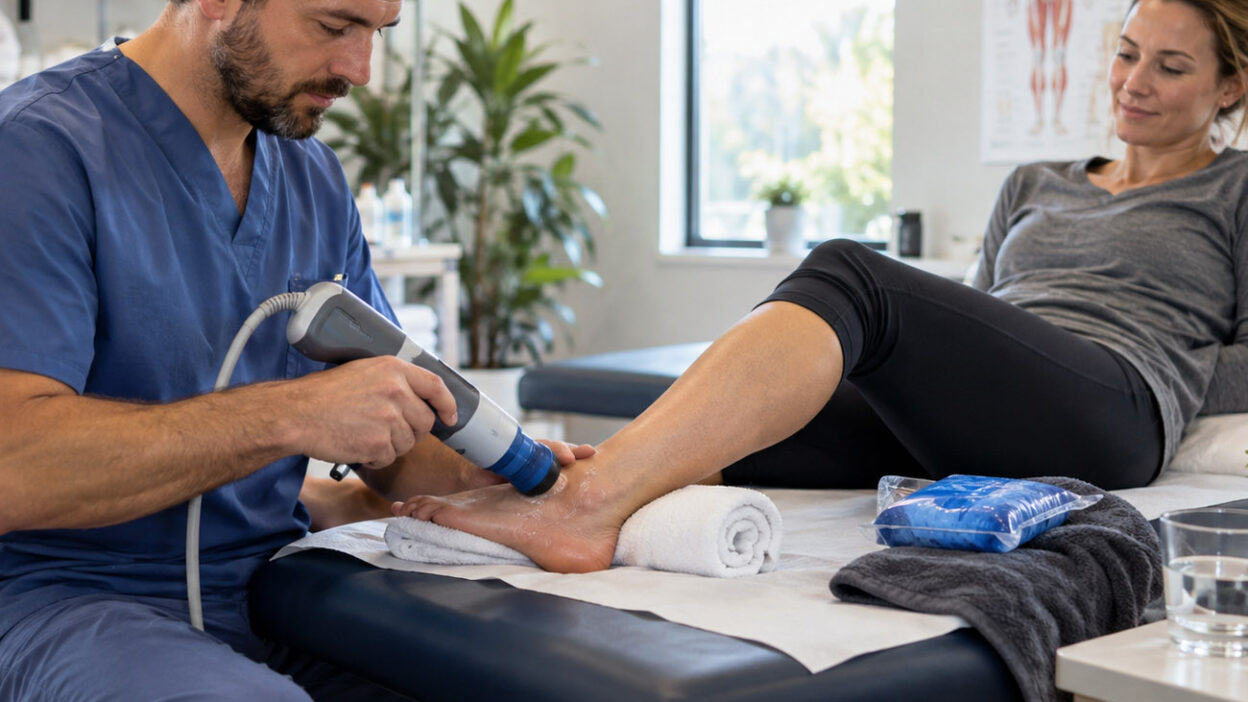
Shockwave devices deliver pulses at specific pressure settings and frequencies measured in bar and hertz. More intensity is not automatically better. Increasing intensity to the point where you begin bracing can trigger protective muscle guarding, which may interfere with treatment of the intended tendon or fascia attachment site, such as the medial calcaneal tubercle in heel pain. A more practical approach is progressive dosing. Your clinician can establish a tolerable baseline, focus on the most irritable points, and return to them after the surrounding tissue has relaxed. Radial shockwave distributes energy over a broader area. It may suit superficial structures such as the plantar fascia, while focused shockwave can deliver energy more precisely to deeper targets, such as a thickened portion of the Achilles tendon. Expect your clinician to change the applicator angle, adjust the frequency to manage discomfort, and move slowly along the fibers of the common extensor tendon during treatment for tennis elbow. Your steady and accurate feedback helps the clinician refine the treatment target.
Right After ESWT: Load, Ice, and Medications
Shockwave therapy is intended to stimulate biological responses that support tissue remodeling. For that reason, aggressively icing the area immediately after treatment or taking anti-inflammatory medications without consulting your provider may not align with the treatment plan. Many clinicians recommend gentle movement, relative rest for 24 to 48 hours, and light mobility rather than aggressive post-treatment measures. A runner with Achilles tendinopathy might replace hill sprints with easy cycling and ankle pumps. At the same time, someone with lateral epicondylitis may perform wrist isometrics and shoulder blade exercises instead of heavy gripping. Temporary soreness, mild swelling, or skin redness may occur around the treatment site. Avoid using scraping tools or massage guns directly over the treated area for a couple of days, and do not test maximal hops, box jumps, or heavy eccentric loads on the same evening. If you notice unusual bruising, increasing pain, or worsening night pain, contact your clinician for guidance.
Between Sessions: Spacing, Activity Progression, and Complementary Rehab
Sessions are often spaced several days apart to give the tissue time to respond to treatment. Impatience can become a common problem. Scheduling treatments too close together and then immediately testing maximal intensity may aggravate symptoms rather than support steady progress. A practical rhythm is to let post-treatment soreness settle, use low-impact conditioning, and gradually reintroduce targeted loading. For plantar fasciitis, this might involve calf stretching with both a straight and bent knee, seated heel raises earlier in the week, and standing single-leg raises later if morning first step pain is decreasing. Track simple markers such as first step pain, soreness after activity, and tenderness around the medial heel to help determine when to progress and when to maintain the current level.
Pair shockwave treatment with a structured rehabilitation program. Eccentric or heavy, slow resistance exercises, such as Alfredson-style heel drops for Achilles tendinopathy or decline squats for patellar tendinopathy, can build physical capacity that shockwave treatment alone cannot provide. Isometric exercises may help manage pain while preparing you to progress toward isotonic loading. Address contributing factors as well, including hip and trunk control for knee problems or forearm and shoulder strength for elbow pain associated with repetitive gripping. Footwear with adequate midsole support or a temporary insole may reduce stress on the plantar fascia between appointments. Sleep and adequate protein intake can also support general tissue recovery, so maintaining a consistent sleep schedule during treatment may help.
When Shockwave Is Not the First Move: Red Flags and Contraindications
Not every painful area should be treated with shockwave therapy. Red flags such as unexplained weight loss, fever, night sweats, or persistent night pain warrant medical evaluation before treatment begins. Local contraindications may include an open wound or active infection at the treatment site, impaired sensation that prevents accurate feedback, or a suspected acute fracture. Additional caution may be necessary for people with bleeding disorders or those taking anticoagulant medications, and providers generally avoid treating areas with known malignancy. Pregnancy may also affect where and when treatment is appropriate, particularly around the abdomen or pelvis. Certain areas are avoided because of potential risk, including locations directly over the lungs or reproductive organs. Clinicians may also evaluate surgical hardware before proceeding. If your pain is accompanied by progressive numbness, tingling, or weakness in a limb, or if back pain occurs with bowel or bladder changes, seek prompt medical evaluation rather than scheduling a shockwave session. Sound clinical reasoning should always come before using any treatment device.
Small choices can add up during a course of shockwave treatment. Arrive with a calm and accessible treatment area, help your clinician identify the painful fibers without pushing discomfort to unnecessary extremes, and give the tissue adequate time, gentle movement, and progressively appropriate loading between appointments. Pair shockwave treatment with strengthening exercises that match the demands of your sport or daily activities, and monitor simple progress indicators rather than testing intense efforts too soon. If you are unsure about icing, medications, or activity timing, ask your clinician before making changes. With a thoughtful plan for each session, shockwave therapy has a better chance of supporting durable, practical improvements in movement and function.