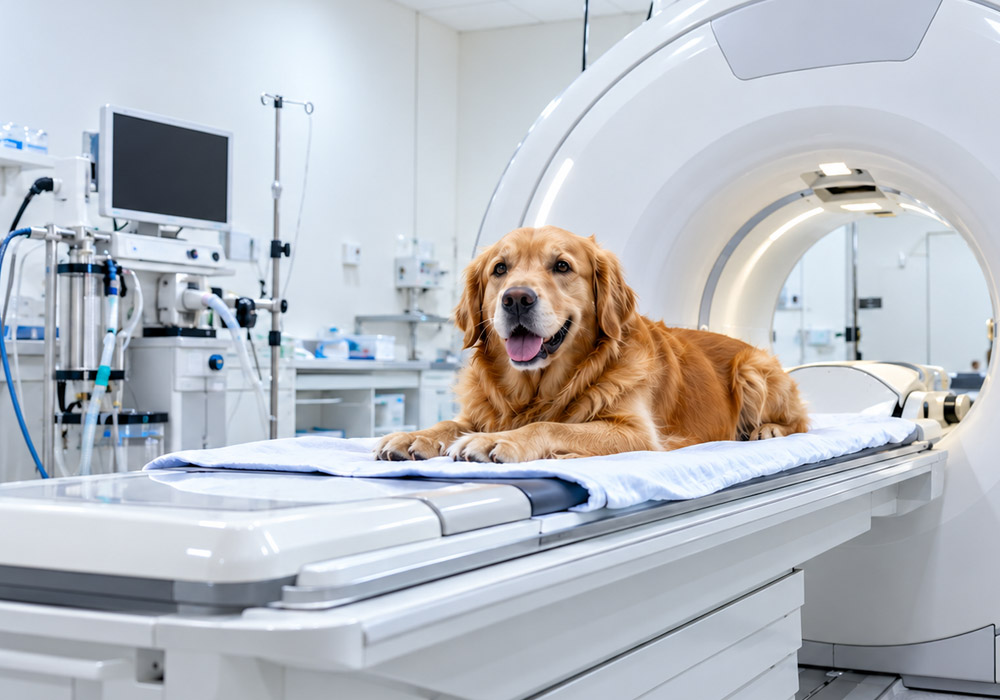
You notice something is off long before you have proof. Your dog is limping again, your cat has stopped jumping to the windowsill, or your pet is breathing in a way that makes your stomach drop. You know they cannot explain what hurts, and that is often the hardest part. You are left watching, guessing, and trying not to panic while you wait for answers from a veterinarian in Acworth, GA.
That is where How Veterinary Hospitals Provide Specialized Diagnostic Imaging becomes more than a technical topic. It is about finding the cause of pain, weakness, seizures, coughing, or a hidden mass without relying on guesswork alone. A veterinary hospital uses imaging to look inside the body in ways a physical exam cannot. X rays can show broken bones or chest changes. Ultrasound can reveal organ disease, fluid, or pregnancy. CT and MRI can help when the problem involves the brain, spine, joints, or areas that need a more detailed view.
Veterinary diagnostic imaging gives answers when symptoms stay vague
Many pet health problems do not announce themselves clearly. A dog with belly pain may only seem restless. A cat with heart disease may simply sleep more. A rabbit with dental disease may stop eating and lose weight before anyone realizes the teeth are the source. When symptoms overlap, treatment without imaging can miss the real issue and waste time your pet may not have.
This is why a veterinary imaging service matters. Imaging helps veterinarians confirm what they suspect, rule out what they fear, and choose treatment based on evidence. If a pet has a cough, chest radiographs may show pneumonia, heart enlargement, or a mass. If a pet is vomiting, ultrasound may reveal an intestinal blockage, pancreatitis, or changes in the liver and gallbladder. If a dog has seizures, MRI may be the test that finally explains why.
The stress often grows when your pet needs more than standard X rays. Advanced imaging can sound expensive, unfamiliar, and serious, because it usually is tied to a problem that needs a closer look. Still, the goal is simple. Get the clearest picture possible so the next decision is the right one.
Specialized diagnostic imaging in veterinary hospitals depends on the problem being solved
Not every pet needs every scan. Veterinary hospitals match the imaging method to the symptom, body part, and urgency. Radiographs are often the first step because they are fast and useful for bones, lungs, and some abdominal concerns. Ultrasound adds motion and soft tissue detail, which helps evaluate the heart, bladder, spleen, kidneys, and more. CT creates detailed cross sectional images and is often used for trauma, nasal disease, complex fractures, and surgical planning. MRI is often chosen for the brain, spinal cord, and soft tissue structures that are harder to assess with other tools.
Large teaching hospitals and referral centers often have board certified radiologists, trained technicians, and equipment that community practices may not keep on site. Cornell’s imaging service outlines how multiple imaging tools work together to support diagnosis and treatment. Virginia Tech’s diagnostic imaging program shows how inpatient and outpatient cases are handled when pets need more advanced studies. Washington State University also describes its diagnostic imaging services for pets needing radiology, ultrasound, CT, MRI, and other support.
If your veterinarian refers you to a hospital for advanced imaging, that does not automatically mean the worst case is happening. It usually means your pet needs more detail than a standard exam can provide. Referral is often a sign of careful medicine, not alarmism.
Comparing common veterinary hospital imaging tools helps you prepare
You may be weighing speed, cost, sedation, and how much information each test can provide. Those concerns are real, especially if your pet is older, anxious, or already fragile.
| Imaging Method | Best For | Typical Sedation Need | What to Expect |
|---|---|---|---|
| X ray | Bones, chest, some abdominal issues | Sometimes none, mild sedation if movement is a concern | Fast, widely available, often first step |
| Ultrasound | Soft tissues, abdominal organs, heart function | Usually none, depends on pet temperament | Real time images, useful for fluid and organ changes |
| CT | Trauma, nasal passages, complex bone and joint issues | Often yes | Detailed cross sectional images, quick scan time |
| MRI | Brain, spinal cord, soft tissue detail | Yes in most cases | High detail for neurologic and complex soft tissue problems |
This is where the financial side often hits hard. Advanced imaging can cost more because it involves specialized equipment, trained staff, image interpretation, and sometimes anesthesia. Yet the cost of not getting a clear diagnosis can also climb. Repeat visits, treatments that do not work, delayed surgery, or worsening disease can create a longer and more painful path for both you and your pet.
Immediate steps can make veterinary hospital imaging less overwhelming
Ask what the imaging test needs to answer. A good question is not “What scan do you recommend?” but “What are you trying to confirm or rule out?” That helps you understand whether the test is screening for a broad issue or targeting a specific concern like a torn ligament, bladder stone, tumor, or spinal lesion.
Get clear on sedation, timing, and risk. Some pets can hold still for an ultrasound, while others need medication even for simple radiographs. Ask whether your pet needs to fast, whether they can go home the same day, and when results will be reviewed. If your pet has heart disease, breathing trouble, or advanced age, ask how the team manages anesthesia risk.
Bring records and track changes at home. Prior bloodwork, previous X rays, medication history, and videos of episodes like limping or seizures can help the imaging team focus faster. Small details matter. A limp that appears only after exercise or a cough that happens mostly at night can shape which images are taken and how they are interpreted.
Specialized pet imaging supports better treatment decisions
When your pet is sick, uncertainty is exhausting. You are trying to stay calm, make smart choices, and avoid both delay and regret. Advanced veterinary imaging does not fix the problem by itself, but it often gives your veterinary team the map they need. That can mean faster treatment, fewer wrong turns, and a clearer idea of what comes next.
If your pet’s symptoms are not adding up, ask your veterinarian whether a veterinary hospital imaging referral is the right next step. Clear answers can change everything.