Plastic welding is an important fabrication technique used across Australian industries where strong, reliable joins between compatible thermoplastic materials are required. Rather than relying on adhesives or mechanical fasteners, the process uses controlled heat, and in some methods pressure or filler material, to create a permanent joint. It is widely relevant to fabrication, construction, water management, mining and other industrial applications.
Why Plastic Welding Matters in Industrial Fabrication
The key advantage of plastic welding is its ability to produce durable, continuous joins suited to demanding industrial applications Depending on the material and process, welded joints can provide strong, leak-resistant connections, making the technique useful for tanks, liners, roofing systems, flooring and fabricated components.
Material compatibility is critical. Common weldable thermoplastics include HDPE, polypropylene and PVC, but the welding method, temperature and filler rod must suit the specific material. Correct surface preparation is also essential because contamination or poor joint preparation can reduce weld quality.
Choosing Equipment for Different Applications
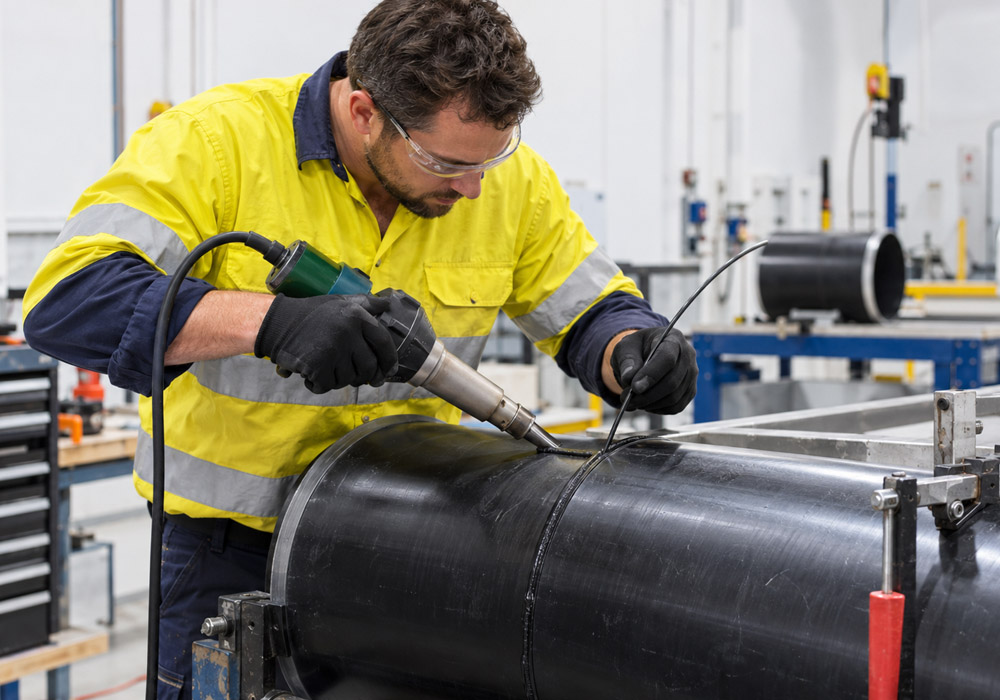
Selecting the right plastic welding equipment depends on the material, thickness, joint design and scale of the work. Hot-air hand tools can suit detailed fabrication and repair tasks, while extrusion welders are often used where larger weld beads and higher output are needed. Automatic equipment can improve consistency and productivity on long seams such as geomembranes and roofing applications.
For Australian businesses comparing tools, welding rods and application-specific systems, Plastral supplies equipment across categories including hot-air tools, extruders, geomembrane welding equipment and test equipment. Choosing equipment that matches the intended material and application can help operators achieve more consistent results and reduce avoidable rework.
Key Factors That Influence Weld Quality
Good results depend on more than the welding tool itself. Operators need to control temperature, welding speed, pressure and airflow according to the process and material. The joining surfaces should be clean and correctly prepared, while filler rods should be compatible with the base plastic.
Operator knowledge is equally important. Incorrect settings or technique can lead to weak seams, incomplete fusion or distortion. Where weld integrity is critical, appropriate inspection or testing should form part of the quality-control process.
Safety should also be considered. Welding work can involve hot surfaces, electrical equipment and fumes, so suitable personal protective equipment, ventilation and workplace procedures are important.
Applications Across Australia
Plastic-welded products are used in tank fabrication, water processing, aquaculture, agriculture, civil works, roofing, flooring, marine construction and geomembrane installations. This range makes the process valuable wherever thermoplastic components require dependable joining or fabrication.
Summary
Successful thermoplastic joining starts with the right combination of compatible materials, suitable equipment, correct settings and skilled operation. Australian businesses can explore specialist equipment and material solutions when planning fabrication, repair or industrial joining work.