Key Takeaways
- Invisalign may be suitable for many mild-to-moderate alignment concerns.
- Clear aligners are removable and discreet, but they depend on consistent daily wear.
- Braces or a hybrid plan may be more appropriate for complex bite concerns or tooth movements.
- Nova Orthodontics provides orthodontic options for children, teens, and adults.
- A consultation allows patients to discuss treatment options, timing, fees, insurance benefits, and retention.
Choosing between clear aligners and braces is not simply a cosmetic decision. Patients searching for an orthodontist Mukilteo often want to know whether Invisalign can address their specific crowding, spacing, or bite concerns while fitting their daily routine. Nova Orthodontics helps patients make that decision through an in-person orthodontic evaluation and a personalized treatment recommendation.
Invisalign can be an effective option for many people, but it is not automatically the right option for every smile. The best choice depends on tooth position, bite alignment, jaw relationship, oral health, treatment goals, and a patient’s ability to wear aligners consistently. Nova Orthodontics offers Invisalign, braces, and hybrid approaches so the treatment method can match the clinical need.
Why Diagnosis Comes Before Choosing Invisalign
Every orthodontic plan should begin with an accurate diagnosis, not a one-size-fits-all appliance recommendation. During a consultation, the orthodontic team considers the teeth, bite, jaw relationship, facial balance, and the patient’s goals. Records may include photographs, X-rays, and digital scans, as appropriate, to create a detailed view of the current smile.
This planning process matters because orthodontic treatment is about more than straight-looking front teeth. The goal is to improve alignment while considering how the upper and lower teeth meet. A clear aligner plan may be recommended when it can predictably meet those needs. If another approach is likely to yield better results, that option should be discussed honestly.
Invisalign and Traditional Braces: Important Differences
Both Invisalign and braces can move teeth, but they work differently and ask different things of the patient.
- Appearance: Invisalign uses clear, removable aligners. Braces use brackets and wires, which may be metal or tooth-colored.
- Daily wear: Invisalign typically requires wearing aligners about 20 to 22 hours each day as directed. Braces remain attached, so treatment does not rely on remembering to put an appliance back in after meals.
- Meals and hygiene: Aligners are removed for meals and brushing. Braces require careful brushing and flossing around brackets and wires.
- Appointments: Nova Orthodontics notes that Invisalign follow-up visits may occur about every 12 weeks, while braces visits may occur about every 6 to 8 weeks. The actual schedule depends on the treatment plan.
- Case suitability: Clear aligners can be well-suited to many mild-to-moderate concerns. Braces can be especially useful when complex movements or bite corrections are needed.
Who May Be a Good Candidate for Invisalign?
Nova Orthodontics identifies Invisalign as a potential treatment for mild crowding, gaps between teeth, selected overbites and crossbites, and alignment issues that require treatment before certain restorative dental work. It can also appeal to adults who prefer a less visible orthodontic option and to responsible teens or children whose needs are appropriate for aligner treatment.
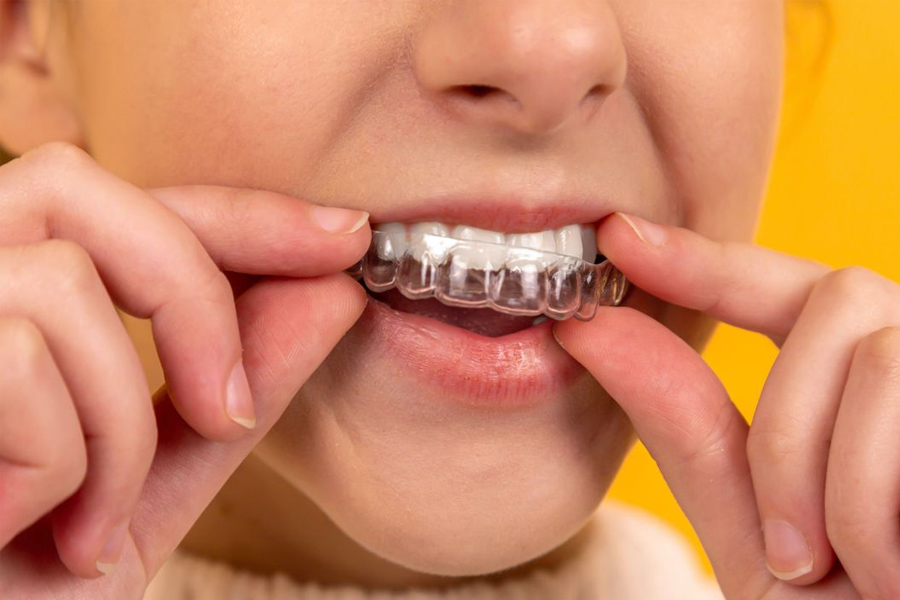
Photorealistic editorial studio shot of a clear orthodontic aligner resting beside a small set of neatly arranged dental models, with soft controlled lighting, a clean white background, and a polished commercial healthcare aesthetic.
However, candidacy requires an examination. A systematic review of clear aligner effectiveness found that aligners may produce clinically acceptable results in mild to moderate malocclusions. At the same time, the evidence was less certain for some tooth movements and more complex situations. That is why diagnosis and ongoing monitoring are essential.
When Braces or Hybrid Treatment May Be Better
Invisalign is not an end-all, be-all solution for every orthodontic problem. Severe bite discrepancies, difficult tooth positions, and movements that require greater control may be better managed with braces. In some cases, Nova Orthodontics may recommend hybrid treatment, combining aligners with braces or other orthodontic appliances to use the strengths of each system.
Patients should not feel pressured to choose aligners solely because they are less noticeable. The right treatment is the one that best supports a healthy, functional bite and the planned tooth movement.
What the Invisalign Process Can Look Like
- Consultation: Discuss concerns, lifestyle needs, smile goals, and treatment expectations.
- Digital records: The orthodontic team gathers the records needed to evaluate the bite and plan treatment.
- Personalized recommendation: The orthodontist explains whether Invisalign, braces, or hybrid treatment is most appropriate.
- Custom aligners: If Invisalign is selected, the patient receives a sequence of aligners designed for planned stages of tooth movement.
- Progress visits: Follow-up appointments help the team assess aligner fit, tooth movement, oral hygiene, and next steps.
- Retention: Retainers are needed after active treatment to help maintain the new alignment.
Benefits and Responsibilities of Clear Aligners
Clear aligners can be removed for meals, brushing, flossing, sports, and important social or professional moments. Their removable design may make daily oral hygiene easier than it is with fixed brackets. Patients should still remove aligners before eating unless they receive different instructions, clean their teeth before replacing them, store aligners safely, and follow the prescribed schedule.
Compliance is central to success. Insufficient wear can slow progress or reduce the effectiveness of aligners. The American Association of Orthodontists explains that clear aligners are not right for everyone and that treatment selection should reflect the patient’s individual orthodontic needs.
Invisalign Options for Children, Teens, and Adults
Children
Invisalign First may be considered for selected children ages 6 to 10. Growth, tooth eruption, crowding, spacing, bite development, and a child’s ability to cooperate with aligner wear all affect the planning process.
Teens
Teens may appreciate clear aligners because they are removable for eating, brushing, school activities, and sports. They still need to wear aligners consistently, attend progress visits, and keep track of them when removed.
Adults
Adults often consider Invisalign because it can be discreet for work, travel, presentations, and social events. Adult treatment planning still depends on periodontal health, bite concerns, and the complexity of the needed tooth movement.
Questions to Ask at a Nova Orthodontics Consultation
- Is Invisalign appropriate for my bite and alignment concerns?
- Would braces or hybrid treatment offer a more predictable result?
- How long might treatment take in my case?
- How often will progress visits be needed?
- What is included in the treatment fee, and what payment options are available?
- What should I do if an aligner is lost, damaged, or does not fit?
- What retainer will I need after treatment?
Request an Invisalign Consultation in Mukilteo
Nova Orthodontics offers complimentary consultations without a referral. Patients can visit the Mukilteo office at 11700 Mukilteo Speedway, Suite 407, Mukilteo, WA 98275, or call 425-382-8000 to discuss Invisalign, braces, or hybrid treatment.
The best Invisalign decision starts with a careful examination and an open conversation about all available options. Nova Orthodontics gives Mukilteo patients a local place to compare treatments and choose a plan based on their individual orthodontic needs, not a generic promise.