From Waste to Worth: Material Strategies That Lower Impact
Materials that do more than fill space are sustainable for outdoor construction. They should tell conservation stories. Mixing reclaimed asphalt pavement with new binder creates durable surfaces that respect finite resources. Demolished concrete aggregates can be base layers or added to new masonry units for stunning textures. Steel and synthetic fibers can reduce strengthening cement in concrete flatwork and improve crack management.
Slag and other industrial byproducts can substitute portland cement in mixtures. The outcome is lower embodied carbon and better durability in numerous exposures. Polymer modified binders and warm mix technologies lower asphalt manufacturing temperatures, reducing energy demand during installation and improving compaction windows in cooler seasons.
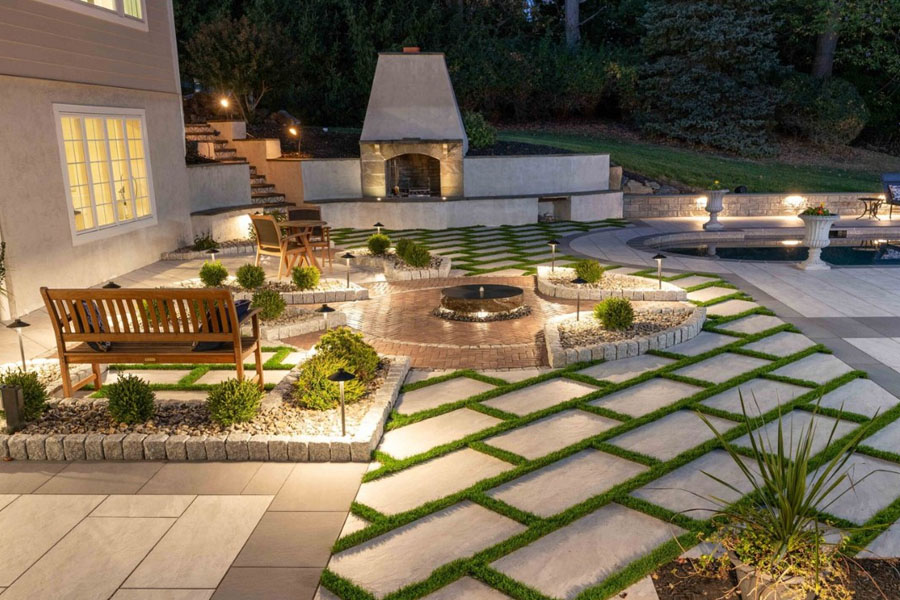
Disassembly design should go beyond architecture. Lift, repair, and reinstall modular retaining wall units, segmental pavers, and dry-set stone with minimal waste. Deconstruction-salvaged bricks add character and longevity to materials. The hardscape becomes a living library of reused resources when specified carefully. Experienced paver contractors can help select and install materials that are designed for easier maintenance, replacement, and future reuse. This approach can extend the lifespan of hardscape features while reducing unnecessary material waste during repairs or future landscape changes.
Cool, Quiet, and Clean: Performance Features That Matter
Hardscapes affect perception. Pavements emit heat, scatter light, and make tire noise. Light-colored brickwork and high-albedo asphalt coatings minimize urban heat gain. In sunny courtyards or long roadways, cool-surface solutions can reduce surface temperatures and thermal stress on nearby plants.
Porous asphalt and pervious concrete reduce tire noise, an overlooked benefit in busy locations with looping drive aisles near patios or doors. Top layers with photoluminescent aggregates and reflecting glass beads improve nighttime safety without luminaires. With proper arrangement, these accents look like ground-plane constellations rather than gimmicks.
Air quality also touches the ground. Photocatalytic treatments for select concrete surfaces can help break down certain pollutants when activated by sunlight. While not a standalone solution, such surfaces contribute to a cleaner microenvironment where people gather and linger.
Water First: Pavement and Masonry That Work With Storms
Every site sits within a watershed, and hardscape choices should respect that reality. Permeable pavements capture and infiltrate rainfall, easing the burden on storm sewers and irrigating subsoils. Underdrain networks, washed stone reservoirs, and geotextiles keep these systems breathing. Integrate bioretention cells, curb cuts, and rain gardens to slow, spread, and sink stormwater before it becomes runoff.
Crossfall and slope are your quiet allies. Even on non-permeable surfaces, micrograding and vegetated swales transport water reliably without scouring. Slot and trench drains can be hidden with elegant lines in tight urban spaces, turning utility into design. Driveway filters catch dirt and oils before they travel.
Maintenance delivers. A few annual vacuum sweeps preserve porous pavements’ infiltration capacity. Clearing the first several inches of gravel in vegetated swales every two seasons reduces sediment creep. Water paths extend pavement life and boost sceneries.
Strong From the Ground Up: Subgrade, Bases, and Reinforcement
Durability comes from invisible layers. Soil assessment should determine bearing capacity, frost susceptibility, and drainage. In clay-rich areas, stabilize subgrades with lime or cement. In sandy areas, densify and limit to prevent rutting. Bridge weak zones with geogrids and geotextiles to minimize stiffness aggregate thickness.
Choose interlocking foundation grades. Open-graded stone reservoirs allow permeation. Solid, frost-resistant dense-graded bases support asphalt and concrete. When transitioning from asphalt to pavers, utilize stabilized bedding layers and edge restrictions to maintain joint integrity.
Thermal movement is inevitable. Joints and reinforcement should anticipate it. Synthetic fibers in concrete slab-on-grade reduce plastic shrinkage cracking. For asphalt, well-designed joint details and proper compaction at longitudinal seams extend life and prevent early unraveling.
Smart Heat and Ice Management Without the Collateral Damage
Winter tests outdoor surfaces. Electric cable or hydronic tubing heated driveways and pathways decrease deicing and keep routes free. Electric systems accommodate smaller footprints and retrofits and are easy to install. Hydronic systems work well with boilers, solar thermal help, and heat pumps for bigger spaces. Smart sensors monitor slab temperature and moisture, activating heat only when needed. Safety without salt burn on lawns and plant beds is the benefit.
Determine deicing strategy for cold areas. Use calibrated spreaders and pretreat brine to reduce salt use. Washed sand provides traction in extreme cold and can be recovered after storms. Sealers that resist freeze-thaw block water and prevent scaling after repeated icing.
Details That Last: Joints, Edges, and Protective Treatments
Projects thrive or fail at edges. Strong concrete collars, steel edging, or anchored curb units protect asphalt shoulders. Continuous edge restraints keep paver field joints tight and avoid creep. To prevent random cracks, concrete slab control joints should be spaced and patterned. Paver joint sands can be polymer-fortified to reduce washout and weeds.
Surface treatments protect. High-quality asphalt sealcoats resist UV, oils, and water. Concrete and masonry penetrating sealers preserve texture and decrease discoloration and freeze-thaw damage. Check for damage after extreme weather and reapply protective coatings regularly. Few hours of maintenance prevent years of repairs.
Crafting Character: Sustainable Masonry Aesthetics
Sustainability and beauty coexist. Masonry lets color, texture, and pattern express a regional story. Local stone reduces transportation and connects a project to its geology. Thin stone veneers and lightweight block systems lessen structural needs without sacrificing appearance. Without added materials, textured finishes, aggregate bands, and saw-cut exposes give depth.
Pavers’ curves and radii soften long stretches and encourage movement. Basketweave, herringbone, and running bond patterns distribute loads differently and can be adjusted for traffic. Seating borders and planters can be built into brick walls to remove freestanding furniture. Every part should work twice.
Planning, Budget, and Lifecycle Thinking
Instead of the lowest bid, consider ownership cost. A permeable driveway may cost more but cover stormwater fees and bed irrigation. Crack-resistant asphalt extends resurfacing cycles, saving money and disruption. Heated walkways reduce winter labor and liability.
Cash flow can guide phasing. Subgrade correction, drainage, and basic circulation are the foundation. Add decorative bands, lighting insets, or custom surfaces afterward without affecting the core. Maintain a digital model and as-built records for seamless repairs and expansions.
Implementation Playbook: Phasing and Quality Control
Quality involves correct decisions. Review mix designs before trucks roll. Check subgrade moisture and density. Check base thickness everywhere, not just edges. For appropriate asphalt compaction, require temperature monitoring at placement and rolling. To avoid weak paste on concrete, monitor air content and finish on schedule.
Protect new work from premature traffic. Cure concrete adequately and keep construction equipment off fresh asphalt longer than you think you need. Photograph layers before they disappear. A simple set of site notes and pictures becomes the memory of the project and a gift to future caretakers.
FAQ
What is the biggest mistake to avoid with permeable pavements?
Skipping maintenance is the classic pitfall. Permeable systems depend on open voids. Without periodic vacuum sweeping and sediment control at upstream areas, pores clog and infiltration rates plummet. Design with access in mind and set a maintenance calendar from day one.
Are heated driveways energy efficient in practice?
They can be with clever controls and realistic coverage. Heat main routes like a tire track pair or a walkway. Only when slab temperature and moisture suggest icing risk do sensors activate heat. Hydronic systems with efficient heat sources work well for vast areas, whereas electric mats work for retrofits and small spaces.
How do I choose between porous asphalt, pavers, and pervious concrete?
Site goals and soils should guide selection. Monolithic porous asphalt provides good traction and quiet performance. Pavers are modular, pattern-rich, and repairable. Pervious concrete is strong and has a modern texture. Include underdrains and sturdy stone reservoirs regardless of surface type in clay-heavy settings.
Will cool pavements look too bright or industrial?
Not if you curate the palette. Cool coatings and light aggregates come in warm grays and soft beiges that read natural. Combine light pavements with darker borders or bands to ground the design. Plantings and wood accents temper reflectivity and create balance.
How do I integrate tree roots with hardscape without future heaving?
Space and guide roots. Root development is supported by structural soil cells under pavements. Root barriers direct roots downward before edges. Near trunks, permeable joint lines exchange air and water. Reduce root pressure beneath pavements with large planting zones.
What maintenance should I schedule in the first two years?
Inspect after every major storm and each freeze-thaw swing. Refill joint sand in pavers if settlement appears. Touch up sealers where staining or heavy sun exposure is evident. Check drains and inlets for debris. Early attention catches small issues before they become structural problems.