$12,000. That’s roughly what a full roof replacement runs on a typical Decatur home, and I’ve watched neighbors spend it years earlier than they had to. Not because their shingles were bad. Because nobody climbed a ladder twice a year.
Your roof fails slowly, then all at once. The first few years of neglect are free. The next few cost you a repair. Then one summer storm pushes you past the point of patching and into a full tear-off.
Here’s what this covers: the small habits that stretch shingle life, the seasonal rhythm that fits Decatur’s weather, a repair-or-replace decision framework, and the warning signs most homeowners miss until water is already in the attic.
Why Decatur’s Climate Is Hard on Roofs
Decatur sits in a warm, humid pocket of Georgia where the freeze line and the thunderstorm belt overlap. According to the National Weather Service, this part of the Southeast sees some of the country’s most frequent severe thunderstorm activity, and the region swings between humid summers and occasional hard freezes.
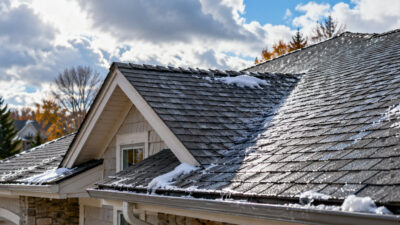
That combination does two things to a roof. Heat bakes the asphalt and oils out of shingles, so they curl and lose flexibility. Then the freeze-thaw cycle works on every crack the heat opened. Water seeps in, freezes, expands, and widens the gap.
I think the humidity is the sneaky one. It grows algae and moss on north-facing slopes, and that dark streaking you see on half the roofs around town isn’t just cosmetic. It traps moisture against the shingle surface year round.
The good news: none of this surprises a roof that’s maintained. Most of the damage I’ve described takes years to develop, and it’s visible long before it becomes expensive.
Five Habits That Add Years to Your Roof
None of these are heroic. They’re fifteen-minute jobs you do twice a year.
- Book a fall and spring inspection. A roofer walks the surface, checks the flashing and boots, and confirms nothing shifted. Two visits a year catch almost everything early.
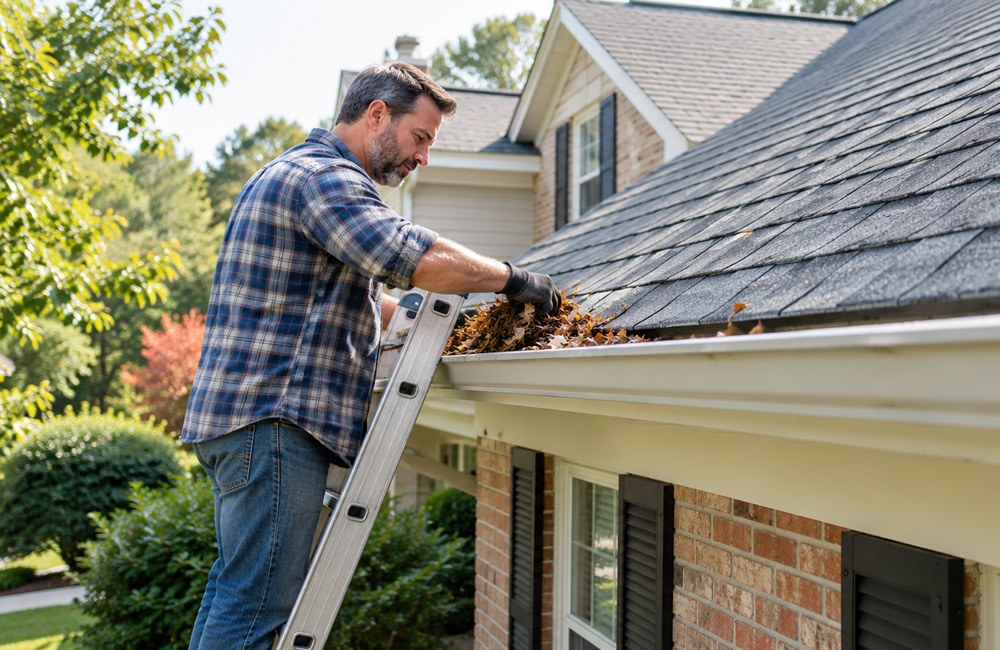
- Clear the debris. Leaves, pine straw, and the occasional fallen branch hold water on the surface and block drainage. A soft broom handles the easy stuff.
- Clean the gutters after leaf drop. A clogged gutter backs water under the bottom course of shingles. That’s how a lot of the interior water stains I’ve seen actually start.
- Don’t power wash the shingles. High pressure strips the granules that protect the asphalt. If you’re fighting algae streaks, ask about a soft wash instead.
- Trim the overhanging trees. Branches within a few feet of the roof scrape shingles in wind and give squirrels a bridge. This one is worth hiring out.
If you’d rather hand the whole list to someone, that’s a legitimate choice. It’s exactly the kind of work a roofing in Decatur, GA crew handles as routine service, and it’s cheaper than the repair you’re avoiding.
I’d pick the inspection first if you only do one thing. You can clean gutters yourself. You can’t spot a failing pipe boot from the ground.
What to Actually Look For After a Storm
Walk your yard the morning after any storm with wind above about 40 miles per hour. You’re looking for granules in the grass and shingle tabs in the shrubs. Both mean the roof took real damage.
Then check the attic with a flashlight. Water finds its way in at the lowest point first, so look for staining on rafters, dark streaks on the sheathing, and daylight coming through where it shouldn’t.
On the ground, check the flashing around chimneys, vents, and skylights. Those are the failure points, not the field of shingles. A cracked pipe boot costs almost nothing to swap and can leak for a year before it shows up as a ceiling stain.
Repair or Replace? A Decision Framework
I use a simple three-part test when I’m helping someone think through this.
| Question | Repair | Replace
|
| How old is the roof? | Under 15 years | Over 20 years |
| How big is the problem? | One area, isolated | Widespread across slopes |
| What shape is the attic? | Dry, no staining | Multiple old leak stains |
If you answer two of three toward replace, get quotes. If it’s one, patch it and keep going. The mistake I see most often is throwing three repairs at a roof that’s already at the end of its service life, then replacing it anyway two years later.
Also worth knowing: home maintenance like this protects value in ways that don’t show on a spreadsheet. The Department of Housing and Urban Development has long tracked how physical condition affects housing quality and property value, which is why a documented roof history matters at sale time.
Water and the Long Game
Most of the real cost of a bad roof isn’t the roof. It’s the water.
Once water gets into sheathing, it doesn’t stay put. It travels along framing, soaks insulation, and shows up as mold risk in the attic and ceiling. Fixing that means drywall, insulation, sometimes framing, and the roof on top of all of it.
The Environmental Protection Agency publishes indoor air quality guidance that treats excess moisture as the root of most indoor mold problems, which is the part homeowners underestimate. A $400 repair today versus a moisture problem you’re managing for a decade is not a close call.
So the habits above aren’t really about the roof. They’re about keeping water on the outside of your house, where it belongs.
Start With One Call
Pick a clear afternoon this week. Walk your yard, look for granules, and shine a flashlight into the attic. If anything looks off, get a professional on the roof while the problem is still small.
The homeowners I know who’ve avoided a surprise five-figure bill aren’t lucky. They just looked up more often. What would you find if you checked your roof this weekend?