Most homeowners climb down from the ladder convinced they dodged it. The shingles look mostly flat, nothing’s dripping into the hallway, and the yard cleanup is already done. Then the next storm rolls through three weeks later and the ceiling stain shows up overnight.
That gap between “looks fine” and “actually is fine” is where the real damage happens. Wind doesn’t have to rip shingles off to hurt your roof. It lifts the edges, breaks the seal, and lets water creep under layers you can’t see from the ground. Hail does something similar but quieter, knocking granules loose and leaving the mat exposed to sun and rain. You probably won’t notice either one until it’s already costing you.
I’ve walked plenty of these calls, and the pattern is always the same: the homes with the worst interior damage are the ones where nobody did anything for a month after the storm. So here’s what actually matters in the first few days, and what you can safely skip.
Start With the Storm Itself, Not the Roof
You can’t judge roof damage without knowing what hit your house. A storm that dropped quarter-inch hail across your zip code did one thing. A storm that parked 60 mph gusts over your neighborhood did something else entirely.
The National Weather Service publishes local storm reports for most counties, usually within a day or two. Pull up your date, check wind speeds and hail size, and screenshot it. That record is the first thing an insurance adjuster asks for, and having it saved to your phone before the inspection puts you in a much stronger position than trying to remember details two months later.
Your action step: before you touch a ladder, write down the storm date, the approximate time it hit, and anything you noticed during it, like a loud crack, a bang on the siding, or water that suddenly appeared near a window.
What to Check From the Ground (And What to Leave Alone)
Stay off your roof. I’ll say that plainly because every year people fall doing exactly this. You can learn a lot without climbing anything.
Walk your yard and look for shingle granules in the grass or gutter splash zones. A few granules after a normal rain is routine. A visible scatter of them after a hail event is a sign the shingle surface took a beating.
Then look up, but from a distance. Stand across the street if you can and scan the roof plane for:
- Shingles that curl, lift, or sit crooked compared to their neighbors
- Bare spots where the granular surface is gone and the gray mat shows through
- Dents in gutters, downspouts, or metal vents, which usually track with hail size
- Any sagging along the roofline or a chimney flashing that’s pulled loose
Inside the house matters too. Check your attic with a flashlight for damp sheathing, water stains on rafters, or daylight coming through where it shouldn’t. Look at ceilings in upstairs rooms and closets, especially corners. Water travels along framing before it drops, so the stain is often a room or two away from the actual entry point.
The Tarp Question: When You Actually Need One
Here’s where people either panic or procrastinate, and both cost money.
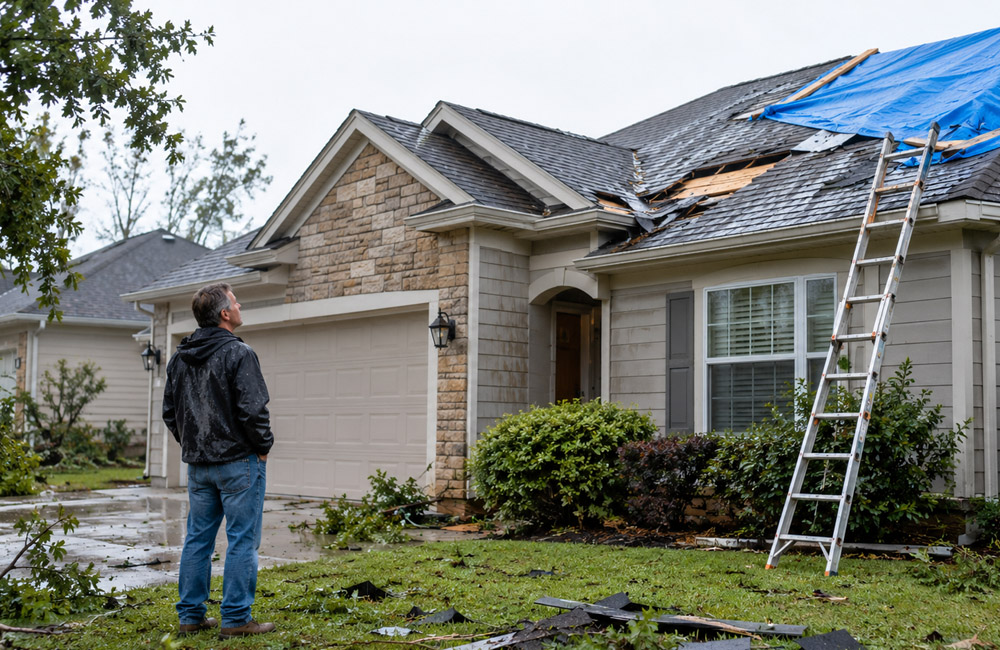
You need emergency roof tarp in Warrenton situations handled fast when there’s an active opening letting water in, a section of decking exposed, or a forecast showing more rain within 48 hours. That’s it. Those three conditions are the trigger. If none of them apply, a tarp isn’t urgent and you can wait for a proper inspection.
If one does apply, don’t wait for a contractor to free up. Get something waterproof over the opening, even temporarily, and document the damage before you do it. Photos of the exposed area, shot from the ground with your phone zoomed in, protect your claim far better than a clean but undocumented roof.
I’d also push back on the instinct to tarp the entire roof. It’s expensive, it traps moisture if it’s done badly, and it can hide damage an adjuster needs to see. Cover the problem area, not the whole house.
Emergency Declarations Change What You Can Recover
One thing most homeowners never check: whether your county was included in a federal disaster declaration. When a major storm triggers one, FEMA opens assistance channels that don’t exist during a normal insurance claim, and the window to apply is limited.
The Federal Emergency Management Agency maintains a searchable disaster database by state and county. It takes about two minutes to check. If your area shows up, you may have access to help beyond your homeowners policy, and knowing that before you sign anything with a contractor keeps you from leaving money on the table.
How to Read a Contractor Before You Sign
Storm season brings out two kinds of roofers: the ones who live where you live, and the ones who follow hail across four states and vanish by fall. You want the first kind.
A few things I’d ask, in this order:
- Where’s your physical address? A local company gives you a street, a shop, and a crew you could drive past. A storm chaser gives you a phone number and a temporary PO box.
- Who’s pulling the permit? The answer should be the contractor, not you. Permitted work gets inspected, and that inspection is your protection.
- Will you meet my adjuster on site? Legitimate roofers do this routinely. Contractors who dodge it usually have a reason.
- What happens if it leaks again in six months? Get the warranty in writing, and read what it actually covers, because materials warranties and workmanship warranties are different documents with very different terms.
Ask for proof of insurance too. Roofing sits high on the list of trades that account for serious workplace injuries, and the Occupational Safety and Health Administration holds employers responsible for fall protection and jobsite safety. If a crew shows up without harnesses or proper fall gear, that tells you something about how they’ll treat your roof.
The contractor who pressures you to sign the same day is the one to walk away from. Good roofers are busy, but they’re never so busy they can’t let you sleep on a decision worth five figures.
A Simple Timeline That Keeps You Covered
Here’s how I’d sequence the first two weeks, mostly so nothing falls through the cracks while you’re dealing with cleanup and insurance paperwork.
| When | What you do
|
| Day 0 to 1 | Photograph everything from the ground. Note the storm time and what you heard. |
| Day 1 to 3 | Pull the local storm report. Check your yard for granules and gutter dents. |
| Day 2 to 5 | Call your insurer and open the claim. Tarp only if water is actively entering. |
| Week 1 to 2 | Get two or three local inspections. Ask the questions above. Compare scope, not just price. |
| Before signing | Confirm permit responsibility, insurance proof, and the written warranty terms. |
The mistake I see most often isn’t picking the wrong roofer. It’s doing nothing at all because the damage isn’t obvious. Roofs don’t heal. They just wait.
What Most Homeowners Get Wrong
Two things, and they’re related.
The first is treating insurance as the starting line instead of documentation as the starting line. Adjusters work from what’s visible and what’s recorded. If you have storm data, dated photos, and a clear interior check, your claim moves faster and lands closer to what the repair actually costs.
The second is waiting for a leak. Roof damage from wind and hail frequently doesn’t leak for weeks or months. The shingle seal breaks, water gets under the layer, and the damage compounds quietly through freeze-thaw cycles and sun exposure. By the time you see the stain on your ceiling, the repair usually involves sheathing and underlayment, not just a few shingles.
So check your attic this week regardless of whether you think anything happened. Shine a light along the underside of the roof deck and look for dark streaks, soft spots, or anything that looks different from the rest of the boards. It takes ten minutes and it’s the single best early warning system you have.
If something looks off and you’re not sure how serious it is, get it looked at before the next front moves through. The inspection is free in most cases, and the difference between a small repair and a full replacement usually comes down to how quickly somebody caught it.