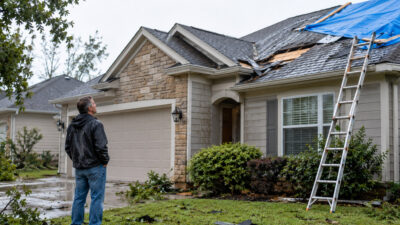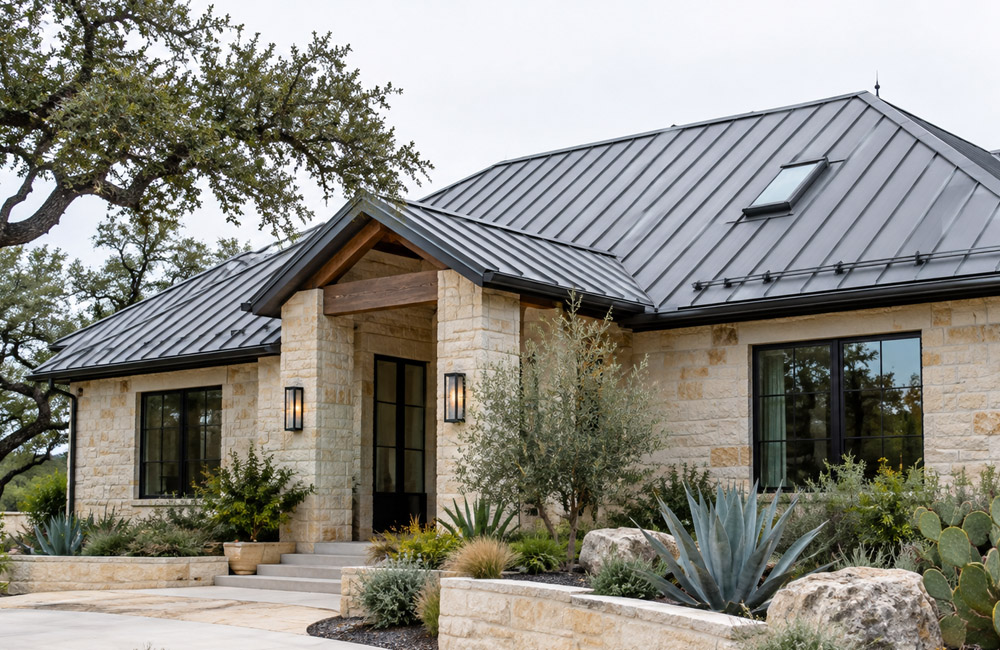
Metal roofs here get sold on romance. Standing seam, matte black, that clean line against an oak. Then the first real hail storm rolls through Bexar County and the conversation changes to dent depth and insurance paperwork.
So let me skip the brochure version. A metal roof is a genuinely strong choice for this climate, but only if you pick the right panel profile, the right underlayment, and a crew that knows how San Antonio heat moves across a roof deck. Get those three right and you’re looking at decades of quiet service. Get one wrong and you’ll spend the next ten years chasing leaks around fasteners you can’t see.
Here’s what I’ll cover: how metal actually performs under Texas sun and hail, what a real quote looks like in this market, and the handful of questions that separate a solid installer from a guy with a truck and a magnet sign.
Why metal handles San Antonio weather better than most roofs
Start with the sun. Your attic in August is a furnace, and a big part of that heat enters through the roof deck. Metal reflects a meaningful share of that solar load back into the sky, and the difference shows up on your electric bill and in how fast your AC recovers on a 104 degree afternoon. The Department of Energy covers the basics of cool roof surfaces and solar reflectance if you want the technical version, and it’s worth twenty minutes of your evening.
Then there’s hail. This is the part people get wrong. Metal doesn’t shrug off hail the way a car hood does, but how it reacts depends entirely on thickness and profile. A 24 gauge standing seam panel with a raised seam every 16 inches takes a beating differently than a thin corrugated sheet screwed down flat. The raised seam interrupts the impact. A flat panel takes the full hit, and once it dents, water can pond in the dimple.
My take: for this city, standing seam is worth the extra money over exposed-fastener panels. Not because it’s prettier, though it is. Because there are no rubber washers baking in the sun for fifteen years. Every screw on that panel is a future leak, and San Antonio gives those washers a hard life.
What a metal roof actually costs here
Nobody can quote you a real number without seeing your roof, and anyone who does over the phone is guessing. But you deserve a range before you start calling, so here’s the honest shape of it.
Metal lands well above asphalt shingle and roughly in line with premium tile. Your total depends on square footage, roof pitch, how many valleys and penetrations you’ve got, whether you’re tearing off the old roof or laying over it, and what panel system you choose.
| Factor | What moves the price up | What keeps it down
|
| Panel type | Standing seam, concealed fasteners | Exposed-fastener corrugated or R-panel |
| Pitch | Steep roofs need more safety gear and slower work | Low-slope sections on a simple plan |
| Complexity | Dormers, valleys, skylights, chimneys | Clean rectangular planes |
| Old roof | Full tear-off and disposal | Layover where code allows it |
| Underlayment | High-temp synthetic with ice and water shield | Builder-grade felt, which I’d avoid here |
One thing I’d push back on: don’t let anyone talk you into the cheapest underlayment to hit a number. Your panels will outlive three underlayment layers. When a metal roof fails early, it’s almost never the metal. It’s the layer underneath that cooked at 160 degrees for a decade.
How to find local metal roofing companies in San Antonio you can actually trust
This city has a lot of roofers. Storm season brings more of them out of the woodwork, sometimes literally, sometimes from three states away with a magnetic sign and a rental truck. So the screening matters more than the shopping.
When you talk to local metal roofing companies in San Antonio, ask for three things in writing: the panel manufacturer and gauge, the exact underlayment product name, and the warranty terms for both materials and labor. That third one is where the real differences hide. A manufacturer’s warranty covering the panel means nothing if the labor warranty expires in two years and the leak is at a penetration.
Here’s the checklist I’d run through before signing anything:
- Ask for the physical address of the business, not just a phone number. A local outfit has a yard.
- Get the manufacturer name on the panel. Reputable systems come with published specs.
- Confirm who pulls the permit. If the answer is you, walk away.
- Ask how they handle penetrations around vents and pipes. The answer should be specific, not “we seal it good.”
- Request a written start date and a written completion window.
- Check that they carry general liability and workers’ compensation coverage.
- Ask what happens if hail damages the roof in year three. Who files, who pays the deductible, who does the repair.
That last question separates the professionals from the storm chasers, and honestly it tells you more about a company than anything on their website.
Installation reality: what the week actually looks like
Most residential metal roofs here take somewhere between three days and two weeks depending on size and complexity. Tear-off is loud. Your yard will have a dumpster in it and a crew on the roof by seven in the morning, because by two in the afternoon the panels get too hot to handle comfortably even with gloves.
Ordering lead time is the sneaky part. Custom-cut standing seam panels get formed to your roof dimensions, and depending on the manufacturer and the season, that can add weeks before anyone climbs up. If a contractor promises a start date ten days out on a custom panel system, ask when the material was ordered. Sometimes the answer is revealing.
During install, watch for the details you can see from the ground. Panels should run straight and even. Seams should look consistent. There shouldn’t be a pile of metal shavings left in your gutters, because those shavings rust and stain.
Will it survive the next hailstorm?
Metal performs well in hail when it’s specified for the job. Impact resistance gets rated through standardized testing, and the National Institute of Standards and Technology publishes research on how roofing materials respond to hail impact if you like reading the science rather than the sales sheet.
Cosmetic dents are the realistic outcome on softer metal. Structural failure is rare. That distinction matters at claim time, because insurance often covers functional damage and not appearance. Know that before the storm, not after.
Where this leaves you
A metal roof is a long commitment and a real investment, and in this climate I think it earns its keep. The heat reflection alone makes summers more bearable, and the lifespan means you probably won’t do this again. Just don’t buy on color alone. Buy on panel gauge, underlayment quality, and the reputation of the crew doing the work.
Before any storm rolls in, get two or three written quotes, and make sure at least one of them comes from a company that’s been answering the same phone number in this city for years. The Department of Housing and Urban Development offers homeowner resources on hiring contractors and understanding your rights if you want a neutral second opinion on the paperwork.
So here’s the question worth sitting with: if a hailstorm hit your roof next week, could you name the company you’d call, and would they still be in business when you did?