Shopping for a pre-owned vehicle in Sarasota calls for more than a quick look at the paint and a short drive around the block. From humid summers and sudden downpours to beach trips, I-75 commuting, and weekend hauling, local driving conditions can expose weaknesses in tires, air conditioning, brakes, and weather seals. Buyers considering used pickup trucks for sale should start with a repeatable process that measures the vehicle against their real needs.
A good used-car decision combines condition, history, safety, and total ownership cost. A clean cabin or low asking price can be appealing, but neither replaces careful records, a proper inspection, and a realistic repair budget. Taking a little extra time before signing can prevent a much larger surprise after the vehicle comes home.
Start With Your Sarasota Driving Needs
Choose a vehicle for the life it will actually support. A downtown Sarasota commuter may value easy parking, fuel economy, and a compact footprint. A family heading to Siesta Key, Lakewood Ranch, or youth sports events may need rear-seat room and cargo space. Drivers who tow boats, carry equipment, or make frequent trips across Florida should confirm payload, towing capacity, cooling performance, and highway comfort.
Body style matters. Sedans often suit commuters, hatchbacks add flexible cargo space, SUVs offer room and ride height, minivans prioritize passengers, and trucks support work or recreation. When comparing used trucks for sale, match the bed length, cab size, and capability to the load you expect to carry rather than buying a vehicle larger than necessary.
Set A Real Budget Before Shopping
The purchase price is only the starting number. Establish a maximum out-the-door price before visiting a seller, then account for sales tax, registration, insurance, fuel, financing charges, tires, maintenance, and likely first-year repairs. A lower monthly payment can still cost more overall if the loan term is long or the interest rate is high.
A Simple First-Year Budget
- Vehicle purchase price, taxes, title, and fees
- Estimated insurance and fuel or charging costs
- Immediate maintenance, such as fluids, filters, brakes, or tires
- Financing interest, if applicable
- An emergency reserve for unexpected repairs
Check History And Recalls
The vehicle identification number, or VIN, ties the vehicle to its records. Compare the VIN on the dashboard, driver-door label, title, registration, and history report. Look for ownership changes, reported collisions, mileage readings, service entries, title brands, and gaps that deserve an explanation. A clean report is useful, but it does not prove there are no mechanical problems.
Before proceeding, use the VIN to check for open safety recalls. Also, review the Federal Trade Commission guidance on buying a used car from a dealer so you understand buyers’ guides, warranties, and the importance of getting promises in writing.
Inspect Inside And Out In Daylight
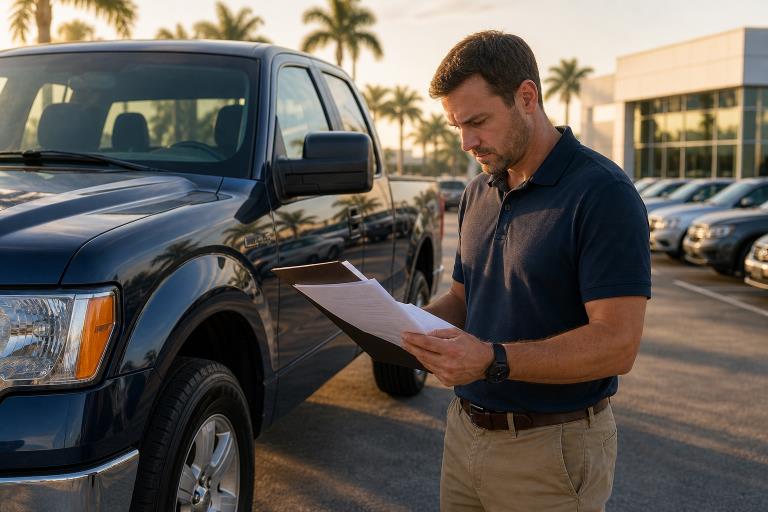
Whenever possible, inspect the vehicle outdoors in daylight on a dry surface. Walk around it slowly and look for mismatched paint, uneven panel gaps, dents, rust, cracked glass, damaged trim, and loose weather stripping. In Sarasota’s humid, salty coastal environment, pay extra attention to corrosion around door edges, underbody components, battery terminals, and electrical connections.
Check every tire for usable tread, uneven wear, sidewall damage, and matching size. Uneven wear can point to alignment, suspension, steering, or collision-related concerns. Test lights, mirrors, wipers, doors, locks, and the spare tire or repair kit. Inside, inspect the carpet, seats, headliner, trunk, and cargo floor for dampness, stains, musty smells, or signs of water intrusion.
Turn on the air conditioning and heat, then test windows, screens, cameras, audio controls, charging ports, and driver-assistance features. Confirm that dashboard warning lights appear during startup and switch off as expected. Ask whether all keys, remotes, manuals, and charging cables are included.
Take A Complete Test Drive
Drive on local streets and, if permitted, at highway speed. Test cold starting, acceleration, braking, steering response, shifting, suspension, parking, visibility, and climate controls. Listen for clunks, grinding, rattles, whining, or wind noise. Notice whether the vehicle pulls, shakes at speed, vibrates while braking, or hesitates under acceleration. Take notes immediately after the drive so two similar vehicles can be compared fairly.
Get An Independent Inspection
A history report cannot replace a mechanical inspection. Arrange for an independent mechanic who is not connected to the sale to inspect the vehicle before completing the purchase. Ask for a written summary of urgent repairs, upcoming maintenance, safety concerns, and estimated costs. Refusal to allow a reasonable inspection is a serious warning sign.
Compare Ownership Costs, Not Just Sticker Prices
Use the same categories for every vehicle under consideration. Compare the purchase price, estimated payment, insurance quote, fuel use, tire size, parts availability, immediate maintenance, and expected resale value. A less expensive vehicle can be the costlier choice if it needs tires, brakes, air-conditioning work, or suspension repairs soon after purchase.
Review Paperwork And Know When To Walk Away
Before signing, verify the title status, VIN, odometer reading, warranty terms, inspection documents, and full out-the-door price. Read every fee and add-on closely. Make sure verbal promises, repairs, accessories, or warranty coverage appear in the written agreement. Understand whether the vehicle is sold as is, with a limited warranty, under remaining manufacturer coverage, or with a separate service contract.
Walk away if the VIN does not match, the title is unclear, the mileage is unexplained, the records are missing, or the seller pressures you to pay immediately. Avoid unusual payment methods and large deposits before the vehicle, documents, and terms are verified. Several small concerns together can be more meaningful than one isolated flaw.
Use A Final Sarasota Buyer Checklist
- Confirm the vehicle fits your daily driving, passengers, cargo, and weather needs.
- Set a full budget and maximum out-the-door price.
- Verify the VIN, history, title, and recall status.
- Inspect the exterior, interior, tires, engine bay, and features.
- Complete a thorough test drive on more than one type of road.
- Get an independent inspection and estimate the needed repairs.
- Review every document before payment or signature.
Conclusion
The strongest used-car choices come from patient comparison rather than pressure or appearance. For Sarasota drivers, a vehicle that handles heat, rain, traffic, and everyday demands with confidence is worth the extra evaluation. Check the condition, confirm the records, calculate the real cost, and move forward only when every important question has a clear answer.