
There is a popular myth in outdoor culture that spontaneous, off-the-cuff adventures yield the best memories. While flexibility is certainly useful on the trail, true freedom in the wild is built on a foundation of thorough preparation. Whether you are embarking on a weekend backpacking loop, a multi-day river trek, or a high-country archery hunt, poor preparation turns a dream getaway into an exhausting ordeal.
Smart planning does not ruin the magic of adventure—it unlocks it. By eliminating uncertainty around gear, navigation, and environmental hazards ahead of time, you give yourself the mental bandwidth to stay present, make sound decisions, and enjoy every mile.
1. The Core Benefits of Structured Trip Preparation
Quick Answer: Structured outdoor trip planning reduces decision fatigue, prevents critical gear failures, ensures group safety, and maximizes your active recreation time by eliminating avoidable field delays.
When you step into the backcountry, every unpredictable variable—from sudden weather shifts to missing gear—demands mental energy. When you lack a clear plan, small hiccups quickly cascade into major stress.
Adopting a detailed outdoor trip preparation protocol offers clear operational advantages:
- Enhanced Safety: Knowing emergency evacuation routes and satellite communication protocols saves lives during medical events.
- Cost and Energy Efficiency: Packing exact gear and food ratios prevents carrying unnecessary weight up steep mountain passes.
- Higher Success Rates: Whether summiting a peak or harvesting game, logistical readiness directly correlates with achieving your goals.
2. Navigating Logistics: The Three-Tier Planning Framework
Quick Answer: The three-tier planning framework categorizes logistics into Environment (weather/terrain), Equipment (gear/tools), and Emergency Protocols (evacuation/first aid) to cover all field contingencies.
To ensure no detail is overlooked, break your planning down into three manageable layers:
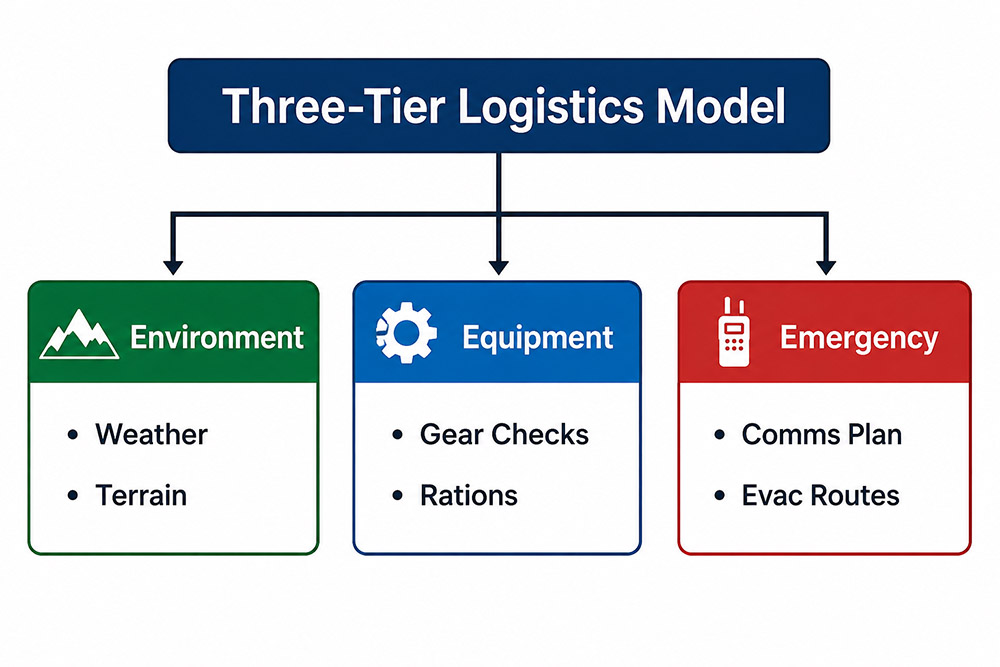
Developing a strong backcountry logistics strategy across these three pillars prevents single-point failures in remote environments where store runs and cellular signal are non-existent.
3. Equipment Verification: Testing Gear Before the Trailhead
Quick Answer: Gear verification requires assembling, testing, and inspecting every piece of equipment at home under realistic conditions to confirm function, fit, and sharpness before packing.
Never break in new boots, test a tent fly, or ignite a new stove for the first time at the trailhead. Every piece of equipment in your pack should be a known variable with proven reliability.
This principle is especially vital for big-game hunters embarking on backcountry trips. Your entire season often hinges on a single moment of execution. Inspecting arrows, tuning bow setups, and mounting razor-sharp fixed blade broadheads to ensure maximum structural integrity and field-point accuracy eliminates gear-related failures when an opportunity presents itself in dense cover.
Taking 30 minutes to conduct a full gear audit at home prevents hours of frustration in the woods.
4. Environmental Intelligence: Analyzing Weather and Terrain
Quick Answer: Environmental analysis involves studying satellite imagery, elevation profiles, water availability, and micro-climate forecasts rather than relying on general city weather predictions.
A common mistake among outdoor enthusiasts is relying on weather reports from the nearest mountain town. Elevation changes dramatically alter local conditions; a sunny 65°F (18°C) forecast in the valley can easily mean 35°F (2°C) winds and freezing rain at a 9,000-foot ridge pass.
Effective wilderness hazard mitigation requires studying topo maps for natural funnels, identifying primary and secondary water sources, and tracking 10-day weather trends. Always prepare for temperatures at least 15 to 20 degrees colder than the regional baseline forecast.
5. Myth vs. Fact: Debunking Outdoor Planning Misconceptions
Separating planning myths from reality helps keep your wilderness trips safe and stress-free.
- Myth: “Planning every detail takes away the spontaneity of outdoor travel.”
- Fact: Thorough planning handles the baseline logistics, giving you more freedom and confidence to explore off-trail safely.
- Myth: “If you have a mobile navigation app, you don’t need paper maps.”
- Fact: Cold temperatures drain phone batteries rapidly, and screens shatter easily. A waterproof topo map and magnetic compass require no battery power and never fail.
- Myth: “A basic first aid kit is enough for any emergency.”
- Fact: A first aid kit is only as good as your knowledge. Carrying advanced supplies like tourniquets or splints without knowing how to use them offers false security.
6. Pre-Departure Safety Checklist
Run through this practical checklist 24 hours before leaving home:
- [ ] Leave an Itinerary: Send exact trail routes, campsites, vehicle info, and return deadlines to a trusted contact at home.
- [ ] Check Water Sources: Verify recent reports regarding seasonal creek flows along your planned route.
- [ ] Inspect Electronics: Charge satellite messengers, headlamps, GPS units, and external power banks to 100%.
- [ ] Audit Rations: Pack an extra 24 hours of high-calorie, non-perishable food in case unexpected weather delays your exit.
- [ ] Review Emergency Evacuation: Highlight the nearest roads or ranger stations along every leg of your route.
7. Frequently Asked Questions
How far in advance should I start planning a backcountry trip?
For simple weekend trips, 1 to 2 weeks of prep is sufficient. For high-elevation treks, multi-day hunting trips, or wilderness water routes, start planning 2 to 3 months in advance to secure permits, audit gear, and build physical conditioning.
What is the single most overlooked item in trip planning?
Communication protocols. People often remember their physical gear but fail to establish a firm “call-by” time with family at home, triggering unnecessary search and rescue calls over minor delays.
Summary of Key Takeaways
Smart planning is not about controlling every second of your journey; it is about building a resilient framework that absorbs unexpected field challenges without compromising your safety or enjoyment.
- Verify Your Gear: Test and inspect all equipment at home to guarantee reliability in the field.
- Analyze Micro-Climates: Prepare for elevation-based weather changes rather than valley forecasts.
- Establish Clear Protocols: Share detailed itineraries and communication deadlines with trusted contacts before departure.
When you invest time into thoughtful preparation before leaving home, you arrive at the trailhead confident, focused, and ready to experience the wilderness at its absolute best.