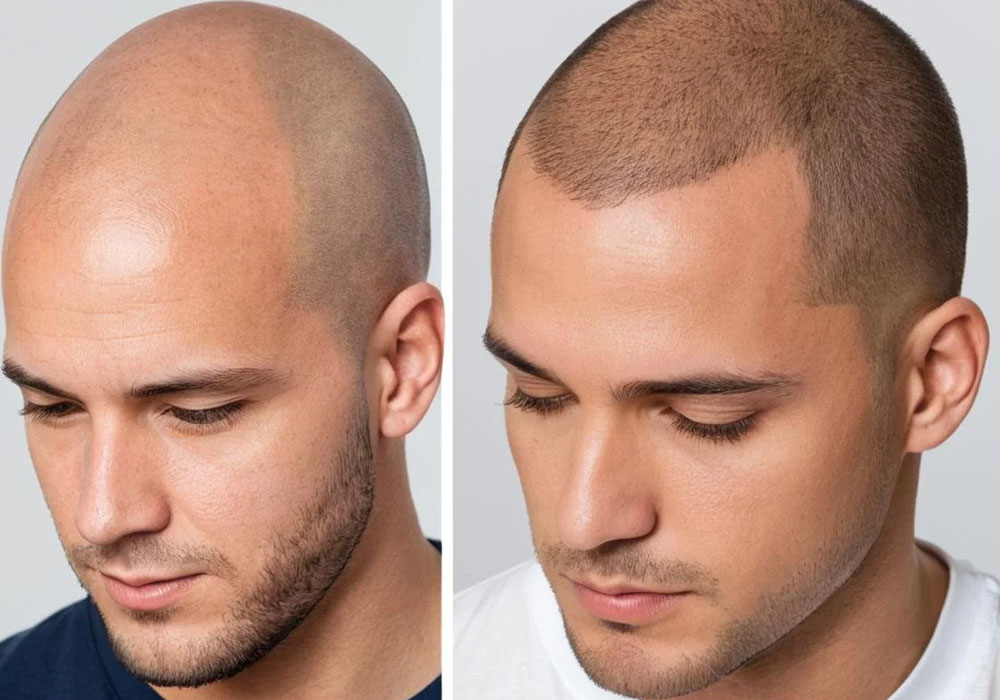
A hair tattoo uses scalp micropigmentation to create the appearance of individual hair follicles across selected areas of the scalp. When scarring affects the scalp, the treatment focuses on applying pigment within and around the scar so the area blends more naturally with the surrounding hair. Because scar tissue varies in texture, color, and shape, pigment placement and distribution are adjusted to suit the affected area. Here is more information about transforming a hair tattoo into a customized solution for bald spots:
Camouflaging Bald Spots
A scar-related bald spot leaves areas of the scalp visible where hair is absent due to scarring. Scalp micropigmentation (SMP) deposits pigment into scar tissue and nearby skin to reduce the contrast between the scar and surrounding areas. The treatment creates the appearance of hair follicles, while existing hair provides a visual reference for pigment placement.
Follicular Unit Extraction (FUE) leaves small, round scars at individual extraction sites. Because the size affects the diameter of each extraction site, scar patterns differ across the donor area. Follicular Unit Transplantation (FUT) creates a linear scar because surgeons remove a strip of scalp containing hair follicles.
These procedures leave distinct scar patterns across the scalp, so treatment approaches vary accordingly. FUE and FUT scars, including linear strip scars, are often addressed through scalp scar camouflage. Pigment is applied to the scar and surrounding skin to help the area blend with existing hair. The treatment reduces the scar’s visibility, but it does not remove or alter the underlying scar tissue.
Blending Existing Hair
A hair tattoo creates the appearance of hair follicles within scarred areas alongside existing hair. Scalp micropigmentation applies pigment to scar tissue and surrounding scalp to reduce visible contrast. The treatment creates tiny follicle-like impressions within the affected region, while color-matched pigment helps the area blend with existing hair. Pigment also extends around the scar, creating a more consistent appearance across the treated area. Because surrounding hair provides a visual reference, pigment placement follows the density and pattern of nearby follicles.
Adding Hair Density
Density enhancement focuses on donor areas where bald patches or scars create visible spaces between existing hairs. SMP adds the appearance of additional follicles, which helps reduce the visual contrast caused by thinning or scarring. Because extraction patterns and punch sizes differ, the amount and distribution of scarring also vary across the donor region.
Pigment creates tiny follicle-like impressions within the treated skin, and the application extends across scarred sections. These placements create a more consistent appearance across the donor region. Practitioners are able to adjust the pigment colors to match existing hair, helping the results look more natural.
Covering Alopecia Areas
Alopecia refers to hair loss affecting the scalp or other areas of the body. When alopecia leaves visible scarring, scalp micropigmentation places pigment within the scarred area to create the appearance of tiny hair follicles. Pigment also extends into the surrounding scalp, helping the treated area blend with nearby hair. The treatment focuses on reducing the appearance of alopecia-related scarring, but it does not address the underlying cause of hair loss. During the consultation, clients discuss the SMP process and review examples of previous alopecia treatments. The practitioner also answers questions and evaluates the pattern and extent of hair loss to determine the appropriate approach. Because alopecia affects each person differently, this assessment helps guide pigment placement and density across the affected areas.
Book a Hair Tattoo Consultation
A hair tattoo offers a targeted approach for addressing visible balding and thinning across the scalp. The practitioner evaluates the pattern, extent, and density of hair loss, then develops the treatment around those characteristics. Scarring is evaluated when it affects the treatment area. Contact a practitioner today to discuss scalp micropigmentation and explore options for addressing visible balding.