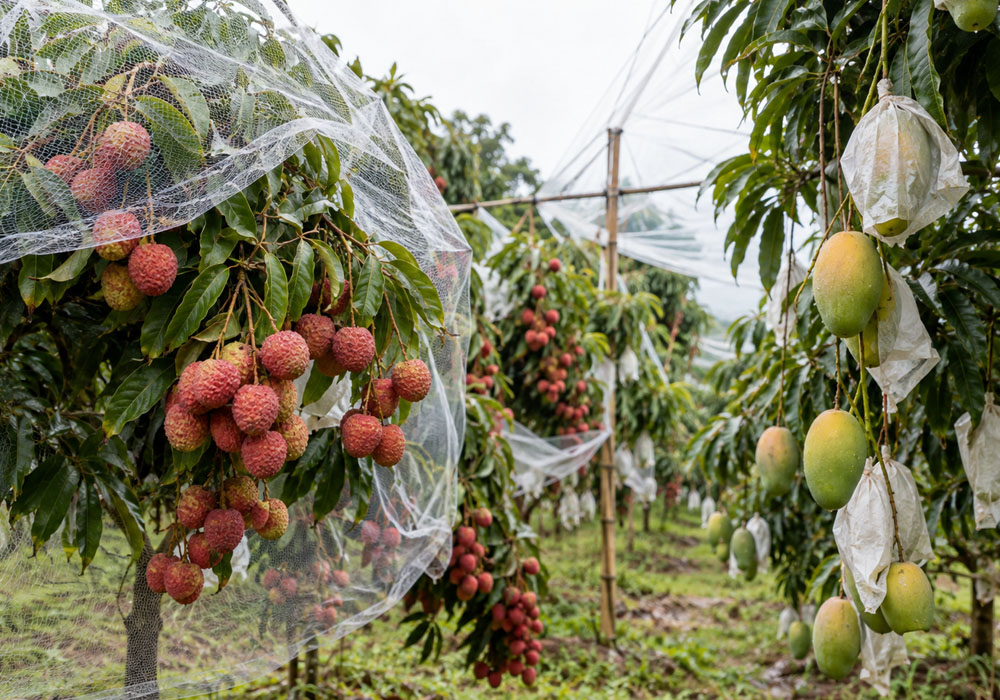
In Dharhara, a village near Bhagalpur in Bihar, families have long planted fruit trees when a daughter is born, mango most of all. News reports on the tradition have counted more than 20,000 fruit trees in the village. Bhagalpur is known for Bhagalpuri Zardalu, a mango registered as a Geographical Indication in 2018. For the growers who tend them, each year’s fruit depends on the weather at a few decisive points. Checking the weather dharhara each day helps a grower decide when to water, when to wait, and when to pick.
Two Crops, Two Different Risks
Mango and litchi grow side by side here, but the weather that threatens each is not the same.
| Crop | Key weather period | Main concern |
| Mango (Zardalu) | Flowering and fruit set, February–March | Rain, humidity and disease pressure |
| Litchi | Fruit development through May | Hot, dry weather and fruit cracking |
| Both | Weeks before harvest | Hail, squalls and heavy rain |
Mango at Flowering
Mango flowering in this part of Bihar typically falls around February and March, and this is when the Zardalu crop is most exposed. Prolonged wet or humid weather at this stage can increase the risk of diseases such as powdery mildew and anthracnose around the flowers, potentially reducing fruit set. Dry weather carries less of this risk, though temperature and pollination conditions also affect how well the fruit sets.
Litchi in the May Heat
Litchi carries the season’s clearest weather risk. Hot, dry “loo” conditions and high temperatures raise the risk of fruit cracking, especially when the tree cannot keep enough moisture during fruit development. In a bad year, cracking ruins much of the crop. ICAR’s advisory for Bihar litchi growers addresses it directly: keep the orchard moist through the hot weeks with light, regular irrigation from the time the fruit is small until it ripens, and use mulch to keep moisture in the soil. ICAR has also documented Bihar litchi orchards using micro-sprinklers during loo conditions to cool the canopy and raise humidity around the fruit.
What a Forecast Lets a Grower Do
A forecast earns its place in the orchard when it points to a specific action, not just a description of the sky.
- Several hot, dry days in the outlook are a cue to check soil moisture and irrigation needs before the fruit comes under stress.
- Strong winds forecast during flowering or early fruiting can increase flower and young-fruit loss, and make spraying harder to apply evenly.
- Rain near harvest is a reason to check whether mature fruit should be picked sooner, especially when prolonged wet weather is forecast.
- A forecast of severe wind or hail is a chance to secure vulnerable young plants and reconsider whether mature fruit should come in before it arrives.
- Prolonged heat during litchi development calls for closer watch on soil moisture and cracking than an ordinary warm spell.
A Local View for Dharhara’s Orchards
A forecast built for the orchard helps a grower more than one for Bhagalpur town, where conditions can differ from the village. MeteoFlow gives Dharhara its own current temperature, rainfall, wind, humidity and UV, alongside an hour-by-hour view of the coming 24 hours and an eight-day outlook. For a litchi grower, the value is a few days’ warning of a hot, dry stretch, with time to water before the fruit is stressed. For mango, the daily outlook shows whether a wet spell is building at flowering. The service reports the conditions. The grower decides whether to water, spray, or pick.
The Weeks That Decide the Harvest
Flowering in late winter, the dry heat of May, and the storms approaching harvest are the windows when a grower should watch Dharhara’s weather most closely. Mango and litchi face different risks at each, from disease at flowering to cracking in the May heat and spoilage in a wet harvest. A forecast built for the village, from a service like MeteoFlow, gives the few days’ notice a grower needs to water the litchi, delay a spray, or bring in mature fruit before a storm, protecting a harvest the families here depend on.