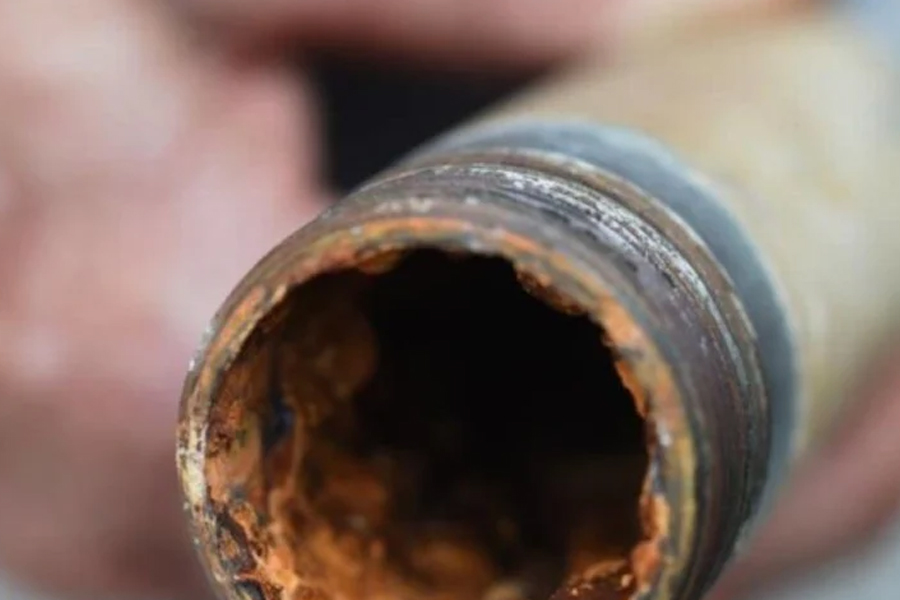
The Invisible Chemistry Behind Chronic Clogs
Clogs rarely start dramatically. Chemistry guides their peaceful incubation. Household water with high dissolved mineral loads like calcium and magnesium loses certain minerals as conditions change. Water heater heat lowers solubility. Minerals leave solution due to pressure and pH changes. Scale, a hard crust, forms on pipe walls and fixtures. A free-flowing tube becomes a constricting channel with each millimeter.
Think of it like cholesterol in arteries. Nothing seems wrong until the narrowing is undeniable. Every shower, laundry cycle, and dishwashing session adds a little more mineral armor to the inside of your plumbing, say Meridian Residential Group specialists. Over time, the once-slick surface turns gritty, and water slows.
From Roughness to Roadblocks: How Deposits Catch Debris
Smooth pipes resist accumulation. Rough pipes invite it. Once mineral scale, rust, or grit creates texture, the system behaves differently. Hair friction increases. Food particles snag. Coffee grounds, rice, and paper fibers cling to bumps and corners, knitting themselves into a mat.
Corrosion forms tubercles in older iron or galvanized lines. Like coral, these catch sediment and grow outward. Not even plastic lines are immune. Plastic doesn’t corrode, but scale and organic film create roughness. Small trash is more likely to form a greater obstruction on uneven surfaces.
Soap, Surfactants, and the Stubborn Film
Soaps and many body washes are designed to bind oils and lift them away. When those same products collide with calcium-rich water, chemistry pivots. Instead of rinsing clean, soap molecules react with minerals and form insoluble soap scum. The film is waxy, sticky, and persistent. It adheres to the insides of tubs, shower glass, and the unseen world of your pipes.
A thin layer works like Velcro. Shampoo residues, laundry lint, and sloughed skin cells form a thin covering that thickens with use. The cold water rinses solidify it quickly. Warm water softens yet releases more dissolved minerals downstream. Regardless, the film inspires clogs.
Grease Behavior in Different Water Conditions
Grease, especially in kitchens, is dangerous. In ideal conditions, dish soap surfactants would encapsulate fats for safe transport. High mineral content makes micelles unstable. Like candle wax, fats separate, cool on metal or plastic, and set. Scale and sediment provide them foothold. Even a teaspoon adds up.
Temperature gradients matter. The cooler the downstream pipe, the faster lipids congeal. Short bursts of hot water rarely carry fats far enough. They simply move the problem deeper where access is harder and tools cannot reach easily without specialized equipment.
Microbes, Biofilm, and Odors
Not all accumulation is food or mineral. On damp surfaces, microorganisms form biofilm, a glue-like matrix. A neglected faucet aerator has the same muck. Biofilm thickens, traps nutrients, and retains sediment. In intermittently used sewers, it might also stink. Certain bacteria produce rotten egg odors in the presence of sulfur compounds and low oxygen, indicating plumbing stagnation and organic load.
Biofilm adds to hydraulic resistance, but its biggest troublemaking trait is how it binds everything else. Limescale becomes the scaffolding, biofilm the mortar, and everyday debris the bricks.
Pipe Materials and Age Matter
The path water takes through your home influences how it behaves:
- Copper resists scale better than steel, but pinhole corrosion can occur when water is aggressive or oxygen-poor. Interior roughness increases as corrosion progresses.
- Galvanized steel, common in older homes, often exhibits heavy internal rust and mineral packing that reduces diameter dramatically.
- Cast iron excels at noise reduction but can develop thick interior buildup and internal flaking as it ages.
- PVC and ABS do not corrode, yet they still develop mineral film and biofilm, and joints create eddies where solids settle.
- PEX has smoother interior surfaces and fewer joints, but fixtures, valves, and transitions introduce turbulence that can seed deposits.
Mixed-material systems can create micro-galvanic differences and varying roughness that catch solids at transitions.
Your Home’s Early Warning Signs
Water tells stories if you listen. Crackling or popping from a water heater often signals sediment on the bottom of the tank. Aerators that clog repeatedly point to suspended grit. White crust at faucet bases and on showerheads indicates persistent mineral content. A toilet that needs more than one flush, a bathtub ring that returns quickly, or a dishwasher that leaves a chalky haze all hint at water that is primed to leave deposits inside your plumbing.
Even flow changes can be instructive. A sink that clears, then slows again within days suggests debris is catching on an underlying layer rather than forming a fresh blockage from scratch.
Prevention That Actually Works
Targeted conditioning targets scale-causing chemical. To minimize hardness and limescale, ion exchange softeners use sodium or potassium instead of calcium and magnesium. Minerals attach less to surfaces with template-assisted crystallization devices. Before entering fittings and valves, sediment filtration collects sand and rust. Properly designed cartridges and backwashing media filters reduce particulate burden, limiting larger blockages’ scaffolding.
Appliance care helps. Flush water heaters to remove sediment. Cleaning faucet aerators and showerheads removes dirt that may fall out. Strainers catch food strands and fiber crumbs that tangle with hair and soap film downstream in kitchens. Bathroom hair catchers prevent the most common clog starter from sticking to sticky films.
Together, chemistry control, particulate capture, and simple interception create a system that is much harder for clogs to defeat.
Maintenance and Professional Cleaning Methods
Specialized cleaning restores capacity in pipes after years of deposits. Cable machines can swiftly clear an obstruction, but they typically leave film and scale behind. Hydrojetting removes biofilm and multilayer deposits from the pipe circumferential using high-pressure water. Carefully using chain or carbide descaling tools in appropriate materials can remove mineral crust from metal lines.
Inspection camera information replaces guesswork. A technician can see scale, grease, and particles in a line belly by looking inside. That map determines how to clean and condition the water. Cleaning without addressing water properties invites repeating.
Special Cases: Wells, Seasonal Homes, and Construction Sediment
Many private wells include iron and manganese, which oxidize into dark particles in low places and fixtures. Slime from iron bacteria stinks and stains. Seasonal dwellings let water stagnate for months. While biofilm builds, gases dissolve into the water, and sediments settle. First-use after a long pause can remove debris that speeds through the system and gets trapped at the worst constriction.
Homes near new construction or after a main repair may experience short-term bursts of sediment as municipal lines are disturbed. Sediment filters and frequent aerator cleanouts during that period prevent a wave of grit from seeding clogs throughout the home.
FAQ
How hard does water need to be before scale becomes a real problem?
Once hardness reaches moderately hard, fixtures and appliances commonly have scaling. When water is heated or pressure varies often, deposits build faster with increasing hardness. The practical tipping point depends on plumbing temperature, pH, and flow patterns.
Will a water softener stop every type of clog?
No. Softening reduces limescale, which removes a major building block. But hair, food particles, grease, and biofilm can still create obstructions, especially in areas with poor pitch or low flow. Softening is a powerful preventive measure, not a complete shield.
Why do my clogs come back after I use a drain snake?
A snake opens a path through the blockage, but it often leaves a sleeve of residue on the pipe wall. That rough sleeve quickly captures new debris. Comprehensive cleaning methods that scrub the entire interior, followed by addressing water chemistry and sediment, improve long-term results.
Are chemical drain cleaners safe for older pipes?
Corrosive cleaners can damage aging metal pipes and some rubber components. They also push caustic material into traps and downstream joints, where it may linger. Mechanical or water-based cleaning paired with preventive measures is typically gentler and more effective.
Does a tankless water heater reduce scale problems?
Tankless units remove the large reservoir where sediment can accumulate, but they heat water at very high temperatures. That can trigger scale on heat exchangers if hardness is not controlled. Most manufacturers recommend water conditioning and periodic descaling for reliable performance.
How often should a water heater be flushed to control sediment?
Frequency depends on sediment load and hardness. Some homes benefit from brief flushes a few times per year, while low-sediment systems may go longer. Audible popping, reduced hot water volume, or cloudy hot water are signs that flushing is overdue.
Can vinegar clear limescale inside drains?
Vinegar can soften light surface scale on accessible parts like aerators and showerheads. Inside drains, results are limited because contact time is short and access is poor. It may help with minor films but will not remove heavy mineral crust or deep grease accumulations.
What role does pipe slope play in recurring clogs?
Insufficient slope slows water and allows solids to settle. Even perfect water chemistry cannot overcome poor hydraulics. Where slope is inadequate or there are sags in the line, debris collects and becomes a nucleus for layered buildup.
Is biofilm always present inside household drains?
In most lived-in homes, yes. Biofilm tends to form wherever moisture, nutrients, and surfaces meet. The goal is not to eliminate it entirely but to minimize its thickness and stickiness by controlling minerals, removing sediment, and maintaining steady, healthy flow.