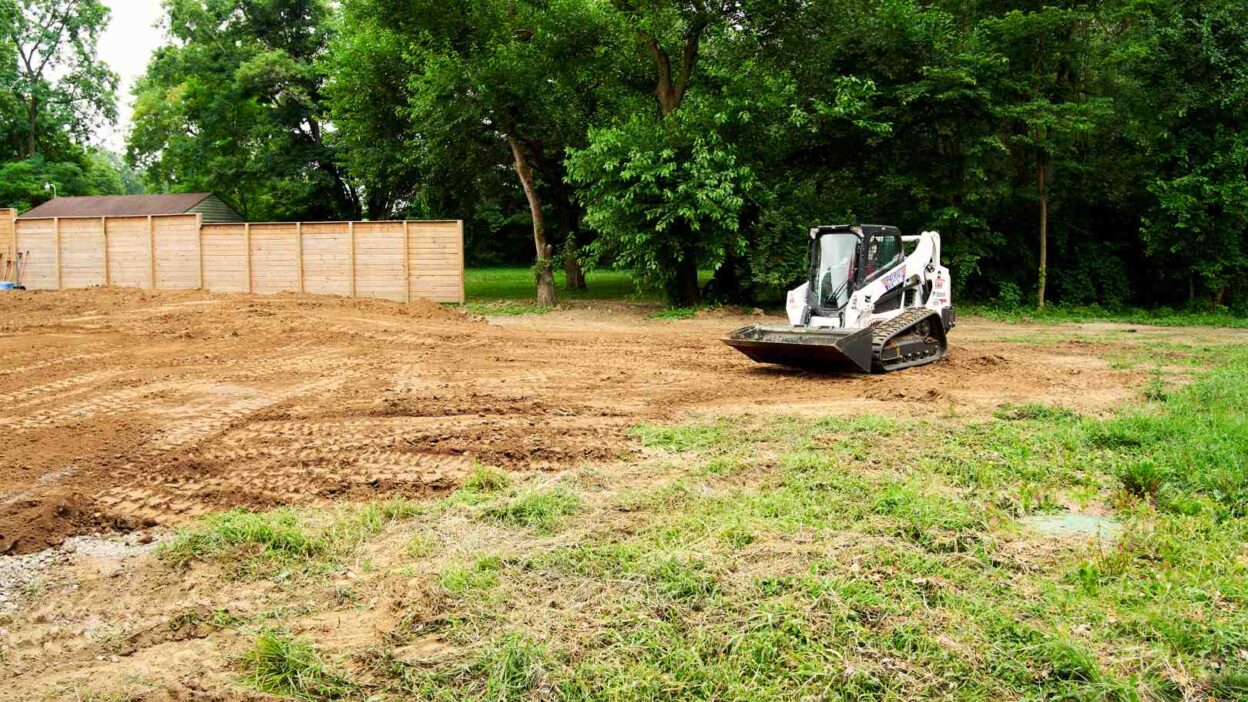
The Core Phases of Excavation, Clearing, and Grading
The journey from raw land to a ready-to-build site involves distinct, yet interconnected, phases. Professional excavation clearing and grading operations establish the structural baseline, ensuring a smooth and reliable progression for residential, commercial, and civil developments alike.
Land Clearing Techniques and Vegetation Management
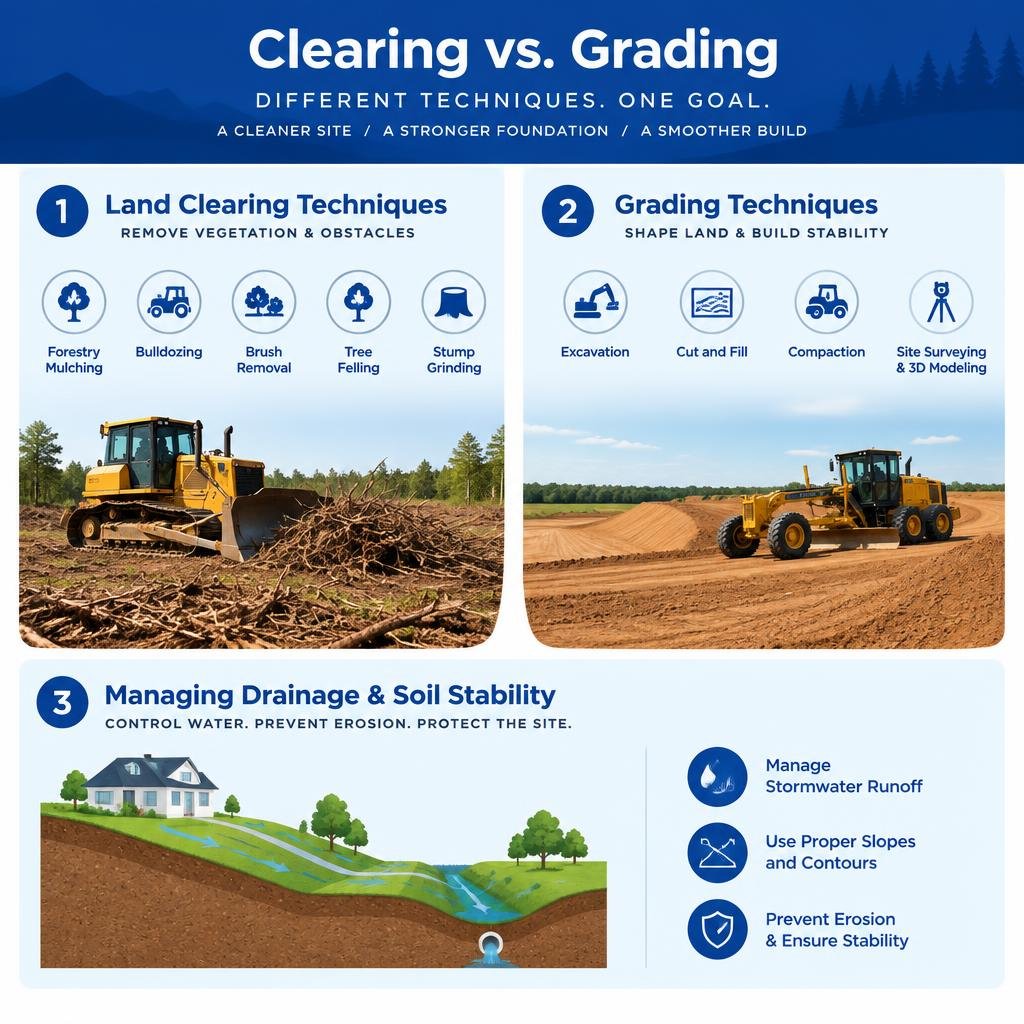
Land clearing is the initial step, focusing on the removal of unwanted obstacles from the site. This primarily includes vegetation such as trees, brush, stumps, and rocks, but can also extend to existing structures, concrete pads, or buried debris. The chosen method depends heavily on the density and type of vegetation, the terrain, environmental considerations, and the project’s timeline and budget.
One common approach is forestry mulching, where specialized equipment grinds vegetation into a fine mulch directly on site. This method is often favored for its environmental benefits, as it returns organic matter to the soil, helps prevent erosion, and eliminates the need for hauling away debris. However, it may not be suitable for very large trees or extremely dense forests, and it leaves behind a layer of mulch that might need to be managed or stripped before structural fill is placed.
For more extensive clearing or heavily forested areas, bulldozing is a powerful and efficient option. Bulldozers equipped with specialized root rakes or heavy-duty straight blades can quickly push over trees, clear dense underbrush, and remove topsoil. While highly effective, this method can cause significant soil disturbance and compaction, which might require additional soil preparation later.
Other techniques include brush removal for lighter vegetation, tree felling for selective removal of larger trees, and stump grinding or stump removal to eliminate remaining tree bases. Root raking follows to gather and remove roots, subsurface taproots, and loose debris, ensuring a clean subgrade that will not decay and cause ground settling later. In some cases, timber salvage might be possible, where valuable timber is harvested and sold, potentially offsetting some project costs. Each method carries its own set of advantages and disadvantages, and a combination is often employed for optimal results across varying terrain zones.
Best Practices for Excavation, Clearing, and Grading Execution
Once the land is cleared, the focus shifts to excavation and grading, which involve reshaping the earth to achieve the desired contours, building pads, and utility elevations. This is where precision and engineering planning are paramount.
Modern projects often benefit from 3D modeling, GPS machine control systems, and advanced site surveying. These technologies allow engineers and contractors to create highly accurate digital representations of the existing terrain and the proposed final grade. Machine guidance systems mounted on excavators and dozers allow operators to cut and fill with millimeter-level accuracy, minimizing costly over-excavation, optimizing earth movement cycles, and providing clear visual documentation for all stakeholders.
A critical aspect of grading is cut and fill, which refers to the process of moving earth from higher elevations (cuts) to lower elevations (fills) on the same site. The goal is often to balance the amount of material cut with the amount filled, reducing the need to import expensive structural fill or export surplus soil. Proper execution of cut and fill ensures the final grade meets design specifications and provides a stable, uniform base for construction.
Following the shaping of the land, subgrade compaction is essential. This involves mechanically densifying the soil in specified lift thicknesses (usually 6 to 8 inches) using vibratory smooth-drum, pneumatic-tire, or sheepsfoot rollers to increase its strength, reduce future settlement, and improve its load-bearing capacity. Moisture conditioning is actively monitored to ensure the soil reaches its optimum moisture content for maximum dry density. Insufficient compaction can lead to catastrophic structural issues for future foundations, pavements, or underground utility trenches. Implementing these best practices ensures that the site is structurally sound, stable, and prepared for long-term use.
Managing Drainage and Soil Stability in Excavation, Clearing, and Grading
Effective land clearing and grading are fundamental to managing water flow and ensuring the long-term stability of a site. Improper grading can lead to significant issues like water pooling, foundation undermining, accelerated erosion, and even structural damage to buildings.
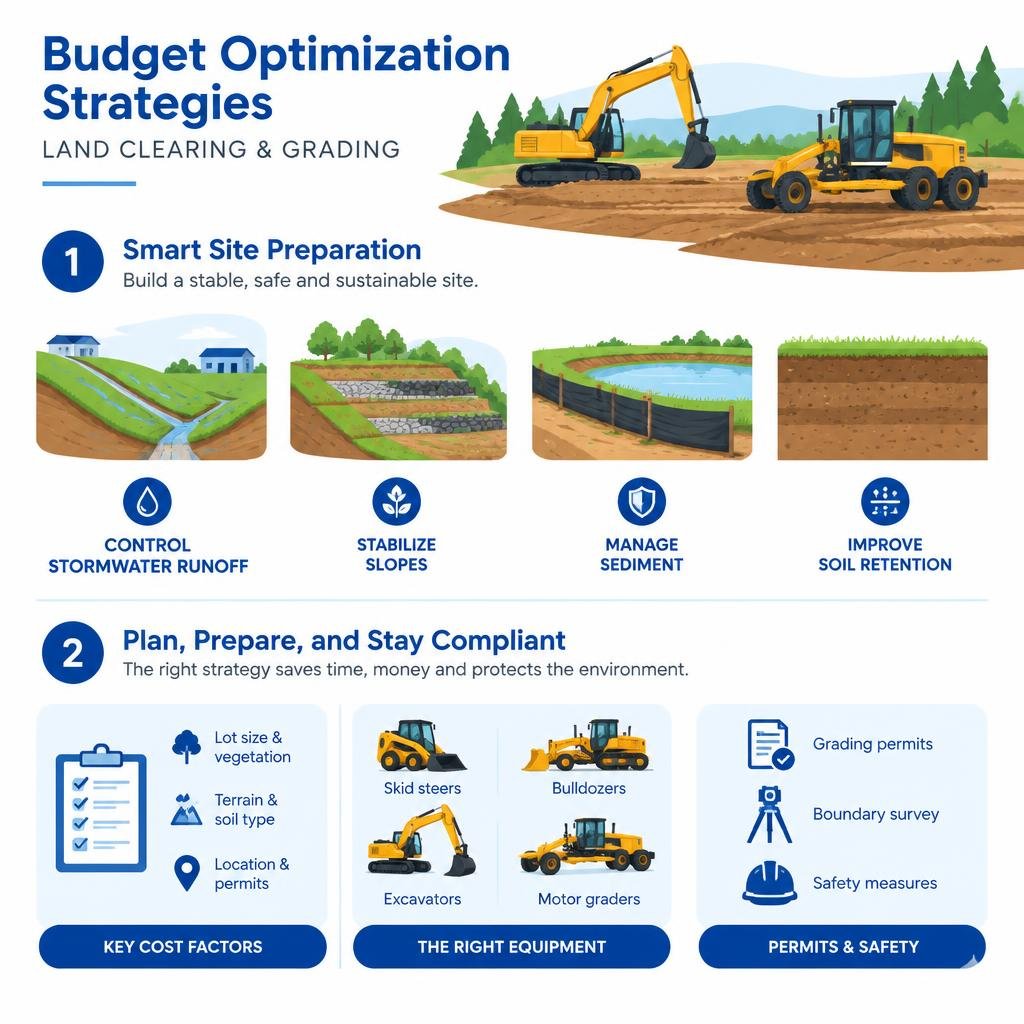
One of the primary goals of grading is to control stormwater runoff. By carefully sculpting slopes and contours, water can be directed away from structures, sensitive areas, and property lines into designated drainage systems, swales, or retention areas. This prevents water from saturating foundations, damaging landscapes, or causing localized flooding. Techniques like creating positive slope away from building envelopes (typically a 5% slope over the first ten feet) and designing swale excavation (shallow, wide depressions lined with turf or rip-rap) are standard strategies.
Slope stabilization is another critical consideration, especially on sites with varying elevations. Unstable slopes are prone to erosion and landslides. Methods to stabilize them include terracing, planting deep-rooted native vegetation, using erosion control blankets, installing hydroseed matrices, or constructing engineered retaining walls. These measures help to bind the soil, slow down water flow, and prevent dangerous soil displacement.
Sediment control is closely related to erosion prevention. During and after clearing and grading, exposed soil is vulnerable to being carried away by wind and water. Measures such as silt fences, sediment ponds, check dams, and straw wattles are installed to trap sediment on-site, preventing it from polluting nearby waterways or accumulating in municipal storm systems. This is not only an environmental best practice but often a strict regulatory requirement enforced by local and federal environmental agencies.
Proper grading contributes to overall soil retention and site resilience. By understanding the soil type, water patterns, and the intended use of the land, professionals can design and execute a comprehensive grading plan that promotes a stable, dry, and sustainable environment for any development.
Strategic Planning, Costs, and Environmental Regulations
Embarking on a land clearing and grading project requires more than just heavy machinery; it demands meticulous strategic planning, a clear understanding of cost factors, and strict adherence to environmental and safety regulations. These elements are crucial for a project’s financial viability, legal compliance, and overall success.
Project Cost Factors and Equipment Selection
While every job site presents distinct requirements, understanding the fundamental cost drivers allows developers, builders, and property owners to budget effectively. These factors are highly variable and depend on the unique characteristics of each site.
Key determinants include the lot size and vegetation density. Clearing a small, lightly wooded parcel will naturally incur different costs than preparing a large, heavily forested tract with massive root systems. The terrain also plays a significant role; challenging slopes, steep grades, or rocky ground typically require specialized equipment, rock breakers, and additional labor hours compared to flat, easily accessible sites. Soil type can also impact costs, as expansive clays or loose saturated sands may require soil stabilization additives (such as lime or cement), geotextile fabrics, or extensive imported structural material.
Location is another major factor, as labor rates, equipment transport logistics, and disposal fees vary significantly by region. Additionally, the need for specific permits, environmental monitoring, and compliance with local municipal codes will factor into overall project overhead.
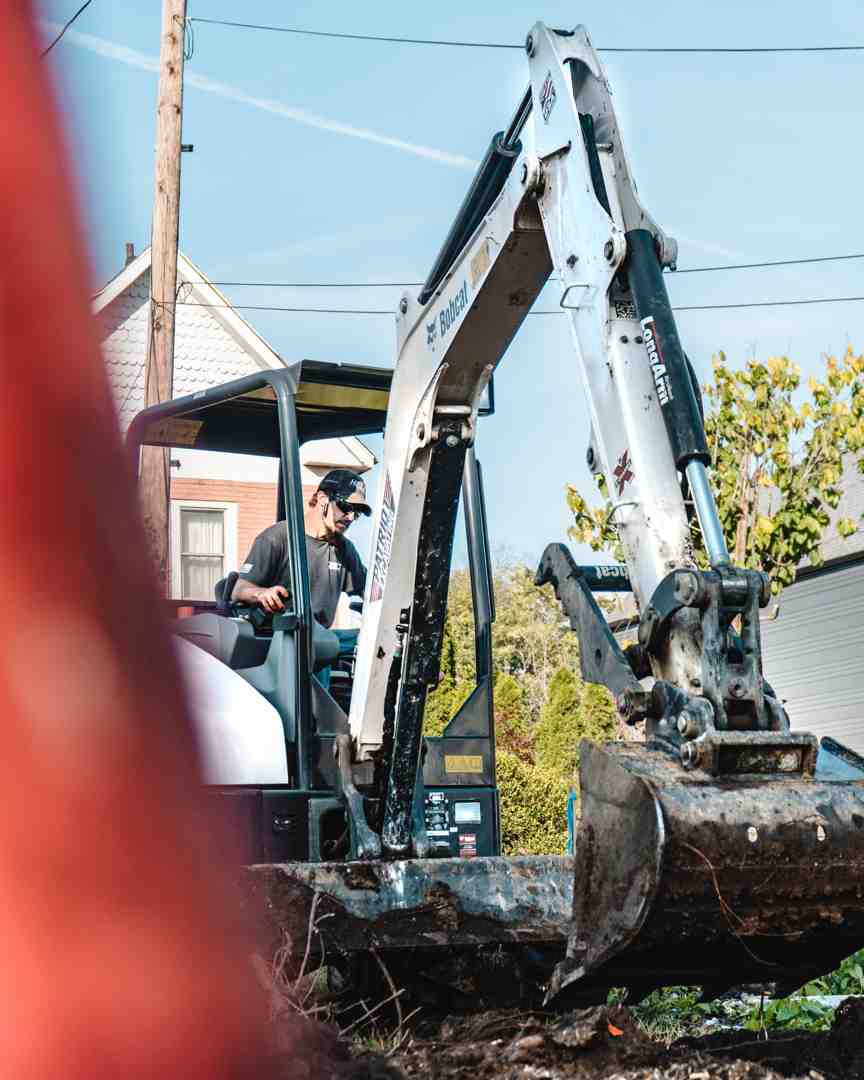
Choosing the right equipment is paramount for efficiency and cost-effectiveness. For smaller projects or areas with limited access, skid steers and compact track loaders offer exceptional agility. For heavy clearing and bulk earthmoving, bulldozers and large excavators are indispensable. Motor graders are essential for achieving precise final grades and smooth surfaces prior to paving or slab pours. Deciding whether to rent equipment or hire a fully licensed and insured earthmoving contractor with seasoned operators directly influences the project budget, schedule reliability, and risk management.
Permitting, Soil Testing, and Operational Safety
Before any ground is broken, a thorough understanding of regulatory requirements and site conditions is essential. Obtaining the necessary grading permits and Stormwater Pollution Prevention Plans (SWPPP) is a non-negotiable step. These permits are typically issued by municipal or county planning departments and ensure that the proposed work complies with zoning laws, erosion controls, wetland protection ordinances, and safety standards.
A precise boundary survey is also critical. This establishes the exact property lines, easements, setbacks, and right-of-ways, preventing encroachment disputes with neighbors and ensuring that all earthmoving activity remains within legal parameters. Without an accurate boundary survey, even well-intentioned site preparation can lead to costly delays, boundary disputes, or legal challenges.
Soil testing and classification provide invaluable information about the site’s subsurface conditions. Geotechnical engineers perform standard penetration tests, core drilling, and laboratory analyses to assess soil bearing capacity, moisture sensitivity, compaction behavior, and shear strength. This data is vital for designing stable building foundations, retaining walls, sub-base pavement sections, and effective site drainage systems. Overlooking geotechnical soil conditions often leads to differential foundation settlement and costly remedial repairs.
Finally, operational safety must be at the forefront of every land clearing and grading project. Heavy machinery, high-voltage lines, uneven terrain, and underground infrastructure present significant workplace hazards. Strict adherence to OSHA standards and regional safety regulations is mandatory. This includes implementing comprehensive safety protocols such as requiring mandatory personal protective equipment (PPE), establishing equipment blind-spot zones, securing open trenches, and conducting routine daily safety briefings. Crucially, calling 811 for underground utility marking must be completed before any excavation begins. Safe daylighting techniques, such as hydro-excavation, ensure underground power lines, gas pipes, water mains, and telecommunication lines remain undamaged, protecting worker safety and keeping the project on schedule.
Conclusion
Land clearing and grading are far more than just moving dirt; they are the strategic foundation upon which successful construction and development projects are built. From the initial removal of vegetation to the precise shaping of the land for optimal drainage and stability, every step in this process is critical.
By understanding the diverse clearing techniques, implementing best practices in excavation and grading, and meticulously managing drainage and soil stability, project managers can mitigate risks and ensure the long-term integrity of their sites. Furthermore, diligent strategic planning, a clear grasp of cost-influencing factors, and unwavering commitment to environmental regulations, permitting, and safety protocols are indispensable.
Investing wisely in expert land clearing and grading is an investment in the future of your project. It prevents costly issues down the line, ensures structural soundness, protects the environment, and ultimately sets the stage for enduring success.