Picking playground gear is not like picking a couch. A wrong couch just looks bad in your living room. Wrong playground equipment can hurt a kid. That is the honest truth nobody says out loud in sales meetings. outdoor playground equipment suppliers are not all the same, and treating them as interchangeable is where most buying mistakes start. Some suppliers cut corners on steel thickness. Some skip proper testing. Some just want your money fast. Knowing what actually separates a good supplier from a risky one saves you years of headaches, and possibly saves a child from a broken arm.
Why the Supplier Matters More Than the Catalogue Photos
A shiny photo tells you nothing about how equipment behaves after two summers of sun and three winters of frost. What matters is what is under the paint. Steel gauge, weld quality, bolt type, these boring details are the whole story. The Consumer Product Safety Commission estimates emergency rooms in the US treat over 200,000 playground related injuries every year, and a big chunk of those trace back to equipment that failed or was installed wrong. That number should sit with you for a second. It is not small.
A good supplier will talk your ear off about materials. A bad one will just talk about price. If a rep cannot explain what steel grade they use without checking a script, walk away. This is not being difficult, it is being smart.
The Standards That Actually Carry Legal Weight
Public playgrounds are not the wild west. There are rules, and the rules are enforced through building codes and insurance requirements, not suggestions on a pamphlet. Commercial equipment for parks and schools generally needs to comply with recognised standards like ASTM F1487 and ASTM F1292 in the US, or EN 1176 across Europe and many other regions. These are mandatory for commercial use. A supplier who cannot show test certificates for these standards is not a supplier you want near your project.
Here is a quick breakdown of what each core standard actually governs, since the names alone tell you nothing:
| Standard | Region | What It Covers |
| ASTM F1487 | United States | Public play equipment design and layout |
| ASTM F1292 | United States | Impact attenuation of surfacing under and around equipment |
| EN 1176 | Europe, widely referenced elsewhere | General safety requirements and test methods |
| AS 4685 | Australia and New Zealand | Playground equipment safety, installation, and inspection |
Materials That Survive Real Weather
Sun fades plastic. Rain rusts metal. Humidity rots wood if it is not treated right. This is not a mystery, yet plenty of budget suppliers still use hardware that was never meant for outdoor life. Stainless steel fasteners, powder coated frames, and UV stabilised plastics are the baseline for anything staying outside for a decade. Anything less is a short term product wearing a long term price tag.
Ask a supplier directly what their expected lifespan is under freeze thaw cycles. A confident answer with a number attached is a good sign. A vague answer about durability is not.
Questions Worth Asking Before You Sign Anything
Most buyers focus on price and delivery time. Both matter, sure, but they are the least important part of the decision. Here is what actually separates a supplier worth trusting from one that will disappear after installation:
- Do they provide third party test certificates, not just their own internal claims?
- What warranty do they offer on structural components versus surface coatings?
- Do they handle installation themselves or subcontract it to whoever is cheapest?
- Can they show completed projects that are five or more years old and still standing well?
- Do they offer maintenance guidance, or do they vanish the moment the invoice clears?
A supplier who welcomes these questions is confident in their product. One who gets defensive is telling you something important, even if they do not mean to.
The Fall Zone Is Not Optional
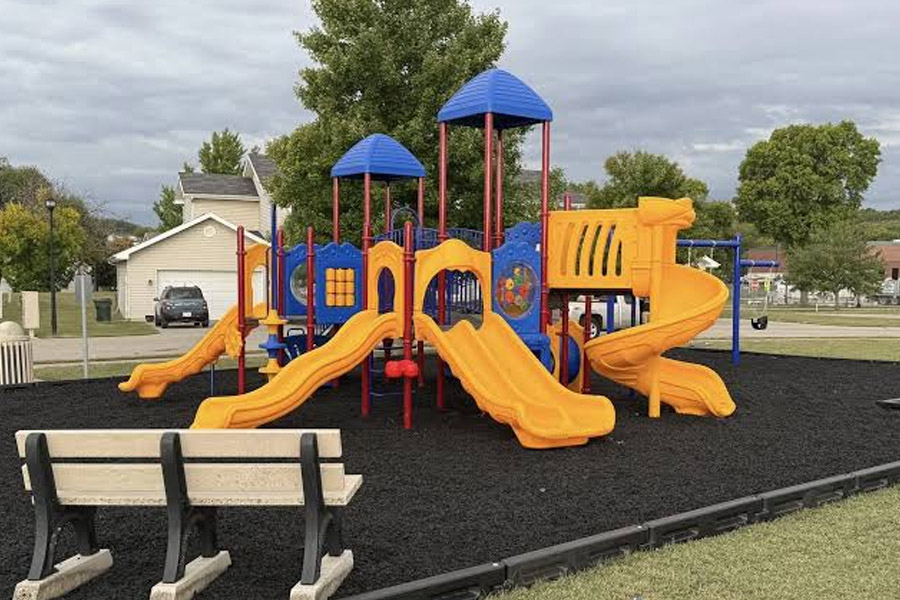
This is the part people skip because it sounds boring, but it is genuinely the most important safety feature of any playground. The area around equipment where a child might land needs proper impact absorbing surfacing, whether that is poured rubber, rubber mulch, or engineered wood fibre at the correct depth. A steel slide bolted onto concrete with a thin rubber mat is a lawsuit waiting to happen, not a playground. The minimum fall zone recommendation in most residential guidance sits around six feet from the outer edge of equipment, and commercial sites often require more depending on equipment height.
Reputable suppliers will not just sell you the climbing frame and leave you guessing about surfacing. They will spec it, because they know an incomplete installation reflects badly on their name too, whether it is fair or not.
Inclusive Design Is No Longer a Bonus Feature
A decade ago, accessible playground equipment was treated as an add on for the few schools that asked for it. That thinking is outdated now. Ramps, ground level activity panels, sensory play elements, and wide transfer platforms let more kids actually play together instead of watching from the sidelines. A supplier who has never designed for accessibility is behind, plain and simple, and a project that skips it is doing less than it could with the same budget.