Most first-timers show up underprepared and leave feeling like they wasted the trip. They forgot ear protection, rented gear they didn’t know how to use, and spent half the session reading posted rules instead of actually shooting. A little planning fixes all of that.
A range day done right is one of the most focused, satisfying afternoons you can have outdoors. The discipline required to line up a shot, control your breathing, and pull the trigger cleanly is genuinely absorbing. And Southern California, with its dense population of serious enthusiasts and well-staffed indoor facilities, is a great place to get started or to sharpen a skill you already have. Here’s what you need to know before you go.
Why Range Culture Is Booming Right Now
Shooting sports have grown dramatically over the past decade, and the numbers back that up. More than 52.7 million people enjoy sport and target shooting activities in the United States. That figure, published by the National Shooting Sports Foundation in their 2024 Participation Report, reflects a broad, sustained shift in how Americans choose to spend their recreational hours.
The crowd has changed, too. In 2022, 17 percent of all adults participating in the shooting sports were newcomers, a 42 percent growth since 2020, with today’s recreational shooters increasingly urban and more representative of women than ever before. That shift shows up visibly at facilities across Los Angeles. Walk into a well-run indoor range on a Saturday afternoon and you’ll see a genuinely mixed room: couples, college students, retirees, people who have never touched a firearm before and people who shoot competitively. The old stereotype of who belongs there is simply out of date.
The Range-Day Ready Framework
This is the approach I’ve seen work consistently for first-timers and returning shooters alike. Think of it in three phases: gear up, brief in, execute. Skip any phase and the session gets messy.
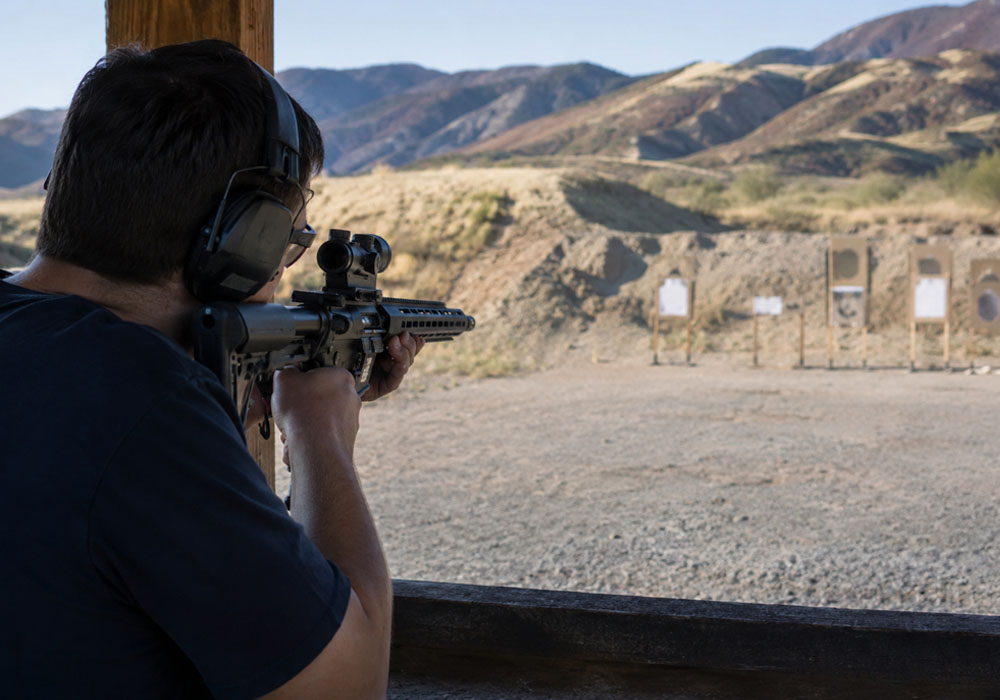
Gear up means arriving with everything you need so you’re not scrambling at the counter. Most ranges offer rental firearms, which is the smart move for beginners, but your own ear and eye protection makes a real difference in comfort. Foam disposable plugs work fine, but a pair of earmuffs rated at 25+ NRR is noticeably better over a 90-minute session. Add safety glasses that wrap around the temples, not fashion sunglasses.
Brief in means taking five minutes with a range officer before you step onto the lane. Ask which direction the targets run, how to call a cease fire, and what the facility’s rules are on drawing from a holster. Good range staff want you to ask. It’s faster for everyone and it keeps the floor safe.
Execute means actually focusing on one skill per session rather than just sending rounds downrange. Pick either stance, grip, trigger press, or sight alignment. Work that one thing until it clicks. You’ll leave with a concrete improvement rather than a vague sense of having fired a lot of bullets.
What to Bring: A Pre-Session Checklist
- Valid photo ID (required at every California facility)
- Eye protection rated to ANSI Z87.1 or higher
- Ear protection: earmuffs or quality foam plugs, or both doubled up for rifle calibers
- Comfortable closed-toe shoes and clothing that doesn’t have an open collar (brass casings eject hot and fast)
- Water and a snack if you plan to shoot for more than an hour
- Your own ammunition if the facility permits bring-your-own
One note on ammo: many indoor ranges restrict steel-core and steel-cased ammunition to protect their backstops. Check before you buy. Lead-free options are increasingly common in California facilities specifically because of state ventilation and environmental standards.
Picking the Right Facility for Your Goals
Not every range is set up for the same purpose. Outdoor ranges give you more space and let you shoot longer distances, but they’re also weather-dependent and often require a longer drive from central Los Angeles. Indoor ranges are climate-controlled, staffed throughout your session, and tend to offer better access to rental firearms and on-site instruction.
If you’re a complete beginner or you’re bringing someone who has never fired before, an indoor facility with a dedicated first-timer orientation is worth prioritizing. The best ones walk you through safe handling, range etiquette, and basic fundamentals before you ever pick up a firearm. That first experience sets the tone for everything that follows.
For anyone looking at a shooting range in california option in the greater Los Angeles area, proximity matters more than you might expect. A facility that’s 40 minutes away sounds fine until you’re trying to fit it into a weekday evening after work. Check weekday hours specifically, because many ranges run extended weeknight schedules that make post-work sessions genuinely viable.
How Southern California Fits Into the Bigger Outdoor Economy
It’s easy to frame a range day as a niche activity, but it’s part of a much larger economic story. According to the U.S. Bureau of Economic Analysis, hunting, shooting, and trapping ranked as the third-largest conventional outdoor recreation category by value added in 2023, generating $14 billion in economic output and posting 19.3 percent growth from 2022. That growth figure placed it second only to bicycling among all tracked outdoor recreation categories, according to BEA’s 2024 Outdoor Recreation Economic Statistics release.
California, as the largest outdoor recreation economy in the country by value added, sits at the center of that growth. The demand for quality range facilities across the state reflects that broader momentum.
Making It a Regular Habit
One range day is a good afternoon. A monthly habit is where you actually build something.
Consistency matters because the fundamentals of marksmanship are motor skills. They degrade without repetition. Shooters who return every three or four weeks hold their progress. People who go twice a year feel like beginners every single time.
“Proficiency, accuracy and safe firearm-handling skills are learned and sharpened through regular and consistent shooting sports participation.” — Joe Bartozzi, President and CEO of NSSF
Building a regular cadence also lets you track real progress. Keep a simple note on your phone: date, firearm used, distance, and one thing you improved. After four or five sessions, patterns emerge. You’ll notice whether your groups are tightening, whether a particular grip adjustment is holding, or whether you keep pulling left under fatigue. That feedback loop is what turns an occasional hobby into a genuine skill.
Southern California’s range infrastructure makes consistency achievable. Between extended evening hours, membership options at established facilities, and the concentration of quality instructors across the LA basin, you’re not far from a solid session no matter which part of the metro you’re in.
The only real barrier is the first trip. Once you know what to expect and show up prepared, the next one is easy to schedule.