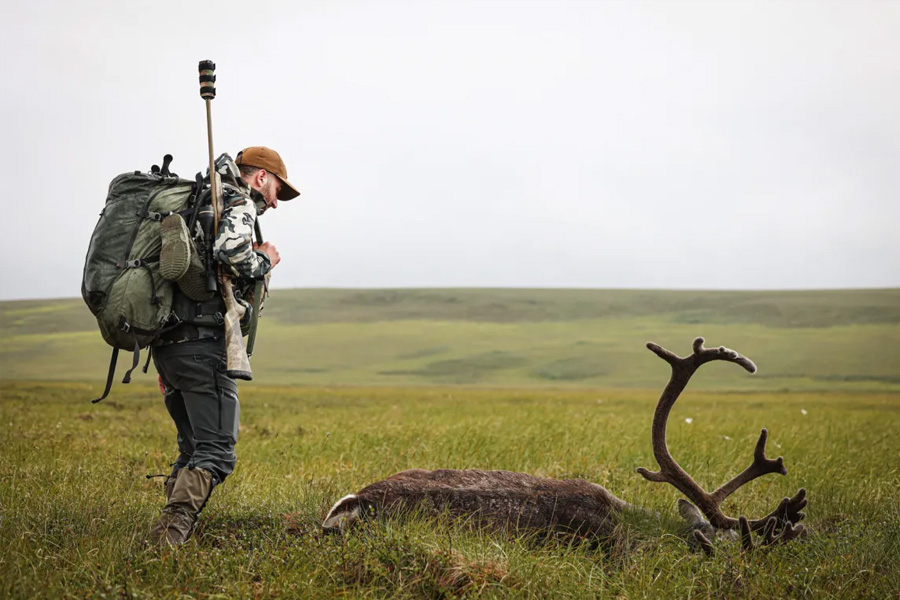
When you are miles deep in the backcountry, hours away from the nearest road, the margin for error disappears. In these environments, your equipment isn’t just a convenience; it is the lifeline that dictates the success of your hunt and, occasionally, your safety. Experienced hunters understand that gear failure is not an option when the stakes are high. Whether you are pursuing elk in the Rockies or whitetails in the Midwest, the reliability of your kit directly correlates to your confidence in the field.
Building a trustworthy kit requires looking past marketing hype and focusing on durability, functionality, and field-tested performance. It is about selecting items that work as hard as you do, regardless of the weather or terrain. This guide breaks down the essential categories of gear where quality cannot be compromised, ensuring you are equipped for reliable results when the moment of truth arrives.
1. Precision Broadheads
The broadhead is arguably the most critical component of your archery setup. It is the only piece of gear that makes contact with the animal, and its performance determines the difference between a clean, ethical harvest and a long, fruitless tracking job. When selecting a broadhead, structural integrity and edge retention are paramount. Hunters must look for materials that can withstand high impact, such as A2 Tool Steel, which is known for maintaining a razor-sharp edge even after passing through bone.
The debate between mechanical and fixed options is ongoing, but for sheer reliability, many seasoned archers turn to fixed blade broadheads. These heads eliminate the variable of moving parts, ensuring the blade is ready to cut the moment it leaves the bow string. Furthermore, optimizing your arrow’s Front of Center (FOC) balance is crucial for long-range accuracy and penetration. Many hunters are now moving up from standard weights to 125 grain broadheads, which provide that extra momentum needed to drive through heavy tissue and bone, resulting in better blood trails and quicker recoveries.
Pro Tip: consistently spin-test your arrows with the broadheads installed before heading into the field. Even a micro-variation in alignment can cause erratic flight patterns at longer distances.
2. High-Performance Optics
You cannot hunt what you cannot see. High-quality optics are essential for locating game, especially during the “golden hours” of dawn and dusk when animals are most active but light conditions are poor. Reliability in optics comes down to glass quality and coating technology rather than just magnification power. Premium glass provides higher light transmission and edge-to-edge clarity, allowing you to distinguish a buck’s antler tip from a tree branch in low light.
Furthermore, weather resistance is non-negotiable. Your binoculars and rangefinders must be nitrogen or argon-purged to prevent internal fogging when temperatures fluctuate rapidly. A housing that is shockproof and rubber-armored will protect the precision internal prisms from the inevitable bumps and drops of rugged terrain.
Pro Tip: invest in a high-quality bino harness that sits tight to your chest. This protects your glass from debris and keeps it accessible for one-handed operation.
3. Durable Hunting Clothing
Your clothing system is your first line of defense against the elements. Reliable hunting apparel helps regulate your body temperature, keeping you focused on the hunt rather than your shivering extremities. The key to versatility is a technical layering system. Avoid cotton at all costs, as it traps moisture and loses insulation value when wet. Instead, opt for Merino wool or high-performance synthetics. Merino wool is naturally antimicrobial and retains warmth even when damp, making it an ideal base layer.
Outer layers should be chosen based on the specific environment. A durable, soft-shell jacket often provides the best balance between breathability and weather protection for active hunting, while a packable rain shell is essential for sudden downpours. The goal is to stay dry from the outside while allowing sweat to escape from the inside.
Pro Tip: practice the “be bold, start cold” method. When starting a hike, strip down to your base layers. You will warm up quickly, and this prevents you from sweating through your clothes before you reach your glassing point.
4. Reliable Navigation Tools
Getting lost in the wilderness can turn a hunting trip into a survival situation in a matter of hours. While modern GPS units and smartphone apps like onX Hunt have revolutionized backcountry navigation, electronics are prone to battery failure and signal loss. A dedicated GPS unit is a powerful tool, but reliable hunters always carry a redundancy system.
A standard magnetic compass and a topographic paper map of your hunting area are indispensable backups. Unlike batteries, magnetic north doesn’t run out of charge. Understanding how to triangulate your position and navigate by terrain features is a skill set that every backcountry hunter should master.
Pro Tip: before leaving your vehicle, drop a waypoint on your GPS and mark the location physically on your paper map. It sounds simple, but it is the most important step in ensuring a safe return.
5. Sturdy Backpacks
A hunting pack does more than just carry your lunch; it is a tool for hauling heavy loads over uneven ground. A reliable pack needs a rigid frame system capable of transferring the weight of a quartered animal from your shoulders to your hips. If the frame flexes or collapses under a heavy load, it can lead to rapid fatigue or injury.
Look for packs made from high-denier fabrics like Cordura, which resist tearing when busting through brush. The layout should allow for organized storage, keeping essential gear like hydration bladders, kill kits, and extra layers accessible without dumping the entire contents of the bag.
Pro Tip: train with your pack loaded with sandbags or water jugs in the off-season. This not only conditions your body but also helps you identify any hot spots or adjustment issues with the pack before you are hauling meat on a steep mountainside.
6. Essential Safety Gear
No matter how experienced you are, accidents happen. A reliable hunter is a prepared hunter. Your safety kit should be compact but comprehensive. At a minimum, this includes a first-aid kit tailored to trauma (tourniquets and clotting gauze), a signaling device (whistle or signal mirror), and a method of fire starting.
For those venturing into remote areas without cell service, a Personal Locator Beacon (PLB) or satellite messenger is a worthwhile investment. These devices allow you to send an SOS signal with your GPS coordinates to search and rescue teams in the event of a life-threatening emergency.
Pro Tip: keep your first aid kit in a bright, easily identifiable pouch on the outside of your pack. If you are injured, you—or your hunting partner—need to access it instantly without digging.
Conclusion
Success in the field is rarely an accident; it is the result of preparation, skill, and the reliability of your equipment. From the structural integrity of your broadheads to the durability of your boots, every piece of gear plays a role in the outcome of your hunt. By investing in trusted equipment and maintaining it properly, you remove variables from the equation, allowing you to focus entirely on the pursuit. Take the time to audit your gear now, so when the season opens, you are ready for whatever the wild throws your way