From Ambience to Assurance: How Exterior Light Changes Behavior
Softly touching shoulders, light guides people. It directs visitors to wander, pause, and enter. Intruders also hear something different. As Arise Real Estate Management specialists observe, bright, even lighting decreases cover, identifies faces, and eliminates uncertainty. A narrow shadow makes hazardous options feel riskier.
Security experts discuss natural surveillance. That involves making people visible. Effective external illumination illuminates vertical surfaces as well as the ground, helping you see faces, analyze body language, and record quality footage. Good light also encourages legal use of locations after dark, deterring crime.
Light Quality Matters More Than Wattage
More light is not always better. Better light is better.
- Brightness: Think in lumens, not watts. A typical entry fixture with 800 to 1100 lumens can feel comfortable while still functional. Paths feel secure around 10 to 20 lux. At locks and keypads, aim higher so hands and keys are easy to see.
- Color temperature: Warm white between 2700 K and 3000 K keeps a home inviting while still offering clarity. Cooler whites can feel stark and may cause glare in landscapes with reflective surfaces. Cameras often perform well with 3000 K to 4000 K, but avoid mixing extreme variations across one yard.
- Color rendering: A higher CRI, ideally 80 or above, makes colors look natural and helps with identification on camera footage.
- Glare control: Shielded fixtures, cutoffs, and frosted lenses keep light focused and reduce harsh hotspots. Glare diminishes visibility and can undo the benefits of added light. Think of glare as fog made of brightness.
Fixture Types That Pull Double Duty
Choose fixtures for what they illuminate and how they make the space feel.
- Entry and porch: Wall lanterns or sconces with downward emphasis reduce glare and light trespass while lighting faces at the door.
- Soffit downlights: Gentle pools of light near doors and along facades help cameras and create a sense of care.
- Step and path lights: Low glare, louvered step lights and shielded path lights mark edges and changes in elevation. Keep beam spread tight enough to avoid lighting lawns like a stage.
- Floods with cutoffs: For driveways and rear yards, use adjustable floods with shields. Aim them across rather than directly at property lines to avoid blinding neighbors or drivers.
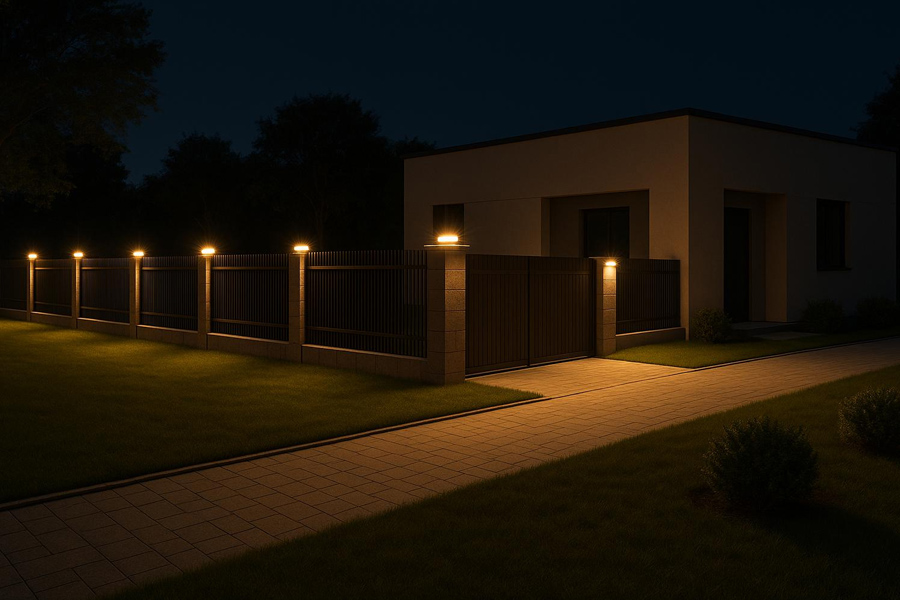
- Bollards: Sturdy and architectural, bollards define boundaries and are hard to knock askew.
- Accent and landscape: Grazing a wall or highlighting a tree provides beauty and helpful background light that raises overall visibility without looking like a parking lot.
- Seasonal and decorative: String or festoon lights offer inviting light at eye level. When placed thoughtfully, they add usable illumination for walkways and seating areas during darker months.
Motion and Automation That Work With You
A light that reacts is a light that communicates. Motion activation announces activity instantly, then returns to calm.
- Sensor placement: Passive infrared sensors read heat plus movement. Mount them 6 to 10 feet high, angled to pick up cross traffic rather than straight at public streets. This reduces false triggers from passing cars.
- Sensitivity and dwell time: Dial in thresholds so raccoons do not set off every flood, and set lights to remain on long enough to investigate but not long enough to annoy the block. Thirty to ninety seconds is typical.
- Zones: Front, side, and rear zones can run different rules. Fronts often favor softer, longer glows. Rear yards can go brighter when triggered.
- Smart controls: Schedules that mimic your typical routines, scenes that flip on multiple zones at once, and vacation modes that randomize lights all make occupancy feel believable.
- Integration: Link motion to camera recording and notifications. A triggered light often improves video quality, which makes any detection more useful.
Mapping the Perimeter
Think like water moving downhill. Where would an intruder flow if they wanted to stay unseen? Light the choke points.
- Approach: Sidewalks, gates, and front walks need consistent guidance. Place path lights so their cones overlap without creating glare. Keep fixtures out of mower paths.
- Thresholds: Doors, garage bays, and gate latches deserve bright, glare controlled light. Layer a porch fixture with a soffit downlight to evenly light faces, hands, and numbers.
- Yard and perimeter: Highlight fence lines, corners, and landscape that could hide movement. A soft wash is often enough to erase hiding spots.
- Practical targets: Aim for 10 to 20 lux on walkways, 30 lux or more at entry hardware, and even vertical illumination along walls for cameras. Maintain uniformity rather than creating isolated beacons.
Installing With Safety and Longevity in Mind
Security lighting fails when corrosion, water, or wiring faults show up at the worst time.
- Weather protection: Choose fixtures with appropriate IP ratings and coastal grade finishes if you are near salt or heavy moisture. Seal every connection with gel filled connectors or heat shrink.
- Power: Use GFCI protected circuits outdoors. Low voltage systems at 12 or 15 volts are safer for landscape and path lights and are easier to modify later.
- Voltage drop: Size wire gauge for run length and total fixture load. Undersized wiring dims the furthest fixtures first and shortens lamp life.
- Controls and protection: Surge protection and quality transformers or power supplies keep electronics healthy. Smart switches rated for exterior use are worth the upgrade.
- Professionals: If you are unsure about code compliance or new circuits, hire a licensed electrician. Safety is part of security.
Night Friendly Security
Good neighbors share good light. The goal is effective illumination without trespass.
Aim fixtures to illuminate your property. Protect narrow boundaries with baffles or shields. Dimming and curfews lessen nighttime intensity while maintaining motion response. Warmer colors are better for wildlife and night vision. If a window lights like a lantern, adjust the beam or output.
Seasonal and Event Lighting as Short Term Security
Temporary illumination can help during long winter nights and hectic holidays. Festive strings and window candles illuminate porches and walkways. Instead of cluttering, place them intentionally. Keep connections off the ground, use outdoor-rated wires and clamps, and route cables so no one trips. Holiday light timing that matches your security schedule is charming and functional. After the season, remove and inspect before storage for next year’s safety.
Maintenance Rituals That Keep Light Working
Dust dimming a lens can cut light more than you think. Overgrowth can swallow a path light completely.
Establish quarterly schedules. Check seals, adjust screws, and wipe lenses with a soft cloth. Reduce vegetation near beams and spider webs near sensors and cameras. Test motion lights at night and adjust aim for proper approach angles. Replace aged bulbs in sets to maintain color and brightness.
Sample Lighting Plans for Common Homes
- Compact bungalow: Two warm sconces at the front door, soffit downlight above the threshold, four low voltage path lights from sidewalk to porch, and a motion flood covering the driveway. A single step light at the porch riser prevents missteps.
- Townhome with alley parking: Shielded sconce at the back door, wall mounted adjustable flood aimed across the parking pad, and a narrow beam light marking the unit number. Motion activation reduces light spill into neighbors’ windows.
- Suburban corner lot: Continuous path lighting from street to both entries, flood coverage at rear corners, accent grazing along the fence for soothing background light, and garage coach light/soffit downlight. Smart scheduling dims late at night while motion stays bright.
- Rental or temporary setup: Plug in string lights under a covered patio for ambient light, two solar or low voltage path lights at the walkway, and a smart plug on the porch lamp to simulate occupancy while away. Choose portable fixtures that do not require permanent wiring changes.
Budgeting Your Upgrade
Start with the highest impact items, then layer as you go.
- Replace exterior bulbs with warm LED lamps of consistent output and color. This alone sharpens the look of the home and improves visibility.
- Add two quality motion activated floods to cover driveway and rear yard. Adjustable heads with shields let you fine tune aim.
- Introduce a low voltage path kit with six to eight fixtures for main walkways. Choose metal stakes and fixtures to withstand weather and foot traffic.
- Install a smart switch or plug for the porch light and a schedule that aligns with sunset to midnight, then motion or dim through late night.
You can scale later with soffit lighting, bollards, or accent uplights as budget allows. Focus on uniformity and control instead of raw brightness.
FAQ
How bright should my exterior lights be at night?
Walkways feel safe at roughly 10 to 20 lux, while door hardware and keypads benefit from brighter, focused light around 30 lux or higher. In everyday terms, an 800 to 1100 lumen porch fixture with good shielding usually does the job. Aim for even coverage rather than isolated hotspots.
Are solar path lights good for security?
Solar path lights add guidance but vary widely in quality and output. They are helpful for marking edges and reducing trips but often lack the brightness and consistency needed for full security. Use them to supplement, not replace, wired path lights and motion floods.
Will constant lighting raise my energy bill?
LEDs save money. Many LED porch lamps utilize less energy than incandescent bulbs. Schedule and dim in low traffic hours, then use motion for stronger, reactive light when needed. Many households notice little monthly cost adjustment after replacing to efficient fixtures.
Where should I point motion floodlights?
Mount floods 6 to 10 feet high and aim across likely approach paths rather than directly outward toward neighbors or streets. Keep beams inside your property lines and use shields to cut glare. Test at night, walk the approach, and adjust until you get reliable triggers without nuisance trips.
What color temperature is best for cameras?
Cameras generally record clear detail between 3000 K and 4000 K. If you prefer a warmer look around 2700 K at entries, maintain consistency within a zone so the camera does not have to constantly adapt to mixed light. Avoid extreme mixes of warm and cool in the same view.
Can exterior lights help wayfinding for guests without being harsh?
Yes. Use low-level layered light. Path and step lights indicate grade changes, while a subtle wash on neighboring walls orients. For comfort, hide sources and use warmer colors. A soft runway impression feels welcoming and safe.