Key Takeaways
- Occupied public facilities require a different approach than vacant construction sites.
- A complete site review helps teams identify access, utility, security, and operational concerns before mobilization.
- Clear project phases make disruptions easier to control and explain.
- Safety, communication, traffic control, dust management, and recordkeeping should be part of the daily work plan.
- A disciplined closeout process helps facilities return spaces to normal use with fewer loose ends.
Public buildings rarely have the option to pause daily life while repairs, upgrades, or expansions take place. Schools still hold classes, transit stations still move riders, civic offices still serve residents, and water facilities still support essential operations. Successful public works construction projects in Southern California depend on planning the work around the people who rely on those facilities every day.
That challenge is especially important across California communities where projects may need to account for busy drop-off periods, heavy traffic, heat, windblown dust, limited staging space, and public expectations for uninterrupted service. A practical plan keeps the job organized while protecting workers, visitors, staff, and nearby neighbors.
Why Active Public Facilities Need Special Planning
Construction at an occupied facility is not simply a matter of placing fencing around a work area. The site may include students walking between buildings, employees arriving for shifts, visitors with accessibility needs, emergency vehicles, delivery drivers, and members of the public who do not know the construction plan. A restroom renovation at an operating school, for example, may require temporary restroom access, protected walkways, adjusted work hours, and close coordination with campus administrators.
Publicly funded construction also carries administrative responsibilities. California’s Department of Industrial Relations explains that public works can include construction, alteration, demolition, installation, repair, and related preconstruction or post-construction activities funded in whole or in part with public money. Project teams should review applicable California public works requirements early, rather than treating compliance documentation as a last-minute task.
Start With a Complete Site Review
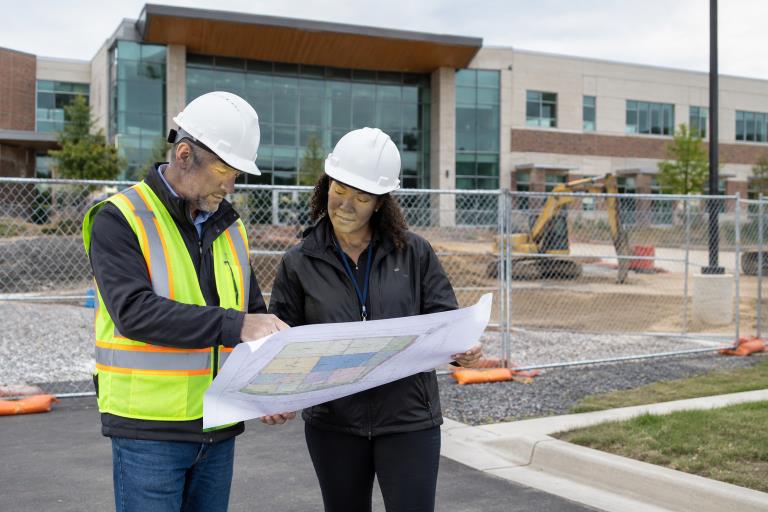
Before equipment arrives, walk the property with facility leaders, designers, safety personnel, and construction supervisors. The goal is to understand how the site functions under normal conditions and where construction could create conflicts.
- Map public entrances, staff-only areas, loading zones, parking areas, emergency exits, and accessible routes.
- Identify utilities, fire protection equipment, security systems, gates, cameras, and controlled-access points.
- Document existing conditions with dated photos, field notes, drawings, and checklists.
- Observe peak activity periods, including school arrival times, public meeting hours, transit rush periods, or scheduled events.
- Flag locations where noise, vibration, dust, deliveries, or temporary closures could affect operations.
Build a Phased Construction Plan
Breaking the project into manageable phases gives everyone a clearer picture of what will happen, where it will happen, and who is responsible. Each phase should identify the work zone, start date, completion target, responsible lead, temporary access route, inspection needs, and handoff requirements.
Keep work zones as small as practical. Closing one wing, room cluster, platform area, or parking section at a time may allow the rest of the facility to remain available. Before any route is closed, establish and mark an alternative route that is safe, accessible, and understandable to first-time visitors. The plan should also include contingencies for delayed materials, extreme weather, hidden utility conflicts, or conditions uncovered after demolition.
Protect People Before Productivity
Schedule pressure should never override public and worker safety. Separate pedestrian routes from trucks, forklifts, lifts, and material storage areas with visible barriers, signs, lighting, and controlled entry points. Maintain emergency exits, fire lanes, and emergency vehicle access throughout the work.
Daily briefings are useful when conditions change, particularly after a new excavation opens, overhead work begins, scaffolding is erected, or a temporary route changes. OSHA notes that construction employers must provide fall protection at specified elevations and protect workers from hazards such as unguarded openings. Teams can use OSHA’s fall-protection guidance when planning guardrails, covers, harness use, access equipment, and worker training.
Coordinate With Facility Staff and the Public
Assign one facility representative and one construction representative who can make or escalate day-to-day decisions. Hold regular coordination meetings that cover schedule changes, safety concerns, access issues, upcoming shutdowns, inspections, and community questions.
Notices should be issued before noisy work, utility interruptions, traffic shifts, entrance closures, or parking changes. Use plain language. A notice that says “east entrance closed Tuesday through Thursday, use the signed south entrance” is more useful than technical project terminology. Staff and visitors should also have a direct way to report hazards, blocked routes, or unexpected disruptions.
Control Noise, Dust, Traffic, and Deliveries
Operational controls turn a workable plan into a safer daily routine. Schedule loud demolition, coring, or drilling when the facility is least occupied. Use appropriate containment, cleaning, ventilation measures, and dust barriers for interior work. In Southern California, secure loose materials and inspect barriers when wind may affect dust or site protection.
- Set delivery windows outside peak pedestrian and vehicle traffic.
- Keep trucks, staged materials, and equipment away from public walkways.
- Use designated spotters where vehicle movement intersects with active facility operations.
- Inspect temporary walkways, signs, fencing, and barriers throughout the day.
- Confirm that waste removal does not block access or create trip hazards.
Keep Safety Records Simple and Useful
Good records do not need to be complicated, but they must be reliable. Maintain a shared log for inspections, public concerns, incidents, corrective actions, schedule changes, and approvals. Store current drawings, permits, meeting notes, utility information, notices, and change documentation in a central location. Photos are particularly valuable when a field condition or completed correction may be difficult to describe later.
Use a Preconstruction Checklist
Before work begins, confirm that the team has addressed the essentials:
- Approved drawings, specifications, permits, and required registrations
- Public protection, site-access, and emergency-response plans
- Utility location, shutdown, and restoration procedures
- Restricted work hours and facility event calendars
- Noise, dust, traffic, waste, delivery, and material-storage controls
- Inspection schedules, reporting procedures, and public communication contacts
- Closeout requirements, including manuals, warranties, testing, and staff training
Handle Changes Without Losing Control
Existing buildings often reveal conditions that are not obvious in original documents. When that happens, avoid informal field decisions. Evaluate how a proposed change affects scope, cost, schedule, public access, safety, and facility operations. Obtain written approval, update drawings and schedules, and communicate changes to people who may be affected.
Prepare for the Final Handoff
Final handoff begins before the last day of work. Complete inspections, resolve open items, test affected systems, and remove temporary barriers and equipment safely. Walk the completed area with facility staff, provide updated records and maintenance information, and confirm that the space is ready for normal use. A short lessons-learned review can improve the next project.
Common Questions About Public Construction Near Active Facilities
Can a public facility stay open during construction?
Often, yes. The answer depends on the type of work, available separation between the public and the construction area, emergency access, utility needs, and the ability to phase the project safely. Some work will still require a partial or temporary closure.
Who should approve changes to public access?
A defined approval process should involve facility operations, project leadership, safety personnel, and the public agency’s designated representatives.
How often should an occupied site be inspected?
Inspect before work begins, during active operations, after major changes, and at the end of shifts when public access may resume.
Conclusion
Public construction succeeds when safety, access, communication, and documentation receive the same attention as the physical work. With a thorough site review, practical phasing, daily coordination, and a clear handoff plan, Southern California agencies can improve facilities while continuing to serve the communities that depend on them.